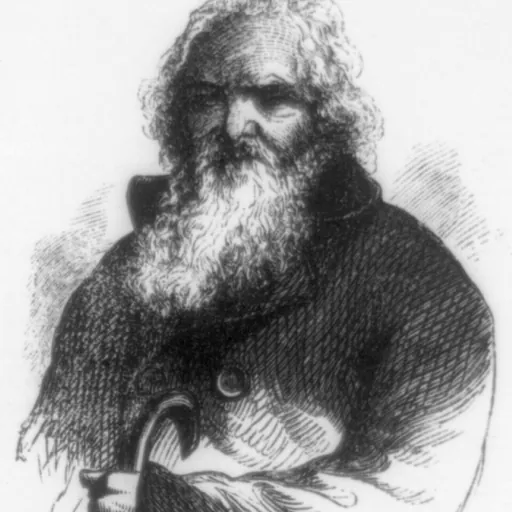
Skenandoa
Oneida chief
About Skenandoa
Lived 1750 – 1816 (aged 65–66). Skenandoa was a traditional leader or chief.
John Skenandoa (; – March 11, 1816), also called Shenandoah among other forms, was an elected chief (a so-called "pine tree chief") of the Oneida. He was born into the Iroquoian-speaking Susquehannocks, but was adopted into the Oneida of the Iroquois Confederacy. When he later accepted Christianity, he was baptized as "John", taking his Oneida name Skenandoa as his surname. Based on a possible reconstruction of his name in its original Oneida, he is sometimes called "Oskanondonha" in modern scholarship. His tombstone bears the spelling Schenando .
During the colonial years, Skenandoa supported the English against the French in the Seven Years' War. Later, during the American Revolutionary War, he supported the colonials and led a force of 250 Oneida and Tuscarora warriors in western New York in their support. He met George Washington, who wrote at least one letter of recommendation for him.
A longtime friend of the minister Samuel Kirkland, a founder of Hamilton College, his request to be buried next to Kirkland was granted. In the funeral procession at the death of Skenandoa together were Oneida, students and officers from Hamilton College, Kirkland's widow and her family, and many citizens of Clinton, New York. thumb
Name Skenandoa's name is variously recorded; "Shenandoah" has become the most famous form, used in many versions of the folk song "O Shenandoah", where the words "O Shenandoah, I love your daughter" and "The chief disdained the trader's dollars: / 'My daughter never you shall follow'" are found. Other forms include Skenandoah or Scanandoa; Schenandoah, Schenandoa, Shenondoa, Shanandoah, or Shanendoah; Skenando or Scanondo; Schenando; Skenandore; and Skennondon, Scanandon, Skonondon, or Skeanendon.
The origin of Skenandoa's name is uncertain. The spelling Oskanondonha (which was not recorded in his lifetime) assumes derivation from Oneida oskanu:tú: , "deer". However, Skenandoa referred to himself as "an aged hemlock", this derivation has had a longer tradition of acceptance.
Life Skenandoa was born in 1706 into the Iroquoian-speaking Susquehannock people (also called Conestoga), located in present-day eastern Pennsylvania. He was adopted into the Oneida people, one of the Five Nations of the Iroquois Confederacy.
As an adult man, he was notable for his height, estimated to be 6'5," and was said to have a commanding presence. The Oneida elected him as a "Pine Tree Chief", in recognition of his leadership and contribution to the tribe. This position allowed him a place in the Grand Council of 50 chiefs of the Confederacy, representing all the clans of all the nations. It was not hereditary, nor could Skenandoa name a successor. The name referred to a man being recognized as a chief and rising up inside the tribe. In the 1800s New York Governor Daniel D. Tompkins gave him a silver pipe in recognition of his contributions. Today it is displayed at Shako:wi, the Oneida Nation museum at their reservation near Syracuse.
Mohawk war leader Joseph Brant, who allied with the British during the revolution, had Skenandoa jailed at Fort Niagara for a period in 1779 during the war when the Oneida chief was on a peace mission to the Iroquois.
Skenandoa lived what appears to be past the age of 100. Nearing the end of his life and having gone blind, the chief is recorded as having said:
After Skenandoah died in 1816 at well over a hundred years old, he was buried upon his request (and with the Kirkland family's approval) next to his friend Kirkland, who had died in 1808, on the grounds of Kirkland's home in Clinton, New York. In 1851, both bodies were reinterred in the cemetery of Hamilton College.
Legacy and honors The Oneida oral tradition tells that Chief Skenandoa provided critical food, sending corn to General George Washington and his men during their harsh winter at Valley Forge in 1777–1778. Washington is said to have named the Shenandoah River and valley in his honor, and subsequently numerous other places in the United States were named Shenandoah. He is also referred to in the title and lyrics of the folk song "Oh Shenandoah".
A monument to Skenandoa was erected by the Northern Missionary Society at the Hamilton College cemetery. Its inscription recognizes his leadership, friendship with Kirkland, and important contributions to the rebel colonists during the war.
The Oneida performer-composer Joanne Shenandoah (1957–2021) was a descendant of Chief Shenandoah.
Don’t just read it —
keep it.
Full-length biographies made to live with: read them, listen on the way to work, watch them tonight.
- E-book
- Audio
- Video
Instant download · yours to keep · every purchase keeps this site free
Important facts
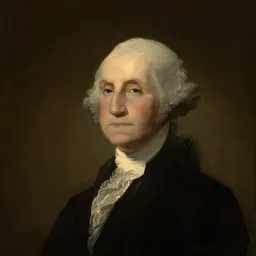
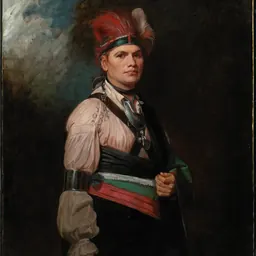
People in Skenandoa's life
Named in this biography and alive at the same time

Related people
Same field, nearest in time

Contemporaries
People whose lives overlapped Skenandoa's





Frequently asked questions
Who was Skenandoa?
Oneida chief
When was Skenandoa born?
Skenandoa was born in 1750 in Iroquois.
When did Skenandoa die?
Skenandoa died on 11 March 1816 in Oneida.
What was Skenandoa's occupation?
Skenandoa was a traditional leader or chief.
What nationality was Skenandoa?
Skenandoa's recorded nationality: Susquehannock.
Sources & further reading
Cite this page
APA: Biography.guide. (2026). Skenandoa. https://biography.guide/skenandoa/
MLA: "Skenandoa." Biography.guide, https://biography.guide/skenandoa/.
Chicago: "Skenandoa." Biography.guide. https://biography.guide/skenandoa/.
Data last updated: 2026-09-22 · Spot an error? Report a correction.
Page generated 2026-09-27 05:09 UTC