
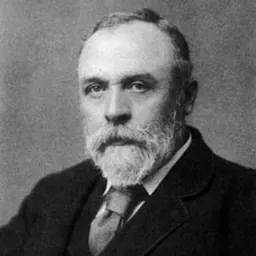
About Sir Smith Child, 2nd Baronet
Lived 1880 – 1958 (aged 78). Sir Smith Child, 2nd Baronet was a British politician and military personnel.
Brigadier-General Sir Smith Hill Child, 2nd Baronet, (19 September 1880 – 11 November 1958) was an officer in the British Army and a Conservative Party politician.
Early life and education Hill Child was educated at Eton College and Christ Church, Oxford. He succeeded his grandfather, Sir Smith Child, 1st Baronet, as 2nd Baronet of Newfield Hall, near Tunstall, Staffordshire, in 1896.
Military career Hill Child was commissioned as a second lieutenant in the part-time 3rd (Edinburgh Light Infantry Militia) Battalion, Royal Scots, on 25 October 1899. The battalion was embodied for full-time service in the Second Boer War on 5 December that year, and in early March 1900 left Queenstown on the SS Oriental for South Africa. They landed at East London on 21 March 1900 and by July was engaged in operations against Boer Commandos in the Transvaal. Hill Child was wounded, and returned to the United Kingdom during Christmas 1900. He was promoted to lieutenant in the militia battalion on 6 March 1901, but in July was commissioned into the Regular Army as a second lieutenant in the newly raised Irish Guards. Promotion to lieutenant in the regiment came on 1 March 1902, and he was chosen to carry the colours at the first presentation of Colours to the Regiment on 30 May 1902, following which he was appointed a Member of the Royal Victorian Order (MVO). He retired from Regular service in 1909 and was placed on the Reserve of Officers in 1910.
On 8 February 1910, Hill Child was promoted to lieutenant-colonel in the part-time Territorial Force and was appointed commanding officer of the II North Midland Brigade in the Royal Field Artillery. He was in command when the brigade was mobilised as part of the 46th (North Midland) Division in the First World War and served with it on the Western Front. The brigade was later numbered CCXXXI (231). 46th Division saw its first major action at the Battle of the Hohenzollern Redoubt in October 1915. Hill Child was awarded the Distinguished Service Order in 1916.
At the Battle of Gommecourt on 1 July 1916, organised as a diversion from the main Battle of the Somme, the divisional artillery was allocated the task of wire-cutting: CCXXXI and another brigade formed the Left group, under the command of Hill Child. This group supported two battalions (1/5th and 1/7th (Robin Hoods)) of the Sherwood Foresters, but the German wire entanglements were in dead ground and could not be seen by artillery observers. The attack was a costly failure, and Hill Child was a member of the court of inquiry into the circumstances.
On 13 March 1918 the Commander, Royal Artillery (CRA) of the 46th Division was wounded, and Hill Child was appointed to act in his place. A week later he was promoted to the temporary rank of brigadier general and confirmed as CRA.
The 46th Division had been very unlucky during the war, the infantry in particular sustaining heavy casualties at the Hohenzollern Redoubt and Gommecourt, but it gained revenge at the Battle of the St Quentin Canal on 29 September 1918 when it crossed the canal and broke open the Hindenburg Line. Careful artillery preparation and support was an integral part of this success. Hill Child had nine brigades of field artillery under his command. The bombardment began on the night of 26/27 September with harassing fire and gas shells, followed with intense bombardment with high explosive shells until the morning of the assault. Every field gun was used in carefully timed barrages: 'creeping barrages' (including smoke shells) ahead of the attacking troops, with pauses at the end of each phase, including a 'standing barrage' of three hours to allow mopping-up of the first objectives to be carried out, and the second wave of troops to pass through and renew the attack behind the creeping barrage. The first of these creeping barrages actually progressed at twice the normal pace while the infantry rushed downhill to seize the canal crossings; it was described in the Official History as 'one of the finest ever seen'. The 46th Division was prominent in the pursuit of the Germans leading to the Armistice in November 1918.
During the war Hill Child was Mentioned in Despatches, awarded the French Croix de Guerre, appointed a Companion of the Order of St Michael and St George and, in 1919, a Companion of the Order of the Bath. until he retired from full-time royal service.
Royal Household career Child was appointed in 1927 Gentleman Usher in Ordinary in the Royal Household by King George V and promoted Deputy Master of the Household in 1929. and was buried in the parish churchyard at nearby Westbury.
Don’t just read it —
keep it.
Full-length biographies made to live with: read them, listen on the way to work, watch them tonight.
- E-book
- Audio
- Video
Instant download · yours to keep · every purchase keeps this site free
Important facts
Related people
Same field, nearest in time




Contemporaries
People whose lives overlapped Sir Smith Child, 2nd Baronet's


Frequently asked questions
Who was Sir Smith Child, 2nd Baronet?
British Army general (1880-1958)
When was Sir Smith Child, 2nd Baronet born?
Sir Smith Child, 2nd Baronet was born on 19 September 1880.
When did Sir Smith Child, 2nd Baronet die?
Sir Smith Child, 2nd Baronet died on 11 November 1958.
What was Sir Smith Child, 2nd Baronet's occupation?
Sir Smith Child, 2nd Baronet was a politician and military personnel.
What nationality was Sir Smith Child, 2nd Baronet?
Sir Smith Child, 2nd Baronet was British.
Sources & further reading
· Wikipedia: Sir Smith Child, 2nd Baronet
· DBpedia: Sir Smith Child, 2nd Baronet
Cite this page
APA: Biography.guide. (2026). Sir Smith Child, 2nd Baronet. https://biography.guide/sir-smith-child-2nd-baronet/
MLA: "Sir Smith Child, 2nd Baronet." Biography.guide, https://biography.guide/sir-smith-child-2nd-baronet/.
Chicago: "Sir Smith Child, 2nd Baronet." Biography.guide. https://biography.guide/sir-smith-child-2nd-baronet/.
Data last updated: 2026-09-20 · Spot an error? Report a correction.
Page generated 2026-09-27 05:26 UTC