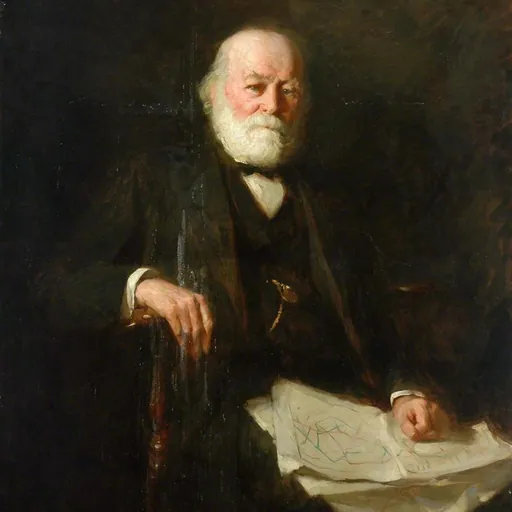
Sir Lowthian Bell, 1st Baronet
Ironmaster, industrial chemist, railway owner
About Sir Lowthian Bell, 1st Baronet
Lived 1816 – 1904 (aged 88). Sir Lowthian Bell, 1st Baronet was a British inventor, politician, metallurgist, chemist, businessperson and entrepreneur, known for Industrial chemistry, Member of Parliament (United Kingdom) and Metallurgy.
Sir Isaac Lowthian Bell, 1st Baronet, FRS (18 February 1816 – 20 December 1904) was a British ironmaster and Liberal Party politician from Washington, County Durham. He was described as being "as famous in his day as Isambard Kingdom Brunel".
Bell was an energetic and skilful entrepreneur as well as an innovative metallurgist. He was involved in multiple partnerships with his brothers to make iron and alkali chemicals, and with other pioneers including Robert Stirling Newall to make steel cables. He pioneered the large-scale manufacture of aluminium at his Washington works, conducting experiments in its production, and in the production of other chemicals such as the newly discovered element thallium. He was a director of major companies including the North Eastern Railway and the Forth Bridge company, then the largest bridge project in the world.
He was a wealthy patron of the arts, commissioning the architect Philip Webb, the designer William Morris and the painter Edward Burne-Jones on his Yorkshire mansions Rounton Grange and Mount Grace Priory.
Early life Bell was the son of Thomas Bell, one of the founders of the iron and alkali company Losh, Wilson and Bell, and his wife Katherine Lowthian. He was born in Newcastle-upon-Tyne and educated at Dr Bruce's academy in Percy Street, Newcastle, followed by studying physical science at Edinburgh University and the Sorbonne University, Paris.
Industry
Establishing a partnership with Robert Stirling Newall in 1850, Bell set up the first factory in the world with machines able to manufacture steel rope and submarine cable. Two years later his brothers Thomas Bell and John Bell joined him to build a major iron works at Port Clarence, Middlesbrough on the north bank of the River Tees. By 1853 there were three blast furnaces, each with a capacity of just over , making them the largest in Britain at the time. including the North Eastern Railway company, of which Bell was a director from 1864 onwards, The Bell brothers' company operated its own ironstone mines at Normanby and Cleveland, and its own limestone quarries in Weardale, he described how critical it was to make aluminium pure in The Technologist:
quote|Now, it happens, that the presence of foreign matters, in a degree so small as almost to be infinitesimal, interferes so largely with the colour, as well as with the malleability of the aluminium, that the use of any substance containing them is of a fatal character. Nor is this all, for the nature of that compound which hitherto has constituted the most important application of this metal — aluminium-bronze — is so completely changed by using aluminium containing the impurities referred to [silica, iron, or phosphorus] that it ceases to possess any of those properties which render it valuable.|Isaac Lowthian Bell
The Cleveland ironstone had been considered inferior for steelmaking, as it contained a relatively high percentage of phosphorus at 1.8 to 2.0%, weakening the resulting iron. Bell directed large-scale experiments at a cost of up to £50,000, resulting in a basic steel process which produced steel rails containing no more than 0.07% phosphorus. His obituary in The Times of 1904 noted, as a sign of the progress that Bell himself had brought about, that Bell could recall "seeing wooden rails in use on the tramroads by which coal was brought down to the River Tees". In 1882, Bell successfully drilled for salt at Port Clarence, finding an exploitable salt bed at a depth of . He used the salt for making soda, but the borehole was sold to the Salt Union in 1888. He continued to own shares in Bell companies and the North Eastern Railway. In 1901, at age 85, after a long period of difficulty for heavy industry and with fears of worse to come as manufacturing grew in Germany, America and Japan, he made a decisive move to guard the family's wealth. He sold his railway interests to the North Eastern Railway company, and the sale of a majority holding in his manufacturing companies to rival Dorman Long was completed in 1903. From the fortune thus released, he gave £5,000 to each of his many nephews, nieces and grandchildren.
Politics For 30 years from 1850, Bell was active on the town council of Newcastle upon Tyne. He became sheriff of the town in 1851, mayor in 1854 and alderman in 1859. Once again he was elected mayor for Newcastle in 1862.
Bell was elected as the Member of Parliament for North Durham from February to June 1874, and for The Hartlepools from 1875 to 1880. He lost his seat in North Durham in 1874 on the grounds that his agents were guilty of intimidation. Bell became a Fellow of the Royal Society in 1874 for his distinction in chemistry and metallurgy, especially of iron.
An international figure with a scientific profile, he was invited to serve as a juror at International Exhibitions in Philadelphia in 1876, and again in Paris in 1878. He was accordingly made an honorary member of the American Philosophical Institution and an officer of the Legion d'Honneur. being nominated a fellow of the Chemical Society of London, and president of the Society of Chemical Industry from 1889-90.
During the 1881 Census, taken on 3 April, Bell was recorded as a visitor at his daughter Maisie's house. Her husband the Hon. Edward L. Stanley, M.P. in Harley Street, London was the Head of the Household, recording Bell's occupation as "Magistrate, Deputy Lieutenant, Iron Master". In 1882 he became a director of the Forth Bridge company. At that time this was the world's largest bridge project.
In 1886 Bell became the 10th president of the North of England Institute of Mining and Mechanical Engineers. He was awarded the George Stephenson Medal from the Institution of Civil Engineers in 1890, In 1895 Bell was awarded the Albert Medal of the Royal Society of Arts, in recognition of the services he has rendered to Arts, Manufactures and Commerce, by his metallurgical researches and the resulting development of the iron and steel industries.
Works Bell wrote many papers on chemistry and metallurgy. In his Iron Trade, he correctly predicted the outstripping of Britain by Germany in industrial production, unsuccessfully urging government action to avoid this. On the Manufacture of Aluminium, The Industrial resources of the District the three northern rivers, the Tyne, Wear and Tees: including the reports on the local manufactures, read before the British Association. (pp 73–119) Baron William George Armstrong, 1863. The Manufacture of Aluminium, The Technologist, July 1864. The Manufacture of Thallium, British Association, 1864. The present state of the manufacture of iron in Great Britain, and its position as compared with that of some other countries (from the report of the British Association for the Advancement of Science 1867), M & M.W. Lambert, Newcastle upon Tyne, 1867. The Chemical Phenomena of Iron Smelting: An Experimental and Practical Examination of the Circumstances Which Determine the Capacity of the Blast Furnace, the Temperature of the Air, and the Proper Condition of the Materials to Be Operated Upon (collection of papers published as a book, 435pp), Routledge, London, 1872. The Iron Trade of the United Kingdom Compared with that of the Other Chief Ironmaking Nations, Literary and Philosophical Society, Newcastle-upon-Tyne, 1875. Mr I Lowthian Bell and the Blair Direct Process. James M'Millin, 1875. Sir Lowthian Bell and his presidential address. North of England Institute of Mining and Mechanical Engineers (vol. 36) 1875. On the Hot Blast, with an explanation of its Mode of Action in Iron Furnaces of Different Capacities. Transactions of the American Institute of Mining Engineers (vol. V pp 56–81) May 1876 to February 1877. The Principles of the Manufacture of Iron and Steel with some notes on the economic conditions of their production , George Routledge & Sons, London, 1884. On the manufacture of salt near Middlesbrough (with James Forrest). Institution of Civil Engineers, London, 1887. On the Probable Future of the Manufacture of Iron. Memorandum as to the wear of rails, Ben Johnson, 1896. Memorandum(No.2) as to the wear of rails & broken rails, Leeds Chorley & Pickersgill 1900.
Family life On 20 July 1842 Bell, known as Lowthian, married Margaret Pattinson, daughter of his business partner Hugh Lee Pattinson and Phebe Walton. Margaret's younger sisters married Bell's business partners Robert Benson Bowman and Robert Stirling Newall: all three brothers-in-law were members of Tyneside Naturalists' Field Club and the Natural History Society of Northumberland.
Their children were Sir Thomas Hugh Bell, 2nd Baronet, known as Hugh, who was father of the explorer and diplomat Gertrude Bell, Florence, Mary Katherine, known as Maisie, who in 1873 married Edward Stanley, 4th Baron Stanley of Alderley, Ada, Charles, and Ellen (who died in infancy). He had about 60 grandchildren. The family prepared a Christmas alphabet in 1877 at Rounton Grange, including "C is the Crushing Contemptuous Pater", which Bell's daughter Elsa later annotated "Sir Isaac Lowthian Bell". While decorating the great house, Morris spoke of "ministering to the swinish luxury of the rich".
Given his huge wealth, Margaret and he lived relatively simply, as a weekend retreat. The house was decorated by the best designers of the day in the "Aesthetic" style, with William Morris's "Double Bough" wallpaper hand-printed using 22 apple wood printing blocks. For the restoration of 2010 the original blocks were used to produce a close replica of the original wallpaper, each roll taking a week to print by hand.
Bell died on 20 December 1904 at his house in London, 10 Belgrave Terrace. He left £750,000 to his son Hugh Bell on his death in 1904.
Legacy After his death, the Institution of Mining Engineers resolved that However, Howell writes, "Lowthian was admired rather than loved, and appears to have been dictatorial and harsh towards his family." She observes that "There is to this day no biography of the man who was as famous in his day as Isambard Kingdom Brunel."
Don’t just read it —
keep it.
Full-length biographies made to live with: read them, listen on the way to work, watch them tonight.
- E-book
- Audio
- Video
Instant download · yours to keep · every purchase keeps this site free
Important facts
People in Sir Lowthian Bell, 1st Baronet's life
Named in this biography and alive at the same time
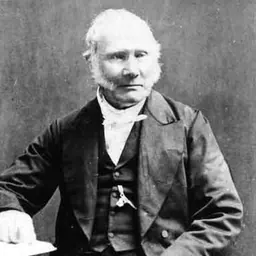

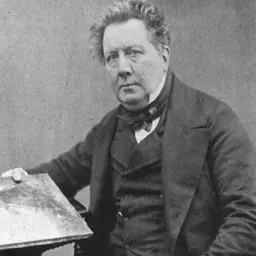
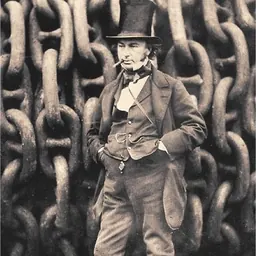


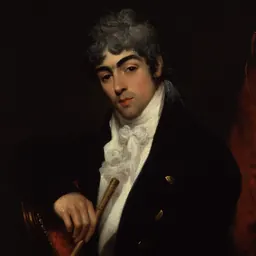

Related people
Same field, nearest in time
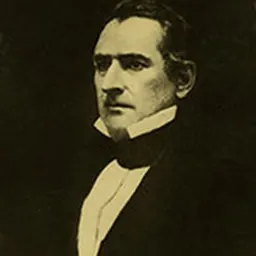

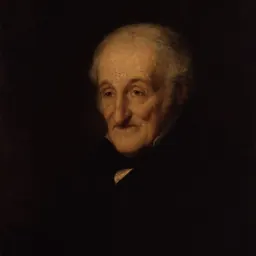
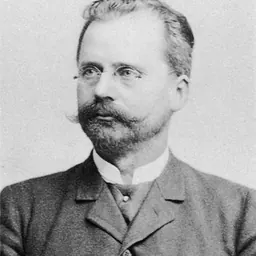
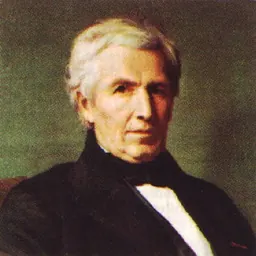

Contemporaries
People whose lives overlapped Sir Lowthian Bell, 1st Baronet's





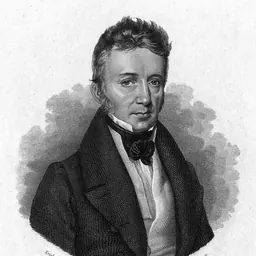
Frequently asked questions
Who was Sir Lowthian Bell, 1st Baronet?
Ironmaster, industrial chemist, railway owner (1816-1904)
When was Sir Lowthian Bell, 1st Baronet born?
Sir Lowthian Bell, 1st Baronet was born on 18 February 1816 in Newcastle upon Tyne.
When did Sir Lowthian Bell, 1st Baronet die?
Sir Lowthian Bell, 1st Baronet died on 20 December 1904 in London.
What was Sir Lowthian Bell, 1st Baronet's occupation?
Sir Lowthian Bell, 1st Baronet was an inventor, politician, metallurgist, chemist, businessperson and entrepreneur.
What was Sir Lowthian Bell, 1st Baronet known for?
Sir Lowthian Bell, 1st Baronet was known for Industrial chemistry, Member of Parliament (United Kingdom) and Metallurgy.
What nationality was Sir Lowthian Bell, 1st Baronet?
Sir Lowthian Bell, 1st Baronet was British.
Sources & further reading
· Wikipedia: Sir Lowthian Bell, 1st Baronet
Cite this page
APA: Biography.guide. (2026). Sir Lowthian Bell, 1st Baronet. https://biography.guide/sir-lowthian-bell-1st-baronet/
MLA: "Sir Lowthian Bell, 1st Baronet." Biography.guide, https://biography.guide/sir-lowthian-bell-1st-baronet/.
Chicago: "Sir Lowthian Bell, 1st Baronet." Biography.guide. https://biography.guide/sir-lowthian-bell-1st-baronet/.
Data last updated: 2026-09-21 · Spot an error? Report a correction.
Portrait: Wikimedia Commons · author & licence
Page generated 2026-09-27 05:01 UTC