
About Robert Stirling Newall
Lived 1812 – 1889 (aged 76). Robert Stirling Newall was a Scottish engineer and astronomer.
Robert Stirling Newall FRS FRAS (27 May 1812 – 21 April 1889) was a Scottish engineer and astronomer.
Life and work He was born in Dundee on 27 May 1812. He began his career in a local merchant's office before he moved to London, where he worked for Robert McCalmont on experiments on the generation of steam. He later spent two years in America promoting McCalmont's business interests.
In 1838, while L. D. B. Gordon was studying at the Freiberg School of Mines, in Germany, he visited the mines at Clausthal and met Wilhelm Albert. Impressed by what he saw, he wrote to Robert urging him to invent a machine for making wire ropes. After receiving Gordon's letter, Newall designed a wire-rope machine consisting of four strands and four wires per strand. When Gordon returned to the UK in 1839, he formed a partnership with Robert and Charles Liddell, registering R. S. Newall and Company in Dundee. On 17 August 1840, Newall patented "certain improvements in wire rope and the machinery for making such rope."
R. S. Newall and Company established a factory in Gateshead, England, and began producing wire ropes for mining, railway, ships' rigging, and other purposes. From that point onward, Newall played a key role in improving submarine telegraph cables, developing a method that used gutta percha insulation surrounded by strong wires. The first successful cable was laid between Dover and Calais on 25 September. In 1851, he left his previous post and continued manufacturing on a large scale. In 1853, he invented the 'brake-drum' and cone for laying cables in deep seas. Owing to the scarcity of engineers competent to deal with the special difficulties of the work, Newall himself directed the submergence of many of his cables. Among these were the lines from Holyhead to Howth, Dover to Ostend, Malta to Corfu, besides several others in the Mediterranean, Suez to Aden, Aden to Kurrachee, Constantinople and Varna to Balaclava in 1855. Half of the first Atlantic cable was manufactured at his works. The last submarine line laid by him personally was that connecting Ringkjobing in Denmark with Newbiggen, Northumberland, in 1868. Their eldest son Robert Stanley (1884 - 1987) of Little Cottage Street, Westminster, was an ethnographer of Aboriginal Australia and an archaeologist for the Commissioners of Woods and Forests who made excavations at Stonehenge with Lieutenant-Colonel William Hawley between 1919 and 1926, and was Vice President of Salisbury Museum from 1971. Their second son was named Basil (b. 1885).
Don’t just read it —
keep it.
Full-length biographies made to live with: read them, listen on the way to work, watch them tonight.
- E-book
- Audio
- Video
Instant download · yours to keep · every purchase keeps this site free
Important facts
People in Robert Stirling Newall's life
Named in this biography and alive at the same time

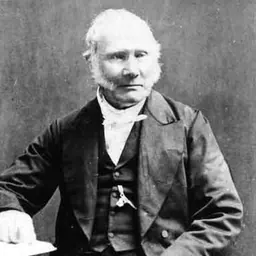

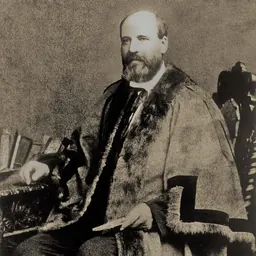

Related people
Same field, nearest in time
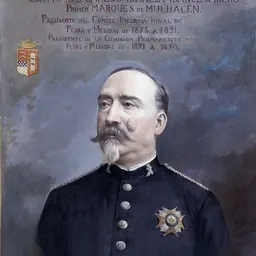

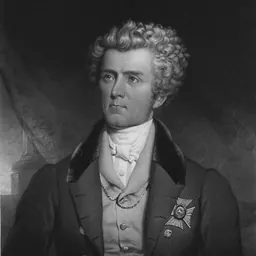
Contemporaries
People whose lives overlapped Robert Stirling Newall's






Frequently asked questions
Who was Robert Stirling Newall?
Scottish engineer and astronomer (1812-1889)
When was Robert Stirling Newall born?
Robert Stirling Newall was born on 27 May 1812 in Dundee.
When did Robert Stirling Newall die?
Robert Stirling Newall died on 21 April 1889 in Gateshead.
What was Robert Stirling Newall's occupation?
Robert Stirling Newall was an engineer and astronomer.
What nationality was Robert Stirling Newall?
Robert Stirling Newall was Scottish.
Sources & further reading
· Wikipedia: Robert Stirling Newall
· DBpedia: Robert Stirling Newall
Cite this page
APA: Biography.guide. (2026). Robert Stirling Newall. https://biography.guide/robert-stirling-newall/
MLA: "Robert Stirling Newall." Biography.guide, https://biography.guide/robert-stirling-newall/.
Chicago: "Robert Stirling Newall." Biography.guide. https://biography.guide/robert-stirling-newall/.
Data last updated: 2026-09-20 · Spot an error? Report a correction.
Page generated 2026-09-27 05:12 UTC