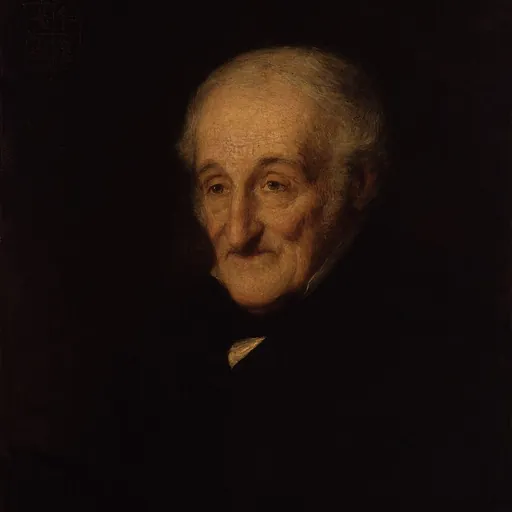
About Francis Ronalds
Lived 1788 – 1873 (aged 85). Francis Ronalds was a British inventor, physicist, archaeologist and electrotechnician, known for Electric telegraph, Perspective machine and Photography.
Sir Francis Ronalds (21 February 1788 – 8 August 1873) was an English scientist and inventor, sometimes described as the first electrical engineer. He was knighted for creating the first working electric telegraph over a substantial distance. In 1816 he laid an length of iron wire between wooden frames in his mother's garden and sent pulses using electrostatic generators. He also created the first electric clock in 1814.
Upbringing and family Born to Francis Ronalds and Jane (née Field), wholesale cheesemongers, at their business premises at 109 Upper Thames Street, London, he attended Unitarian minister Eliezer Cogan's school before being apprenticed to his father at the age of 14 through the Drapers' Company. He ran the large business for some years. The family later resided in Canonbury Place and Highbury Terrace, both in Islington, at Kelmscott House in Hammersmith, Queen Square in Bloomsbury, at Croydon, and on Chiswick Lane.
Ronalds had eleven brothers and sisters. His youngest brother Alfred Ronalds wrote The Fly-fisher's Entomology (1836) with Ronalds' assistance before emigrating to Australia. His brother Hugh was one of the founders of the city of Albion in the American Midwest, and sister Emily Ronalds epitomised the family's interest in social reform. Other sisters married Samuel Carter – a railway solicitor and MP – and sugar-refiner Peter Martineau, the son of Peter Finch Martineau.
Nurseryman Hugh Ronalds was his uncle, and his nephews included chemistry professor Edmund Ronalds, artist Hugh Carter, barrister John Corrie Carter and timber merchant and benefactor James Montgomrey. Thomas Field Gibson, a Royal Commissioner for the Great Exhibition of 1851, was one of his cousins.
Early electrical science and engineering Ronalds was conducting electrical experiments by 1810: those on atmospheric electricity were outlined in George Singer's text Elements of Electricity and Electro-Chemistry (1814). He published his first papers in the Philosophical Magazine in 1814 on the properties of the dry pile, a form of battery that his mentor Jean-André Deluc helped to develop. The next year he described the first electric clock.
Other inventions in this early period included an electrograph to record variations in atmospheric electricity through the day; an influence machine that generated electricity with minimal manual intervention; and new forms of electrical insulation, one of which was announced by Singer. of electrical books and managing his collection with perhaps the first practical card catalogue.
His theoretical contributions included an early delineation of the parameters now known as electromotive force and current; an appreciation of the mechanism by which dry piles generated electricity; and the first description of the effects of induction in retarding electric signal transmission in insulated cables.
Electric telegraph
Ronalds created the electric telegraph at the age of 28. He established that electrical signals could be transmitted over large distances with of iron wire strung on insulators on his mother's lawn in Hammersmith. He found that the signal travelled immeasurably fast from one end to the other (but still believed the speed was finite).
He complemented his vision with a working telegraph system built in and under his mother's garden at Hammersmith. It was rejected on 5 August 1816 by Sir John Barrow, Secretary at the Admiralty, as being "wholly unnecessary". Commercialisation of the telegraph only began two decades later in the UK, led by William Fothergill Cooke and Charles Wheatstone, who both had links to Ronalds' earlier work.
Grand Tour
The period 1818–20 was Ronalds' "Grand Tour" to Europe and the Near East. Embarking on his trip alone, he met up with numerous people along the way, including his friend Sir Frederick Henniker, archaeologist Giovanni Battista Belzoni, artist Giovanni Battista Lusieri, merchant Walter Stevenson Davidson, Revd George Waddington, Italian numismatist Giulio Cordero di San Quintino and Spanish geologist Carlos de Gimbernat. Ronalds' travel journal and sketches have been published on the web. On his return, he published his atmospheric electricity observations made in Palermo, Sicily, and near the erupting crater of Vesuvius. The first of these instruments produced a perspective view of an object directly from drawings of the plan and elevations. The second one enabled a scene or person to be traced from life onto paper with considerable precision; he and Dr Alexander Blair used it to document the important Neolithic monuments at Carnac, France, with "almost photographic accuracy". He also created the ubiquitous portable tripod stand; his original model had three pairs of hinged legs to support his drawing board in the field. He manufactured these instruments himself and several hundred of them were sold.
Continuously recording camera
The first successful camera for making continuous recordings of scientific instruments, built by Francis Ronalds in 1845. This example is an electrograph measuring atmospheric electricity Ronalds' most noteworthy innovation at Kew, in 1845, was the first successful camera to make continuous recordings of an instrument 24 hours per day. The British Prime Minister Lord John Russell gave him a financial award in recognition of the importance of the invention for observational science.
He applied his technique in electrographs to observe atmospheric electricity, barographs and thermo-hygrographs to monitor the weather, and magnetographs to record the three components of geomagnetic force. The magnetographs were used by Edward Sabine in his global geomagnetic survey while the barograph and thermo-hygrograph were employed by the new Met Office to assist its first weather forecasts. Ronalds also supervised the manufacture of his instruments for other observatories around the world (the Radcliffe Observatory under Manuel John Johnson and the Colaba Observatory in India are two examples) and some continued in use until late in the 20th century.
The phenomenon now known as geomagnetically induced current was observed on telegraph lines in 1848 during the first sunspot peak after the network began to take shape. Ronalds endeavoured to employ his atmospheric electricity equipment and magnetographs in a detailed study to understand the cause of the anomalies but had insufficient resources to complete his work. The Ronalds Library was bequeathed to the newly formed Society of Telegraph Engineers (soon to become the Institution of Electrical Engineers and now the Institution of Engineering and Technology) and its accompanying bibliography was reprinted by Cambridge University Press in 2013.
Ronalds had a very modest and retiring nature and did little to publicise his work through his life. During his last years, however, his key accomplishments became well known and revered in the scientific community, aided in particular by his friends Josiah Latimer Clark and Edward Sabine and his brother-in-law Samuel Carter. He was knighted at the age of 82. Colleagues at the Society of Telegraph Engineers regarded him as "the father of electric telegraphy", while his continuously recording camera was noted to be "of extreme importance to meteorologists and physicists, and… employed in all first-rate observatories". His portrait was painted by Hugh Carter. Commemorative plaques have been installed on two of his former homes in Highbury and Hammersmith, and a road was named after him in Highbury. Ronalds Point in Antarctica is named after him.
Don’t just read it —
keep it.
Full-length biographies made to live with: read them, listen on the way to work, watch them tonight.
- E-book
- Audio
- Video
Instant download · yours to keep · every purchase keeps this site free
Important facts
People in Francis Ronalds's life
Named in this biography and alive at the same time





Related people
Same field, nearest in time
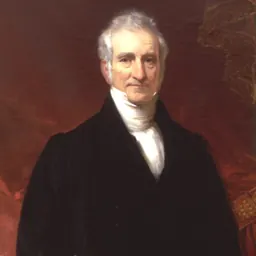
Contemporaries
People whose lives overlapped Francis Ronalds's



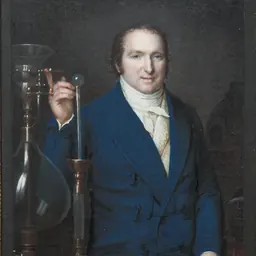
Frequently asked questions
Who was Francis Ronalds?
British meteorologist
When was Francis Ronalds born?
Francis Ronalds was born on 21 February 1788 in London.
When did Francis Ronalds die?
Francis Ronalds died on 8 August 1873 in Battle.
What was Francis Ronalds's occupation?
Francis Ronalds was an inventor, physicist, archaeologist and electrotechnician.
What was Francis Ronalds known for?
Francis Ronalds was known for Electric telegraph, Perspective machine and Photography.
What nationality was Francis Ronalds?
Francis Ronalds was British.
Sources & further reading
Cite this page
APA: Biography.guide. (2026). Francis Ronalds. https://biography.guide/francis-ronalds/
MLA: "Francis Ronalds." Biography.guide, https://biography.guide/francis-ronalds/.
Chicago: "Francis Ronalds." Biography.guide. https://biography.guide/francis-ronalds/.
Data last updated: 2026-09-21 · Spot an error? Report a correction.
Portrait: Wikimedia Commons · author & licence
Page generated 2026-09-27 04:59 UTC