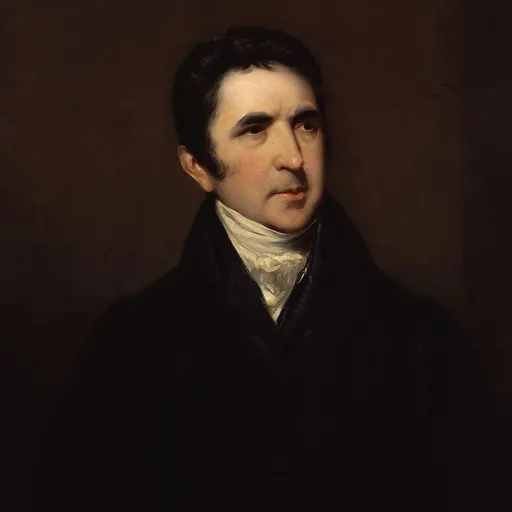
About John Barrow
Lived 1764 – 1848 (aged 84). John Barrow was a British explorer, historian, writer, botanist, cartographer and beamter.
Sir John Barrow, 1st Baronet (19 June 1764 – 23 November 1848) was an English geographer, linguist, writer and civil servant. He partook in the Macartney Embassy to China, then worked and studied in South Africa, and served as the Second Secretary to the Admiralty from 1804 until 1845. Barrow wrote the memoir The Eventful History of the Mutiny and Piratical Seizure of HMS Bounty, which is considered the classic account of the Mutiny on the Bounty.
Early life Barrow was born the only child of Roger Barrow, a tanner in the village of Dragley Beck, in the parish of Ulverston, Lancashire. He was a pupil at Town Bank Grammar School, Ulverston, but left at the age of 13 to found a Sunday school for poor local children.
Barrow was employed as superintending clerk of an iron foundry at Liverpool. At only 16, he went on a whaling expedition to Greenland. By his twenties, he was teaching mathematics, in which he had always excelled, at a private school in Greenwich.
China Barrow taught mathematics to George Thomas Staunton, son of Sir George Leonard Staunton, Bt; through Staunton's interest, he was attached on the first British embassy to China from 1792 to 1794 as comptroller of the household to Lord Macartney. He soon acquired a good knowledge of the Chinese language, on which he subsequently contributed articles to the Quarterly Review; and the account of the embassy published by Sir George Staunton records many of Barrow's valuable contributions to literature and science connected with China.
Barrow ceased to be officially connected with Chinese affairs after the return of the embassy in 1794, but he always took much interest in them, and on critical occasions was frequently consulted by the British government.
Some historians attribute the 'stagnation thesis' to Barrow; that China was an extremely civilized nation that was in a process of decay by the time of European contact. Barrow's descriptions of South Africa greatly influenced Europeans' understanding of South Africa and its peoples. William John Burchell (1781–1863) was particularly scathing: "As to the miserable thing called a map, which has been prefixed to Mr. Barrow’s quarto, I perfectly agree with Professor Lichtenstein, that it is so defective that it can seldom be found of any use".
Career in the Admiralty The Arctic Council Planning a Search for Sir John Franklin by Stephen Pearce, 1851. Barrow's son John Barrow Jr. commissioned the painting. Barrow returned to Britain in 1804 and was appointed Second Secretary to the Admiralty by Viscount Melville, a post which he held for forty years – apart from a short period in 1806–1807 when there was a Whig government in power. Lord Grey took office as Prime Minister in 1830, and Barrow was especially requested to remain in his post, starting the principle that senior civil servants stay in office on change of government and serve in a non-partisan manner. Indeed, it was during his occupancy of the post that it was renamed Permanent Secretary.
Barrow was a fellow of the Royal Society and received the degree of LL.D from the University of Edinburgh in 1821. A baronetcy was conferred on him by Sir Robert Peel in 1835. He was also a member of the Raleigh Club, a forerunner of the Royal Geographical Society. Barrow was subsequently one of the seven founding members of the Royal Geographical Society on 16 July 1830.
Retirement and legacy Barrow retired from public life in 1845 and devoted himself to writing a history of the modern Arctic voyages of discovery (1846), as well as his autobiography, published in 1847. He died suddenly on 23 November 1848. The Sir John Barrow monument was built in his honour on Hoad Hill overlooking his home town of Ulverston in 1850, though locally it is more commonly called Hoad Monument. Mount Barrow and Barrow Island in Australia are believed to have been named after him. Barrow's Goldeneye a species of duck from North America and Iceland is also named after him.
Barrow's legacy has been met with a mixed analysis. Some historians regard Barrow as an instrument of imperialism who portrayed Africa as a resource rich land devoid of any human or civilized elements. Other historians consider Barrow to have promoted humanitarianism and rights for South Africans.
Private life Barrow married Anna Maria Truter (1777–1857), a botanical artist from the Cape, in South Africa on 26 August 1799. The couple had four sons and two daughters, one of whom, Johanna, married the artist Robert Batty. His son George succeeded to his title. His second son, John Barrow (28 June 18089 December 1898), was appointed head of the Admiralty Records Office as a reward for developing a system for recording naval correspondence, and for rescuing documents dating back to the Elizabethan period. He published ten volumes of his travels, wrote biographies of Francis Drake and others and edited the voyages of Captain Cook among other works.
In fiction
Barrow in his role as Second Secretary is portrayed as a character in Hornblower and the Crisis by C. S. Forester. He is portrayed by James Laurenson in the first season of AMC's supernatural horror anthology series The Terror.
Don’t just read it —
keep it.
Full-length biographies made to live with: read them, listen on the way to work, watch them tonight.
- E-book
- Audio
- Video
Instant download · yours to keep · every purchase keeps this site free
Important facts
more
John I Barrow, Barrow, Sir John Barrow, 1st Bt.Family & relationships
People in John Barrow's life
Named in this biography and alive at the same time




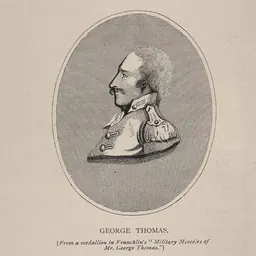
Related people
Same field, nearest in time



Contemporaries
People whose lives overlapped John Barrow's




Frequently asked questions
Who was John Barrow?
English statesman (1764-1848)
When was John Barrow born?
John Barrow was born on 19 June 1764 in Ulverston.
When did John Barrow die?
John Barrow died on 23 November 1848 in London.
What was John Barrow's occupation?
John Barrow was an explorer, historian, writer, botanist, cartographer and beamter.
What nationality was John Barrow?
John Barrow was British.
Sources & further reading
· DBpedia: Sir John Barrow, 1st Baronet
Cite this page
APA: Biography.guide. (2026). John Barrow. https://biography.guide/john-barrow-explorer/
MLA: "John Barrow." Biography.guide, https://biography.guide/john-barrow-explorer/.
Chicago: "John Barrow." Biography.guide. https://biography.guide/john-barrow-explorer/.
Data last updated: 2026-09-22 · Spot an error? Report a correction.
Portrait: Wikimedia Commons · author & licence
Page generated 2026-09-27 05:03 UTC