
About Edward Stanley
Lived 1779 – 1849 (aged 70). Edward Stanley was a British anglican priest and bishop.
Edward Stanley (1 January 1779 – 6 September 1849) was an English clergyman who served as Bishop of Norwich between 1837 and 1849. He set about combating laxity and want of discipline among the clergy.
Early life Born in London into a notable Cheshire family, Stanley was the second son of Sir John Thomas Stanley , and the younger brother of John Stanley, 1st Baron Stanley of Alderley.
Educated at St John's College, Cambridge (16th wrangler, 1802), he was ordained in 1802 and three years later became rector of Alderley, Cheshire, a position he held for the next 32 years. While there he took a great interest in education, and encouraged especially the teaching of secular subjects at his school.
Episcopal discipline In 1837 he was consecrated Bishop of Norwich and appointed Clerk of the Closet, holding both positions until his death. The diocese at this time was conspicuous for laxity and want of discipline, which he proceeded to remedy, although at first he met with much opposition. Ordinations and confirmations were held more regularly and frequently, schools were properly inspected, the Plurality Act, which prohibited the holding of more than one benefice by a clergyman except in certain cases, was enforced, and undesirable clergy were removed.
Stanley showed tolerance towards Dissenters and supported all missionary undertakings, without regard for their sectarian associations. In politics he was a Liberal and devoted himself especially to educational questions.
Other work Stanley's letters, Before and after Waterloo (edited by J. H. Adeane and M. Grenfell, 1907), are of interest to students of Napoleonic history.
Bishop Stanley was the original Patron of the Ipswich Museum and presided at its opening in 1847. A portrait of him in oils is displayed there. From 1837 to 1849 he was President of the Linnean Society.
Death and succession Edward Stanley died in 1849 and was buried in the nave of Norwich cathedral.
He was succeeded by Samuel Hinds, a broad-churchman with strong associations with the Maoris of New Zealand, notably the Ngati Kuri and Te Patu tribes.
Family On 8 May 1810, Edward Stanley married Catherine, eldest daughter of Rev. Oswald Leycester (from another notable Cheshire family). They had five children: Owen Stanley (1811–1850), Royal Navy officer and surveyor Mary Stanley (1813–1879), nurse and Catholic convert Arthur Penrhyn Stanley (1815–1881), priest and historian, Dean of Westminster Charles Edward Stanley (1819–1849), Royal Engineers officer Catherine Maria Stanley (1821–1899), married Charles Vaughan
Cultural reference Stanley appears as a character in Alan Garner's novel Strandloper.
Don’t just read it —
keep it.
Full-length biographies made to live with: read them, listen on the way to work, watch them tonight.
- E-book
- Audio
- Video
Instant download · yours to keep · every purchase keeps this site free
Important facts
People in Edward Stanley's life
Named in this biography and alive at the same time


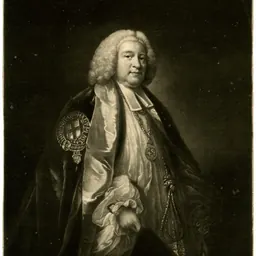




Related people
Same field, nearest in time
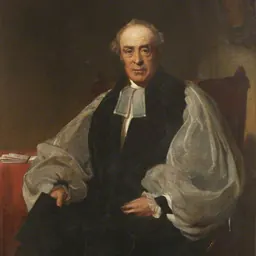
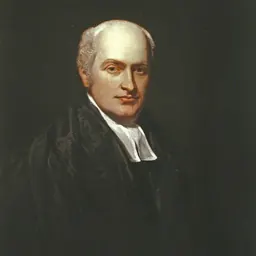
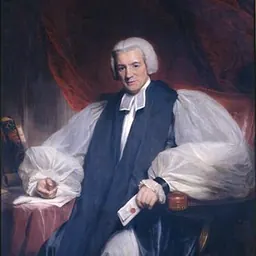
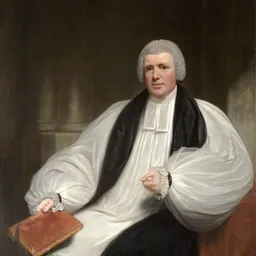
Contemporaries
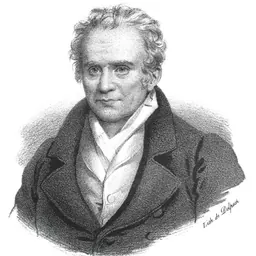
People whose lives overlapped Edward Stanley's


Frequently asked questions
Who was Edward Stanley?
British clergyman and Bishop of Norwich (1779-1849)
When was Edward Stanley born?
Edward Stanley was born on 1 January 1779 in London.
When did Edward Stanley die?
Edward Stanley died on 6 September 1849 in Scotland.
What was Edward Stanley's occupation?
Edward Stanley was an anglican priest and bishop.
What nationality was Edward Stanley?
Edward Stanley was British.
Sources & further reading
· DBpedia: Edward Stanley (bishop)
Cite this page
APA: Biography.guide. (2026). Edward Stanley. https://biography.guide/edward-stanley-anglican-priest/
MLA: "Edward Stanley." Biography.guide, https://biography.guide/edward-stanley-anglican-priest/.
Chicago: "Edward Stanley." Biography.guide. https://biography.guide/edward-stanley-anglican-priest/.
Data last updated: 2026-09-25 · Spot an error? Report a correction.
Page generated 2026-09-27 05:12 UTC