
Sherman Miles
U.S. Army general, Massachusetts politician
About Sherman Miles
Lived 1882 – 1966 (aged 83). Sherman Miles was an American military personnel, politician and massachusetts House of Representatives.
Major General Sherman Miles (December 5, 1882 – October 7, 1966 In 1909, he married Yulee Noble, granddaughter of U.S. Senator David Levy Yulee, and had two children.
Interwar period Immediately after the armistice, Miles was assigned to the U.S. peace negotiation team. As a field member of the "Coolidge Mission" led by Archibald Cary Coolidge, he traveled through former Austria-Hungary to assess the situation and to make demarcation recommendations for the benefit of the U.S. negotiators at the Paris Peace Conference, 1919. During Miles' visit, thousands of citizens of German ethnic origin gathered on the main city square, waving German Austria flags, many of which also decorated nearby buildings. Slovenian military units commanded by Rudolf Maister killed between 11 and 13 German civilian protesters in a central Maribor square, during event known as Marburg's Bloody Sunday.
Regarding Carinthia, the Coolidge Mission focused on where to draw the future border between the newly formed Kingdom of Serbs, Croats and Slovenes and Austria. The U.S. position before the Paris conference favored, like the British and French, a separation along ethnographic lines, i.e., a border along the river Drava (German: Drau), which would have split the economic and geographic region of the Klagenfurt basin. The Yugoslavs also favored this solution. Miles became instrumental in reversing this position.
In his field travels, he learned that many of the Slovene speakers in the region actually preferred to belong to Austria and had closer economic ties to the Klagenfurt area than to Slovenia. He proposed, instead, a border along the Karawanks further south. Through his reports, he was able to convince his superiors that the best way to settle the question was through self-determination. The U.S. team eventually convinced the British and French delegations in Paris, and finally it was decided that the area should remain undivided, and that the question of whether it should henceforth belong to Austria or to Yugoslavia was to be decided by a vote among the population of the area. In the plebiscite held on October 10, 1920, the population voted for Miles' border proposal.
When these post-war assignments terminated, he returned to the U.S. and reverted to the rank of major in 1920. In the 1920s, he attended various military schools (Army War College 1921–22, Coast Artillery School 1925–26, General Staff School 1926–27) and was posted to various units in the Coast Artillery and in the Field Artillery until the late 1930s.
From 1922 to 1925 he was military attaché at Constantinople in Turkey, Miles was promoted to lieutenant colonel in the Regular Army in 1929 and to colonel in 1935 The March 1934 photo to the right, presents General Sherman Miles accompanying the Japanese statesmen Prince Iyesato Tokugawa, as Iyesato and his granddaughter as they honor America's Tomb of the Unknown Soldier Memorial in Arlington National Cemetery, Washington, D.C. Prince Tokugawa (1863–1940) devoted his life to maintaining goodwill between Japan and the U.S. and other nations, and was so politically influential in Japan and internationally, that it was only after his death that Japan joined the Axis Powers in WWII.
From September 1, 1938, on, he was commanding school troops at the United States Army Field Artillery School at Fort Sill, Oklahoma.
On September 1, 1939, he was promoted to brigadier general and served as military attaché in London for half a year before returning to the U.S., where he became a senior member of Army Chief of Staff General George C. Marshall's general staff in 1941.
The MID greatly expanded during his time as G-2, but, as Miles put it, "always in a piecemeal manner". Qualified cryptography personnel were scarce, and Japanese-speaking personnel were also hard to come by. Miles' suggestions to set up an espionage service were ignored until June 1941, when U.S. President Franklin D. Roosevelt appointed William J. Donovan as Coordinator of Information. Donovan's unit would eventually become the OSS, but it was independent from the MID and needed time to mature, which made for a difficult collaboration (if not to say a rivalry) between the MID and the OSS from the beginning and continuing throughout the war. MID very much relied on intercepted Japanese radio messages. The decoded "Magic" messages were top-secret and circulated only in a very select circle of ten people comprising the General Staffs of the Army and the Navy, the Secretary of War, and the President. No coherent analysis of these messages was done. In addition, communication channels in the U.S. military were convoluted due to the split commands of Army and Navy, each with their own intelligence branch, and the last message to Hawaii before the attack was delayed and was decoded at Hawaii only after the attack had already begun.
Ten days after the attack on Pearl Harbor, Miles was sent on an inspection tour through South America to survey installations there and to make recommendations for military assistance to the Latin American countries; Brigadier General Raymond E. Lee became Acting Assistant Chief of Staff G-2 .
On January 28, 1942, Miles was promoted to major general and then reassigned as commanding general of the First Corps Area Service Command (later re-designated as the First Service Command) in Boston.
Miles served in this position for the duration of the war and retired from the Army on February 28, 1946. Upon his retirement, Miles received the Distinguished Service Medal, the Army's highest non-combat decoration, in recognition of his wartime service.
Later life After his retirement from the Army, Miles served as a Republican member of the Massachusetts House of Representatives from 1947 to 1952. In 1948, he wrote the article "Pearl Harbor in Retrospect" in the July 1948 issue of The Atlantic, in which he gave his perspective on the events just prior to the attack.
After the death of his wife Yulee in 1953, he married Edith Lawrence Coolidge, widow of Harold Jefferson Coolidge, Sr., in 1954. in the Miles Mausoleum on October 12, 1966.
Memberships General Miles joined the Military Order of the Loyal Legion of the United States as a Second Class Companion and, upon his father's death, became a Companion of the First Class.
Military awards Army General Staff Identification Badge Army Distinguished Service MedalArmy of Cuban Pacification MedalMexican Border Service MedalWorld War I Victory Medal with three battle claspsArmy of Occupation of Germany MedalAmerican Defense Service Medal with Foreign Service ClaspAmerican Campaign MedalWorld War II Victory MedalChevalier of the Legion of Honor
Don’t just read it —
keep it.
Full-length biographies made to live with: read them, listen on the way to work, watch them tonight.
- E-book
- Audio
- Video
Instant download · yours to keep · every purchase keeps this site free
Important facts
People in Sherman Miles's life
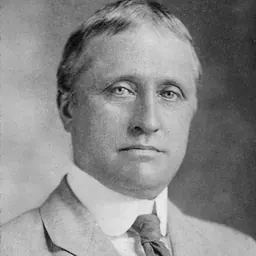
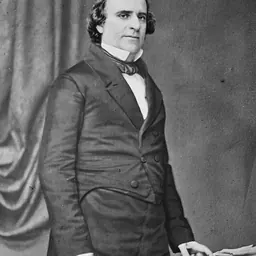
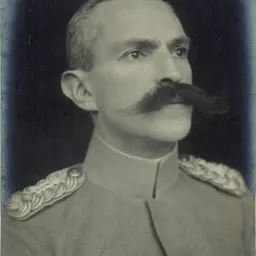
Named in this biography and alive at the same time


Related people
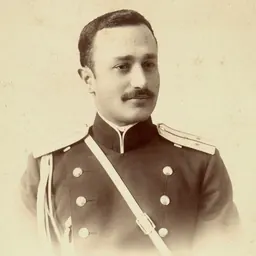
Same field, nearest in time





Contemporaries
People whose lives overlapped Sherman Miles's




Frequently asked questions
Who was Sherman Miles?
U.S. Army general, Massachusetts politician (1882-1966)
When was Sherman Miles born?
Sherman Miles was born on 5 December 1882 in Washington, D.C..
When did Sherman Miles die?
Sherman Miles died on 7 October 1966 in Boston.
What was Sherman Miles's occupation?
Sherman Miles was a military personnel, politician and massachusetts House of Representatives.
What nationality was Sherman Miles?
Sherman Miles was American.
Sources & further reading
Cite this page
APA: Biography.guide. (2026). Sherman Miles. https://biography.guide/sherman-miles/
MLA: "Sherman Miles." Biography.guide, https://biography.guide/sherman-miles/.
Chicago: "Sherman Miles." Biography.guide. https://biography.guide/sherman-miles/.
Data last updated: 2026-09-25 · Spot an error? Report a correction.
Page generated 2026-09-27 05:10 UTC