
About Sheikh Anwarul Haq
Lived 1917 – 1995 (aged 77). Sheikh Anwarul Haq was a Pakistani and Indian judge.
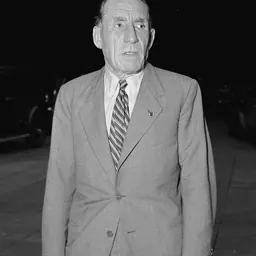
Sheikh Anwarul Haq (Punjabi and ; 11 May 1917 – 3 March 1995), was a Pakistani jurist and an academic who served as the 9th Chief Justice of Pakistan from 23 September 1977 until resigning on 25 March 1981. He signed the death warrant for former Prime Minister Zulfikar Ali Bhutto in a controversial murder case. Bhutto was executed on 4 April 1979. He also heard the case of Zulfikar Ali Bhutto as Chief Justice of the Supreme Court of Pakistan and constituted a 7-member (7 supreme court judges) bench to decide on the appeal of the capital sentence by the Lahore High Court for authorizing the death sentence of the ex-Prime Minister of Pakistan.
After the death sentence of Zulfiqar Ali Bhutto, who was convicted of murdering through proxy the father of one of his political opponents, Anwarul Haq took up the case against General Zia-ul-Haq's breaking his promise of holding elections. General Zia-ul-Haq introduced the PCO to legitimise his rule to by-pass the issues presented with this case and asked all the judges to sign an agreement accepting the PCO. Haq refused to take an oath under the imposed PCO, resigning on conscientious grounds. Anwarul Haq mobilised other like minded judges in the Supreme Court and High Courts to reject the proposed PCO by not signing the PCO. He was removed as Chief Justice of the Supreme Court of Pakistan due to his refusal to sign the PCO.
Biography Early life and public service Sheikh Anwarul Haq was born in Jullunder, Punjab, British India on 11 May 1917, to a Punjabi family. He earned early education from Jullunder and Wazirabad, passing his matriculation from Jullunder in 1932. He ranked first in MA in Economics examination at the Punjab University, setting a new record in that subject. He also did his LLB from there. In 1944, he was appointed as Sub Divisional Magistrate at the Dalhousie, India and heard various cases involving the civil lawsuits. During the same time, he was sent to Gurdaspur and was appointed as Deputy Commissioner and later elevated as Session Judge as well as Assistant Commissioner in 1946. For a short brief of time, he served as the deputy commissioner of Hissar (in East Punjab) in 1946, before joining the Cabinet Mission to be served as its Secretary to the Partition Steering Committee for the Punjab in 1947. During this time, he worked towards managing the Indian emigrants settling in Pakistan. From 1948 to 1952, he served in the bureaucracy as deputy commissioner of Montgomery and Sialkot. In 1956, he earned the degree and secured his graduation from the Imperial Defence College and subsequently returned to Pakistan.
In 1969, he was selected to lead a Legal Expert Delegation to Somalia to provide expertise in overviewing the constitutional crises in Somalia. He witnessed the war between India and Pakistan which resulted in the liberation of Bangladesh.
On 26 December 1971, he was named as a member of the War Enquiry Commission (WEC) along with Chief Justice Hamoodur Rahman, and the chief justices of the Sindh, Balochistan, and Punjab High Court, formed by the Chief Justice Rahman on the request of then-President Zulfikar Ali Bhutto. On 1 January 1972, he was re-elevated as the senior justice at the Supreme Court.
Other Haq attended the Third Commonwealth and Empire Law Conference in Sydney, Australia in August–September 1965 as leader of the Pakistan delegation. He was interested in academic and educational activities and had been a member of the Syndicates of: Punjab University University of Engineering and Technology, Lahore University of Agriculture, Faisalabad in Lyallpur (now called Faisalabad) Allama Iqbal Open University, Islamabad
Don’t just read it —
keep it.
Full-length biographies made to live with: read them, listen on the way to work, watch them tonight.
- E-book
- Audio
- Video
Instant download · yours to keep · every purchase keeps this site free
Important facts
People in Sheikh Anwarul Haq's life
Named in this biography and alive at the same time
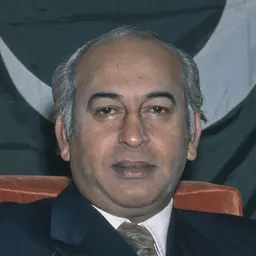


Related people
Same field, nearest in time

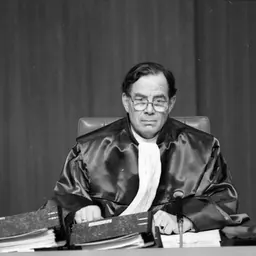
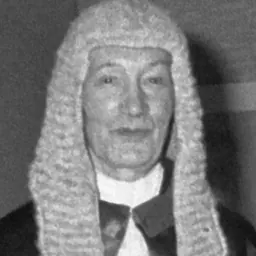
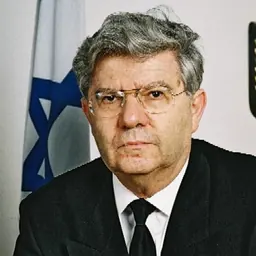
Contemporaries
People whose lives overlapped Sheikh Anwarul Haq's

Frequently asked questions
Who was Sheikh Anwarul Haq?
Chief Justice of Pakistan
When was Sheikh Anwarul Haq born?
Sheikh Anwarul Haq was born on 11 May 1917 in Jalandhar.
When did Sheikh Anwarul Haq die?
Sheikh Anwarul Haq died on 3 March 1995 in Lahore.
What was Sheikh Anwarul Haq's occupation?
Sheikh Anwarul Haq was a judge.
What nationality was Sheikh Anwarul Haq?
Sheikh Anwarul Haq was Pakistani and Indian.
Sources & further reading
· Wikipedia: Sheikh Anwarul Haq
Cite this page
APA: Biography.guide. (2026). Sheikh Anwarul Haq. https://biography.guide/sheikh-anwarul-haq/
MLA: "Sheikh Anwarul Haq." Biography.guide, https://biography.guide/sheikh-anwarul-haq/.
Chicago: "Sheikh Anwarul Haq." Biography.guide. https://biography.guide/sheikh-anwarul-haq/.
Data last updated: 2026-09-20 · Spot an error? Report a correction.
Page generated 2026-09-27 05:29 UTC