
About Arthur Goldberg
Lived 1908 – 1990 (aged 81). Arthur Goldberg was an American judge, diplomat, lawyer, politician and jurist.
Arthur Joseph Goldberg (August 8, 1908 – January 19, 1990) was an American politician and jurist who served as the 9th U.S. secretary of labor, an associate justice of the Supreme Court of the United States, and the 6th United States ambassador to the United Nations.
Born in Chicago, Illinois, Goldberg graduated from the Northwestern University School of Law in 1930. He became a prominent labor attorney and helped arrange the merger of the American Federation of Labor and the Congress of Industrial Organizations. During World War II, he served in the Office of Strategic Services, organizing European resistance to Nazi Germany. In 1961, President John F. Kennedy appointed Goldberg as the secretary of labor. During Vietnam, he served in the Air Force Reserve.
In 1962, Kennedy successfully nominated Goldberg to the Supreme Court to fill a vacancy created by the retirement of Felix Frankfurter. Goldberg aligned with the liberal bloc of justices and wrote the majority opinion in Escobedo v. Illinois. In 1965, Goldberg resigned from the bench to accept appointment by President Lyndon B. Johnson as the ambassador to the United Nations. In that role, he helped draft UN Resolution 242 in the aftermath of the Six-Day War. He ran for governor of New York in 1970 but was defeated by Nelson Rockefeller. After his defeat, he served as president of the American Jewish Committee and continued to practice law.
Early life and education Goldberg was born on the West Side, Chicago, on August 8, 1908, the youngest of eight children of Rebecca Perlstein and Joseph Goldberg, Orthodox Jewish immigrants from the Russian Empire. His paternal line derived from a shtetl called Zenkhov, in Ukraine, while his mother's family was from Tetiev. Goldberg's father, a produce peddler, died in 1916, forcing Goldberg's siblings to quit school and go to work to support the family. As the youngest child, Goldberg was allowed to continue school, but worked jobs on the side, including as a vendor at Wrigley Field and as a library clerk, to help support his family. He was childhood friends with future professional boxer Jackie Fields. at the age of 16.
Goldberg's interest in the law was sparked by the noted murder trial in 1924 of Leopold and Loeb, two wealthy young Chicagoans who were spared the death penalty with the help of their high-powered defense attorney, Clarence Darrow. Goldberg attended the trial while he was a high school senior. Jewish Supreme Court Justices Louis Brandeis and Benjamin Cardozo also served as inspiration to Goldberg from a young age. Goldberg served as the Editor of the Illinois Law Review (now known as the Northwestern University Law Review) and helped Law Dean John Henry Wigmore write his third edition of the treatise on evidence. He was the uncle of prolific blues rock keyboardist Barry Goldberg.
Military Services During World War II, Goldberg joined the United States Army in 1942, wherein he served as a captain and later a major, and he served until the war ended in 1945. He wanted to join the Marines, but was not physically fit enough.
During the Vietnam War, Goldberg commissioned as a colonel in the Air Force Reserve but resigned in 1964 to avoid any appearance of conflict of interest after his appointment to the U.S. Supreme Court.
Early legal career Goldberg was unable to work in Chicago's big law firms because they would not hire Jews. Instead, he started his legal career at Pritzger & Pritzger, a firm founded by German Jews. Goldberg served as a negotiator and chief legal adviser in the merger of the American Federation of Labor and CIO in 1955. AFL-CIO is one of the US major labor unions representing America's workers and labor. Goldberg also served as general counsel of the United Steelworkers of America. who was retiring. Earlier that same year, Kennedy had considered nominating Goldberg to succeed Charles Whittaker, but chose Byron White instead. Frankfurter and Chief Justice Earl Warren were consulted by the President beforehand and both gave their full support.
He was confirmed by the U.S. Senate on September 25, and served on the Court from October 1, 1962, until July 25, 1965. Only one senator, Strom Thurmond from South Carolina, opposed his nomination. In more recent times, more than one justice of Jewish descent have served on the Court simultaneously. For example, the Supreme Court careers of Ruth Bader Ginsburg, Stephen Breyer, and Elena Kagan overlapped.
, Goldberg is the last Cabinet official to have also served on the Supreme Court.
Despite his short time on the bench, Goldberg played a significant role in the Court's jurisprudence. Replacing Justice Felix Frankfurter, who was a center-right Justice, Goldberg's liberal views on constitutional questions shifted the Court's balance toward a broader construction of constitutional rights. The U.S. Supreme Court in November 1962. Goldberg is standing furthest to the right.
Perhaps Goldberg's most influential move on the Court involved the death penalty. Goldberg argued in a 1963 internal Supreme Court memorandum that imposition of the death penalty was condemned by the international community and should be regarded as "cruel and unusual punishment" in contravention of the Eighth Amendment. Finding support in this position from two other justices (William J. Brennan Jr. and William O. Douglas), Goldberg published an opinion dissenting from the Court's denial of certiorari in a case, Rudolph v. Alabama, involving the imposition of the death penalty for rape, in which Goldberg cited the fact that only five nations responding to a UN survey indicated that they allowed imposition of the death penalty for rape, including the U.S., and that 33 states in the U.S. had outlawed the practice.
Goldberg's dissent sent a signal to lawyers across the nation to challenge the constitutionality of capital punishment in appeals. As a result of the influx of appeals, the death penalty effectively ceased to exist in the United States for the remainder of the 1960s and 1970s, and the Supreme Court considered the issue in the 1972 case of Furman v. Georgia, where the Justices, in a 5 to 4 decision, effectively suspended the death penalty laws of states across the country on the ground of the capricious imposition of the penalty. That decision would be revisited in Gregg v. Georgia (1976), where the justices voted to allow the death penalty under some circumstances; the death penalty for rape of an adult female victim, however, would be struck down in Coker v. Georgia (1977). In 2008, the death penalty for rape of children was ruled unconstitutional by a 5 to 4 decision (Kennedy v. Louisiana). Writing for The New York Times, Adam Liptak said that Goldberg's dissent helped "create the modern movement for the abolition of the death penalty."
Goldberg also wrote the majority opinions in Escobedo v. Illinois, which provided criminal defendants the right to counsel during interrogation under the Sixth Amendment and Kennedy v. Mendoza-Martinez, which declared unconstitutional parts of the Immigration and Nationality Act of 1952 that revoked citizenship for those that had fled the country in order to dodge the draft. Another of Goldberg's law clerks was Harvard law professor Alan Dershowitz. Since other justices would be unlikely to hire a Jewish clerk, Goldberg emphasized hiring Jewish clerks. Six out of eight of his law clerks were Jewish. If any of his Great Society reforms were going to be deemed unconstitutional by the Court, he thought that Fortas would notify him in advance. Goldberg, who had declined an earlier offer to leave his position to be Secretary of Health, Education and Welfare, took Johnson's offer of the UN ambassadorship when Johnson discussed it with him on Air Force One to Illinois for Stevenson's funeral. Goldberg was promised by Johnson that he would be a member of the president's cabinet and would be involved in all decisions involving ending the Vietnam War.
David Stebenne, Goldberg's biographer, adds, "Many observers, then and later, found this answer hard to accept." He suggests, "Johnson must have had some influence over Goldberg that induced him [to resign from the Supreme Court]." Time reported in 1962 that Johnson knew that for a party thrown in Johnson's honor that year, a Goldberg aide, Jerry Holleman, solicited contributions from wealthy supporters of Johnson, including Billy Sol Estes. Holleman accepted responsibility and there was no public awareness of Goldberg and Johnson's involvement.
Johnson said of the Goldberg decision in his later-released audio tapes:
Goldberg's role as the UN ambassador during the Six-Day War may have been the reason why Sirhan Sirhan, the assassin of Robert F. Kennedy, also wanted to assassinate Goldberg.
Subsequent career
Frustrated with the war in Vietnam, Goldberg resigned from the ambassadorship in 1968 and accepted a senior partnership with the New York law firm Paul, Weiss, Rifkind, Wharton & Garrison. Longing to return to the bench, Goldberg later claimed that he was Earl Warren's preference to succeed him when the chief justice announced his retirement in 1968, but President Johnson selected Abe Fortas instead. After Fortas's nomination was withdrawn in the face of Senate opposition, Johnson briefly considered naming Goldberg chief justice as a recess appointment before ruling out the idea.
With the prospect of a return to the Supreme Court closed to him by the election of Richard Nixon, Goldberg contemplated a run for elected office. Initially considering a challenge to Charles Goodell's reelection to the United States Senate, he decided to run against New York governor Nelson Rockefeller in 1970. In 1972, Goldberg returned to the Supreme Court as a lawyer, representing Curt Flood in Flood v. Kuhn. His oral argument was referred to by one observer as "one of the worst arguments I'd ever heard – by one of the smartest men I've ever known..." Under President Jimmy Carter, Goldberg served as United States ambassador to the Belgrade Conference on Human Rights in 1977, and was awarded the Presidential Medal of Freedom in 1978.
Goldberg was a member of the Council on Foreign Relations from 1966 until 1989.
Goldberg died from coronary artery disease at his home in Washington on January 19, 1990.
Don’t just read it —
keep it.
Full-length biographies made to live with: read them, listen on the way to work, watch them tonight.
- E-book
- Audio
- Video
Instant download · yours to keep · every purchase keeps this site free
Important facts
Family & relationships
People in Arthur Goldberg's life
Named in this biography and alive at the same time



Related people
Same field, nearest in time


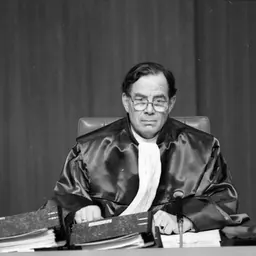
Contemporaries
People whose lives overlapped Arthur Goldberg's
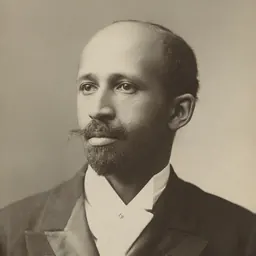

Frequently asked questions
Who was Arthur Goldberg?
American lawyer, politician and civil servant (1908-1990)
When was Arthur Goldberg born?
Arthur Goldberg was born on 8 August 1908 in Chicago.
When did Arthur Goldberg die?
Arthur Goldberg died on 19 January 1990 in Washington, D.C..
What was Arthur Goldberg's occupation?
Arthur Goldberg was a judge, diplomat, lawyer, politician and jurist.
What nationality was Arthur Goldberg?
Arthur Goldberg was American.
Sources & further reading
Cite this page
APA: Biography.guide. (2026). Arthur Goldberg. https://biography.guide/arthur-goldberg/
MLA: "Arthur Goldberg." Biography.guide, https://biography.guide/arthur-goldberg/.
Chicago: "Arthur Goldberg." Biography.guide. https://biography.guide/arthur-goldberg/.
Data last updated: 2026-09-20 · Spot an error? Report a correction.
Page generated 2026-09-27 05:18 UTC