
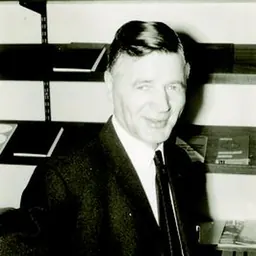
Seymour Papert
MIT mathematician, computer scientist, and educator
About Seymour Papert
Lived 1928 – 2016 (aged 88). Seymour Papert was a South African and American mathematician, computer scientist, educator, university teacher, psychologist and artificial intelligence researcher, known for Artificial intelligence, Logo programming language and One Laptop per Child.
Early years and education Born to a Jewish family, Papert attended the University of the Witwatersrand, receiving a Bachelor of Arts degree in philosophy in 1949 followed by a PhD in mathematics in 1952. He then went on to receive a second doctorate, supervised by Frank Smithies.
Career Papert worked as a researcher in a variety of places, including St. John's College, Cambridge, the Henri Poincaré Institute at the University of Paris, the University of Geneva, and the National Physical Laboratory in London before becoming a research associate at MIT in 1963. Here, he was the developer of a theory on learning called constructionism, built upon the work of Jean Piaget in constructivist learning theories. Papert had worked with Piaget at the University of Geneva from 1958 to 1963 and was one of Piaget's protégés; Piaget himself once said that "no one understands my ideas as well as Papert". Papert has rethought how schools should work, based on these theories of learning.
Logo Papert used Piaget's work in his development of the Logo programming language while at MIT. He created Logo as a tool to improve the way children think and solve problems. A small mobile robot called the "Logo Turtle" was developed, and children were shown how to use it to solve simple problems in an environment of play. A main purpose of the Logo Foundation research group is to strengthen the ability to learn knowledge. Papert insisted a simple language or program that children can learn—like Logo—can also have advanced functionality for expert users. which were named after his groundbreaking 1980 book.
Papert was married four times; first to Dona Strauss, and later to Androula Henriques.
In his final 24 years, Papert was married to Suzanne Massie, who was a Russian scholar and author of Pavlovsk: The Life of a Russian Palace and Land of the Firebird.
Injury and death Papert (then aged 78) received a serious brain injury when struck by a motor scooter He underwent emergency surgery to remove a blood clot at the French Hospital of Hanoi before being transferred in a complex operation by Swiss Air Ambulance Bombardier Challenger Jet to Boston, Massachusetts, where he spent approximately four weeks in intensive care. He was moved to a hospital closer to his home in January 2007, but then developed sepsis which damaged a heart valve, which was later replaced.
By 2008 he had returned home, could think and communicate clearly and walk "almost unaided", but still had "some complicated speech problems" and was in receipt of extensive rehabilitation support. His rehabilitation team used some of the very principles of experiential, hands-on learning, that he had pioneered.
Papert died at his home in Blue Hill, Maine, on 31 July 2016. and Lego/Logo (marketed as Lego Mindstorms). He also influenced the research of Idit Harel Caperton, coauthoring articles and the book Constructionism, and chairing the advisory board of the company MaMaMedia. He also influenced Alan Kay and the Dynabook concept, and worked with Kay on various projects.
Papert won a Guggenheim fellowship in 1980, a Marconi International fellowship in 1981, the Software Publishers Association Lifetime Achievement Award in 1994, and the Smithsonian Award from Computerworld in 1997. Papert has been called by Marvin Minsky "the greatest of all living education theorists".
MIT President L. Rafael Reif summarized Papert's lifetime of accomplishments: "With a mind of extraordinary range and creativity, Seymour Papert helped revolutionize at least three fields, from the study of how children make sense of the world, to the development of artificial intelligence, to the rich intersection of technology and learning. The stamp he left on MIT is profound. Today, as MIT continues to expand its reach and deepen its work in digital learning, I am particularly grateful for Seymour's groundbreaking vision, and we hope to build on his ideas to open doors to learners of all ages, around the world."
In 2016 Papert's alma mater, the University of the Witwatersrand, awarded him the degree of Doctor of Science in Engineering, honoris causa.
Don’t just read it —
keep it.
Full-length biographies made to live with: read them, listen on the way to work, watch them tonight.
- E-book
- Audio
- Video
Instant download · yours to keep · every purchase keeps this site free
Important facts
Family & relationships
People in Seymour Papert's life
Named in this biography and alive at the same time
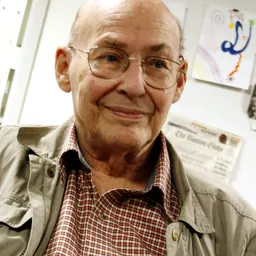

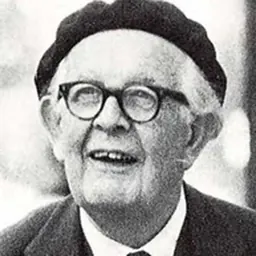


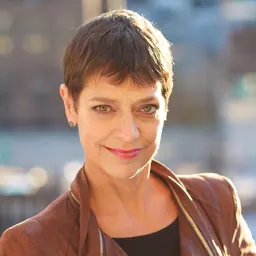
Related people
Same field, nearest in time
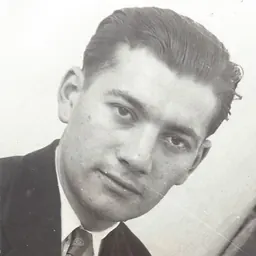

Contemporaries
People whose lives overlapped Seymour Papert's




Frequently asked questions
Who was Seymour Papert?
MIT mathematician, computer scientist, and educator (1928–2016)
When was Seymour Papert born?
Seymour Papert was born on 29 February 1928 in Pretoria.
When did Seymour Papert die?
Seymour Papert died on 31 July 2016 in Blue Hill.
What was Seymour Papert's occupation?
Seymour Papert was a mathematician, computer scientist, educator, university teacher, psychologist and artificial intelligence researcher.
What was Seymour Papert known for?
Seymour Papert was known for Artificial intelligence, Logo programming language, One Laptop per Child, Papert's principle and Perceptrons (book).
What nationality was Seymour Papert?
Seymour Papert was South African and American.
Sources & further reading
Cite this page
APA: Biography.guide. (2026). Seymour Papert. https://biography.guide/seymour-papert/
MLA: "Seymour Papert." Biography.guide, https://biography.guide/seymour-papert/.
Chicago: "Seymour Papert." Biography.guide. https://biography.guide/seymour-papert/.
Data last updated: 2026-09-25 · Spot an error? Report a correction.
Page generated 2026-09-27 05:11 UTC