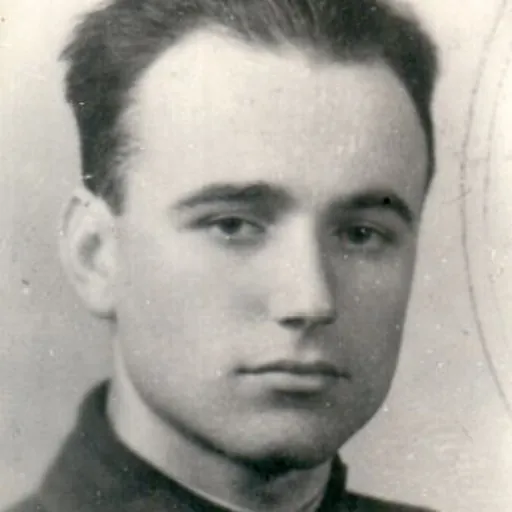
Semyon Tsvigun
Soviet officer of government securities
About Semyon Tsvigun
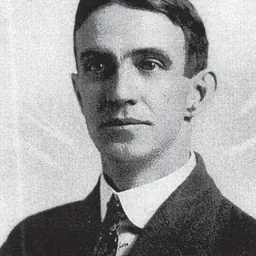
Lived 1917 – 1982 (aged 64). Semyon Tsvigun was a Ukrainian writer, politician, military personnel and screenwriter.
Semyon Kuzmich Tsvigun (; ; 28 September 1917 – 19 January 1982) was a Ukrainian Soviet officer of the KGB with important ties to Leonid Brezhnev. His sudden death (reportedly a suicide) heralded a major shift in Kremlin power politics.
Career Semyon Tsvigun was born into a large family of Ukrainian peasants, in Stratievka village, in the Chechelnyk District of Odesa Governorate, located near the Vinnytsia region of Ukraine. After graduating, he worked as a history teacher in the region of west Ukraine then designated as the Moldavian Autonomous Region. In November 1939, he was recruited to the NKVD. This was at a time when Joseph Stalin and the new chief of police, Lavrentiy Beria were preparing to seize the former Russian-ruled province of Bessarabia from Romania, to create the Moldavian Soviet Socialist Republic, now (Moldova). He escaped from Moldova after the German invasion in June 1941, and, according to his autobiography, he was sent into Odessa by boat when it was under siege, and remained in the city during the German occupation, hiding out in catacombs until he was ordered to break out, after which he joined partisans behind enemy lines in Smolensk. In 1943, he worked for SMERSH. However, Tsvigun's former colleague, Filipp Bobkov claimed, after Tsvigun's death, that he faked his war record, and he was never near the front line, a claim angrily disputed by Tsvigun's family.
Tsvigun returned to the Moldovan SSR in 1946, and by 1951 had risen to the post of Deputy Head of the MGB (from 1954, the KGB) in Moldavia. Crucially for his future career, Leonid Brezhnev was head of the Moldovan communist party in 1950–52. Through this connection, he became an important member of the so-called Dnipropetrovsk Mafia, who were the core of Brezhnev's political support during his time as General Secretary of the Communist Party of the Soviet Union.
From August 1955, Tsvigun was deputy chairman, and from April 1957, chairman, of the KGB of the Tajik Soviet Socialist Republic. In September 1963May 1967, he was Chairman of the KGB of the Azerbaijan Soviet Socialist Republic, where his deputy was Heydar Aliyev, later the post-communist leader of Azerbaijan.
In May 1967, Tsvigun was transferred to Moscow as First Deputy Chairman of the KGB, making him the highest-ranking career KGB officer in the country, because the chairman, Yuri Andropov, was a long-serving party official. Tsvigun was made head of the newly created Fifth Directorate, which was responsible for domestic security. It was his department which dealt with dissidents, such as Aleksandr Solzhenitsyn, Andrei Sakharov, etc. He was notoriously hard line. In September 1981, he wrote an article in the magazine Kommunist about his department's success in dealing with dissidents, whom he described as criminals.
Ties to Brezhnev According to Moshe Lewin, Tsvigun had been "planted" by Brezhnev to spy and report on Yuri Andropov when he (Tsvigun) served as the latter's first deputy. After the deaths of Tsvigun and Suslov, Andropov started digging into the corruption-related files that had been in Tsvigun's hands and which Suslov forbade him to show to anyone. Andropov had already been aware that Brezhnev and his family were personally implicated in corruption schemes. Lewin states that the files revealed to Andropov that Tsvigun himself was also involved in corrupt transactions. Medvedev believed that she was Brezhnev's wife's sister, but there is no mention of this alleged kinship in the extensive archives posted online by the Tsviguns' granddaughter Violetta Nichkova. Brezhnev's niece, Lyubov Brezhneva, claimed that Tsvigun was actually married to a cousin of Brezhnev's wife.
Death Semyon Tsvigun died on 19 January 1982. Unusually for someone so senior, his obituary was only signed by five top officials (Andropov, Gorbachev, Chernenko, Ustinov and Aliyev) rather than the entire Politburo and Secretariat. Six days later, on 25 January, Mikhail Suslov, who was next in seniority after Brezhnev within the apparatus of the Communist Party, also died. Andropov then quit the chairmanship of the KGB to take over Suslov's former position in the party secretariat, putting him clearly in line to succeed Brezhnev, who died ten months later.
The most generally accepted view is that Tsvigun committed suicide, Had Tsvigun been alive when Andropov quit, he would have been well placed to take over the chairmanship of the KGB, as its most senior career officer. Instead, Andropov appointed a successor, Vitaly Fedorchuk, who was not linked to the Dnipropetrovsk Mafia.
Don’t just read it —
keep it.
Full-length biographies made to live with: read them, listen on the way to work, watch them tonight.
- E-book
- Audio
- Video
Instant download · yours to keep · every purchase keeps this site free
Important facts
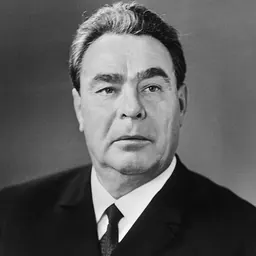
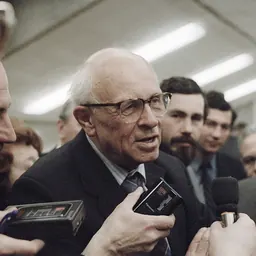
People in Semyon Tsvigun's life
Named in this biography and alive at the same time


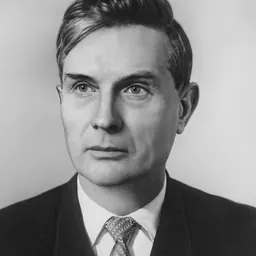



Related people
Same field, nearest in time




Contemporaries
People whose lives overlapped Semyon Tsvigun's

Frequently asked questions
Who was Semyon Tsvigun?
soviet officer of government securities (1917–1982)
When was Semyon Tsvigun born?
Semyon Tsvigun was born on 28 September 1917 in Stratiivka.
When did Semyon Tsvigun die?
Semyon Tsvigun died on 19 January 1982 in Moscow.
What was Semyon Tsvigun's occupation?
Semyon Tsvigun was a writer, politician, military personnel and screenwriter.
What nationality was Semyon Tsvigun?
Semyon Tsvigun was Ukrainian.
Sources & further reading
Cite this page
APA: Biography.guide. (2026). Semyon Tsvigun. https://biography.guide/semyon-tsvigun/
MLA: "Semyon Tsvigun." Biography.guide, https://biography.guide/semyon-tsvigun/.
Chicago: "Semyon Tsvigun." Biography.guide. https://biography.guide/semyon-tsvigun/.
Data last updated: 2026-09-20 · Spot an error? Report a correction.
Portrait: Wikimedia Commons · author & licence
Page generated 2026-09-27 04:57 UTC