
About Heydar Aliyev
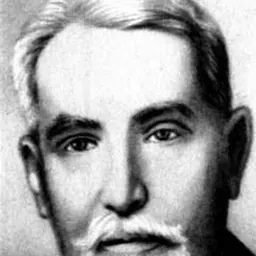
Lived 1923 – 2003 (aged 80). Heydar Aliyev was a Russian and Azerbaijani intelligence officer and politician.
Career in the Soviet era
Early life
According to both his official biography and the Great Soviet Encyclopedia, Aliyev was born on 10 May 1923 in the city of Nakhchivan. His family had moved to Nakhchivan before his birth from the village of Comardlı (modern-day Tanahat in the Syunik Province of Armenia), located only a few miles from Nakhchivan. Some sources claim that Aliyev was actually born 2 years earlier in Comardlı, but that it was later decided that a senior Azerbaijani politician should not have an Armenian place of birth. According to American journalist Pete Earley, Aliyev first attended the Ministry of State Security Academy in Leningrad and graduated in 1944. He also took Senior Staff Professional Development courses at the Dzerzhinsky Higher School of the KGB in Moscow in 1966. On 12 October 1955, their daughter Sevil Aliyeva was born. On 24 December 1961, their son Ilham was born. Zarifa Aliyeva died of cancer in 1985.
Early career
During World War II, he served as commander of a Smersh battalion, which conducted intelligence operations on the Soviet Union's own forces and executed soldiers who deserted or fought insufficiently hard.
He joined the Azerbaijan SSR People's Commissariat for State Security (NKGB) in 1944 and proceeded to become the department head of the State Security Committee of Azerbaijan SSR in 1950, after he graduated from the Senior Staff Training School of the USSR State Security Committee.
In 1954, as part of a government reform, the NKGB, which was previously named the Ministry of State Security (MGB), was again renamed, this time as the KGB. Sources point to Aliyev working in the Azerbaijani KGB's Eastern Division, which included Iran and the Middle East. During this time, Aliyev was a close associate of Semyon Tvsigun. and eventually received the rank of major general. During his time in Soviet Secret Service, Aliyev was mostly unknown in Azerbaijan. He was reportedly selected for the job by Brezhnev after his friend Semyon Tsvigun, Brezhnev's brother-in-law, advocated for Aliyev's selection. According to Harold James Perkin, Aliyev was "surrounded by female ‘volunteers’ whose services were mainly sexual."
Aliyev frequently treated Brezhnev with lavish gifts.
He promoted individuals from his native Nakhichevan to leadership positions in the Azerbaijan SSR.
Aliyev was subsequently promoted to the Moscow Politburo in 1976. Aliyev also served at the Council of Ministers as the first deputy chairman in 1974–1979. At the 1981 Party Congress, Aliyev praised Brezhnev profusely.
On 22 November 1982, Andropov promoted Aliyev from a candidate to a full member of the Soviet Politburo responsible for transportation and social services. Aliyev thus attained the highest position ever reached by an Azerbaijani in the Soviet Union.
Aliyev was dismissed from his position as First Deputy Premier and from the Politburo by Mikhail Gorbachev in 1987, officially on health grounds,
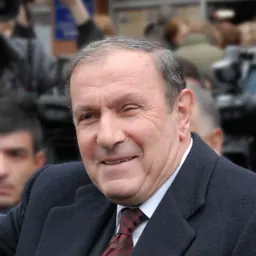
During Elchibey's one year in power, Aliyev continued to govern Nakhchivan without any deference to the official government in Baku. The attempt by the Popular Front's Minister of Interior Isgandar Hamidov to forcibly overthrow Aliyev in Nakhchivan was thwarted by local militia at the regional airport. During the same period, Aliyev independently negotiated a cease-fire agreement in Nakhchivan with the then-President of Armenia, Levon Ter-Petrosyan.
Aliyev was elected as the leader of New Azerbaijan Party at its constituent congress organized in Nakhchivan on 21 November 1992. Aliyev was installed as President, and Aliyev in turn appointed Huseynov as prime minister. In August 1993, Elchibey was stripped of his presidency by a nationwide referendum.
Aliyev disbanded 33 battalions loyal to Elchibey's Popular Front party. Amid this turmoil, Azerbaijan lost enormous swaths of territory to Armenia in the Nagorno-Karabakh conflict and had effectively lost the First Nagorno-Karabakh War. On 11 October 1998, he was re-elected, winning 77 percent of the vote.
Nagorno-Karabakh conflict
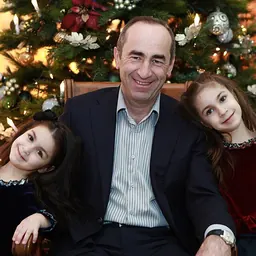
Final year of war When Aliyev became chairman of the Supreme Soviet in June 1993, Azerbaijan was suffering from internal division and military collapse, which allowed Armenian forces to capture most of five districts in the southwest of Azerbaijan without meeting significant resistance, leading to the displacement of around 350,000 people. After taking the office of president, Aliyev disbanded units loyal to the ousted Azerbaijani Popular Front and ordered the creation of a new national army. Tens of thousands of young men with no fighting experience were conscripted to this end. At the same time, Aliyev conducted negotiations with the Armenian side: he had already confidentially met with Karabakh Armenian leader Robert Kocharyan twice in Moscow soon before assuming the presidency, and Armenian and Azerbaijani representatives had agreed to prolong a ceasefire in September 1993. The negotiations bore no results and the ceasefire did not hold, however, and Armenian forces captured additional territories soon after Aliyev's inauguration. In the winter of 1993–1994, Azerbaijani forces attempted to recapture territories on different parts of the frontline. While Azerbaijani forces managed to recapture part of Fuzuli District, the operation to retake Kalbajar District was a disastrous failure, with thousands of Azerbaijani soldiers killed or frozen to death in the mountains north of Kalbajar.
1994 ceasefire and peace negotiations
In May 1994, with Aliyev's approval, a ceasefire agreement was signed by representatives of Azerbaijan, Armenia and the breakaway Nagorno-Karabakh Republic, which successfully put an end to the hostilities in and around Nagorno-Karabakh. While agreeing to the ceasefire, Aliyev rejected Russian proposals to deploy a peacekeeping contingent to Nagorno-Karabakh. Following the ceasefire, Aliyev periodically engaged in negotiations with the Armenian side mediated by the OSCE Minsk Group and its co-chair countries (Russia, France and the United States) for the resolution of the Nagorno-Karabakh conflict. At the OSCE Lisbon Summit in December 1996, all of the OSCE member states except for Armenia signed a declaration affirming Azerbaijan's territorial integrity and stating that Nagorno-Karabakh's right to self-determination should be realized in the form of "the highest degree of self-rule within Azerbaijan".
Aliyev reportedly agreed to a "phased solution" to the conflict proposed by the Minsk Group co-chairs in September 1997, which envisioned the withdrawal of Armenian forces from occupied districts surrounding Nagorno-Karabakh (besides the Lachin District) and the deployment of international peacekeepers, followed by negotiations on the final status of Nagorno-Karabakh in subsequent phases; the proposal was never realized as Armenian president Levon Ter-Petrosyan failed to win support for it from his own government and was forced to resign in February 1998. Aliyev participated in bilateral talks with the new president of Armenia, Robert Kocharyan, in spring 1999 and again in January 2001. and the final version consisted of 5 chapters, 12 sections and 147 articles. The new constitution was confirmed by a referendum held on 12 November 1995. To ensure separation of power, the constitution created 3 divisions: legislative (Milli Majlis), executive (President) and judicial (courts).
Aliyev suggested amendments to the Constitution of Azerbaijan in June 2002. The first amendment to the Constitution of Azerbaijan was approved as the result of the 2002 Azerbaijani constitutional referendum, which was married by fraud. Consequently, 39 amendments to 23 articles of the Constitution of Azerbaijan were made. These included the abolition of proportional party-list elections to Parliament, a change in the presidential line of succession to favor the prime minister instead of the chairman of Milli Majlis, the favoring of a simple majority when calculating presidential election results, and the establishment of rights for citizens, courts and ombudsmen to appeal directly to the Constitutional Court of Azerbaijan.
Repression of veterans groups Aliyev perceived the military as a threat to his rule. Milli Majlis approved the draft law on 10 February 1998. As a result, capital punishment was replaced with life imprisonment. Azerbaijan joined the "Second Optional Protocol to the International Covenant on Civil and Political Rights, aiming at the abolition of the death penalty" on 22 January 1999.
Agrarian and land reform
Agrarian reforms implemented during the Aliyev administration can be divided into 2 phases:
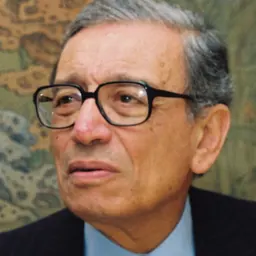
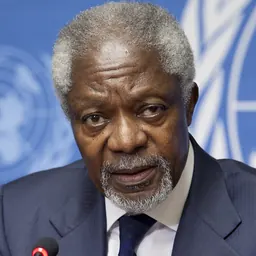
1995–1997 – During the first phase, the legislative base for an agrarian sector was reestablished through the adoption of a number of legislative documents. Privatization of Azerbaijani agriculture through the dissolution of the traditional collective and state farms was the focus of these laws. Examples of these laws include "the Basis of Agrarian Reform" (18 February 1995); "Reform of state and collective farms" (18 February 1995); and "Land Reform" (16 July 1996). On 10 January 1997 Aliyev issued a Decree on "Approval of some legal documents assuring implementation of agrarian reforms". The State Commission on Agrarian Reforms was formed by Aliyev on 2 March 1995. 1998–2001 – The second phase focused on post-privatization support and the removal of bureaucratic barriers for more effective implementation of these reforms. The Ministry of Agriculture was reorganized by a presidential decree dated 6 June 1998 (On Ratification of the Statue on the Ministry of Agriculture), the law on "State land cadaster, land monitoring and structure" (22 December 1998), a decree on "Land rent" (12 March 1999), and a law on "land market" (7 May 1999). The Land Code of Azerbaijani Republic was approved by the Law on "Approval of Land Code of the Republic of Azerbaijan" (25 June 1999). He received former Secretary General of UN Boutros Boutros-Ghali in October 1994 in Baku. Aliyev met with Secretary General Kofi Annan during his trip to the US in 1997 July. Aliyev addressed the Millennium Summit of UN held in September 2000, where he talked about the Armenian invasion of Nagorno-Karabakh and adjacent regions, and mentioned UN resolutions 822, 853, 874, 884, which demanded unconditional withdrawal of the Armenian armed forces from the occupied Azerbaijani territories. After 11 September attacks, Azerbaijan joined the anti-terror coalition of UN and cooperated with Office of Counter-Terrorism and Sanctions Committee of the UN SC. In October 2001, Azerbaijan joined the International Convention for the Suppression of the Financing of Terrorism adopted by UN SC in 1999. Aliyev approved the PfP Presentation Document on 19 April 1996. In November 1997, Azerbaijan joined the PfP Planning and Review Process. NATO PA also made Azerbaijan an associate member of NATO in November.
Relations with the EU The Partnership and Cooperation Agreement between the European Union and the Republic of Azerbaijan was signed in Luxembourg on 22 April 1996, and went into effect on 22 June 1999. It promises cooperation in the fields of trade, investment, economy, legislation, culture, immigration and the prevention of illicit trade. Azerbaijan received assistance from the EU for economic reforms in the country through the TACIS and TRACECA programmes. The “Restoration of the Historic Silk Road” international conference was organized in Baku on 8 September 1998 by Aliyev and President Eduard Shevardnadze of Georgia with the support of the TACIS and TRACECA programmes.
Relations with the Council of Europe Azerbaijan participated as a specially invited guest at the Council of Europe (CoE) on 28 June 1996. Consequently, a number of resolutions and legal acts were adopted from 1996 to 2001 to improve the Azerbaijani legislative system so it could fulfill the requirements of European standards and international law. On 28 June 2000, Azerbaijan's full admission to the CoE was recommended at the session of Parliamentary Assembly of the CoE. Azerbaijan became a full member of the CoE on 17 January 2001; the official ceremony was conducted on 25 January 2001. Presidential orders “On the implementation of the measures of the program of cooperation between the Council of Europe and the Republic of Azerbaijan” (8 July 1996), "On the measures of Deepening Cooperation between the Council of Europe and the Republic of Azerbaijan" (20 January 1998), and “On the measures of expanding cooperation between Azerbaijan and CoE for defending interests of the Republic of Azerbaijan in Council of Europe"
Relations with Russia Aliyev prioritized establishing warmer relations with Russia more than the previous leadership of Azerbaijan did. He stated in his speech at Milli Majlis on 15 June 1993, after being elected as the head of the Parliament of Azerbaijan: "Russia, our northern neighbor, is absolutely a vast state. Undoubtedly, the relation based on independent principles between Azerbaijan and Russia must be better, broader and more fruitful." The Agreement on Friendship, Cooperation and Mutual Security between Russia and Azerbaijan was signed on 3 July 1997. Aliyev paid his first official trip to Russia as a president of the Republic of Azerbaijan in July 1997 with the invitation of Russian president Boris Yeltsin. Relations with Russia further developed through Aliyev-Putin negotiations during their bilateral visits (Vladimir Putin visited Azerbaijan in 2001 and Aliyev paid a reciprocal visit to Russia in 2002).
Relations with the US
Establishing closer relations and developing cooperation with the US were among the main goals of Aliyev's foreign policy. He stated in one of his speeches regarding this issue: “The relations of Azerbaijan with the United States are important as we need to learn the Western democracy, culture, achievements, to benefit from them, to use and apply them in Azerbaijan. In this regard, the United States is a special country for us." Relations between the two countries strengthened after oil contracts were signed. Aliyev paid his first official visit to the US and met with President Bill Clinton on 1 August 1997. They signed a Joint Statement on future relations between the US and Azerbaijan in defense and military issues. During this trip (27 July-5 August 1997), a statement on intentions of formation of bilateral dialogue between the US and Azerbaijan regarding energy issues and the general agreement between the Government of the Azerbaijani Republic, the National Bank, and the US Export-Import Bank on the promotion of projects were signed. Additionally, 4 agreements on development and production sharing for the Azerbaijani sector of the Caspian Sea were signed. Azerbaijan joined a US-lead international coalition against terrorism after 11 September attacks, and sent a military contingent to Afghanistan. An amendment to the Freedom Support Act was adopted on 24 October 2002 by the US Senate to allow a US president to temporarily waive Section 907, which used to forbid to export any financial or humanitarian support to Azerbaijan.
Oil strategy alt= Four oil pipelines fan out from Sangachal Terminal on the Caspian Sea coast to the south-west of Baku, with one heading north into Russia while the other three avoid Armenia by running through Georgia, with one terminating on the Georgian Black Sea coast, one terminating in Turkey, and the other terminating on the Turkish Mediterranean coast.
Aliyev used the oil potential of Azerbaijan to avoid the difficulties his country faced after the collapse of the Soviet Union by attracting foreign investment into Azerbaijan. After a year-long series of negotiations in Baku, Istanbul and Houston, the “Agreement on the Joint Development and Production Sharing for the Azeri and Chirag Fields and the Deep Water Portion of the Gunashli Field in the Azerbaijan Sector of the Caspian Sea” was signed in Baku on 20 September 1994 by the Government of Azerbaijan and a consortium of 11 oil companies from 6 countries (US, UK, Russia, Norway, Turkey, Saudi Arabia) in the presence of Aliyev.
The State Oil Fund of Azerbaijan was established by Presidential Decree in December 1999 to gather the income gained from oil profit with the aim of financing social and economic projects. As a result of the oil strategy developed by Aliyev, Azerbaijani oil was planned to be carried through different routes as Baku–Supsa, Baku–Tbilisi–Ceyhan pipeline (BTC), etc.
The decision to export Azerbaijani crude oil to the Port of Novorossiysk was made through a contract signed in Moscow on 18 February 1996. Establishment of the alternative Baku–Supsa route was agreed on 8 March 1996 by Aliyev and Shevardnadze. The Baku–Supsa route began operation in April 1999.
Illness, succession and death
Aliyev's health began to fail in 1999 when he had a major heart bypass operation in the United States at the Cleveland Clinic. He later had prostate surgery and a hernia operation. He collapsed while giving a speech on live television in April 2003. On 6 August, Aliyev permanently returned to the US for treatment of congestive heart failure and kidney problems.
Less than two weeks before the 2003 Azerbaijani presidential election, he withdrew his candidacy and appointed his son Ilham as his party's presidential candidate. Ilham won the election, which was widely considered to have been fraudulent. International observers criticized the contest as falling well below expected standards. A statue of Aliyev has been unveiled in a Tašmajdan Park in Belgrade; its renovation was aided by 2 million euros ($2.9 million) from the Azerbaijani government. In August 2012 a statue of Aliyev which had been gifted to Mexico by the Azerbaijani embassy was installed in a park in Mexico City but was removed the following January after proving controversial. On 10 April 2023, Heydar Aliyev Street was opened in the center of Astana, the presidents of Kazakhstan and Azerbaijan took part in the opening ceremony.
Full list of honours and awards Soviet Union Hero of Socialist Labour, twice (1979, 1983) Five Orders of Lenin (1971, 1973, 1976, 1979, 1983) Order of the October Revolution (1982) Order of the Red Star (1962) Order of the Patriotic War, 1st class (1985) Medal "For Battle Merit" Medal "For Labour Valour" Medal "For the Defence of the Caucasus" (1944) Medal "For the Victory over Germany in the Great Patriotic War 1941–1945" (1945) Jubilee Medal "Twenty Years of Victory in the Great Patriotic War 1941–1945" (1965) Jubilee Medal "Thirty Years of Victory in the Great Patriotic War 1941–1945" (1975) Jubilee Medal "Forty Years of Victory in the Great Patriotic War 1941–1945" (1985) Jubilee Medal "In Commemoration of the 100th Anniversary of the Birth of Vladimir Ilyich Lenin" (1969) Medal "For Valiant Labour in the Great Patriotic War 1941–1945" Medal "Veteran of Labour" (1974) Medal "Veteran of the Armed Forces of the USSR" (1976) Jubilee Medal "30 Years of the Soviet Army and Navy" (1948) Jubilee Medal "40 Years of the Armed Forces of the USSR" (1957) Jubilee Medal "50 Years of the Armed Forces of the USSR" (1967) Jubilee Medal "60 Years of the Armed Forces of the USSR" (1978) Jubilee Medal "70 Years of the Armed Forces of the USSR" (1988) Medal "For Impeccable Service" Second Class (1959) Medal "For Impeccable Service" First Class (1964)
Other First Class of the Order of the State of Republic of Turkey (1997) Order of Prince Yaroslav the Wise, 1st class (20 March 1997) – "for outstanding contribution to the development of cooperation between Ukraine and the Republic of Azerbaijan and strengthening friendship between the Ukrainian and Azeri people" Silk Road Service Award by the Silk Road Fund (1998) Atatürk International Peace Prize (1999) Order of St. Andrew (10 May 2003) – "for his great personal contribution to strengthening friendship and cooperation between Russia and Azerbaijan" Chuvash National Prize named after Ivan Yakovlev (2000) Order of the Golden Fleece (2001) Astana Medal Grand Cross of the Legion of Honour (2003) "Gloria Populi" award of Golden Fortune International Scientific Organization
Order "Sheikh-ul-Islam" (posthumously)
Don’t just read it —
keep it.
Full-length biographies made to live with: read them, listen on the way to work, watch them tonight.
- E-book
- Audio
- Video
Instant download · yours to keep · every purchase keeps this site free
Important facts
Family & relationships
People in Heydar Aliyev's life
Named in this biography and alive at the same time

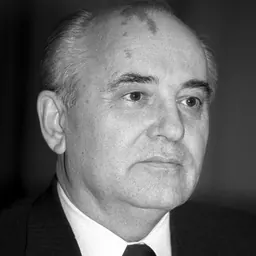

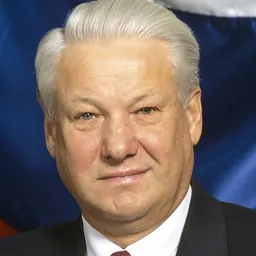
Related people
Same field, nearest in time



Contemporaries
People whose lives overlapped Heydar Aliyev's


Frequently asked questions
Who was Heydar Aliyev?
3rd President of the Republic of Azerbaijan (1923–2003)
When was Heydar Aliyev born?
Heydar Aliyev was born on 10 May 1923 in Nakhchivan.
When did Heydar Aliyev die?
Heydar Aliyev died on 12 December 2003 in Cleveland.
What was Heydar Aliyev's occupation?
Heydar Aliyev was an intelligence officer and politician.
What nationality was Heydar Aliyev?
Heydar Aliyev was Russian and Azerbaijani.
Sources & further reading
Cite this page
APA: Biography.guide. (2026). Heydar Aliyev. https://biography.guide/heydar-aliyev/
MLA: "Heydar Aliyev." Biography.guide, https://biography.guide/heydar-aliyev/.
Chicago: "Heydar Aliyev." Biography.guide. https://biography.guide/heydar-aliyev/.
Data last updated: 2026-09-20 · Spot an error? Report a correction.
Page generated 2026-09-27 05:25 UTC