
About Sei Fujii
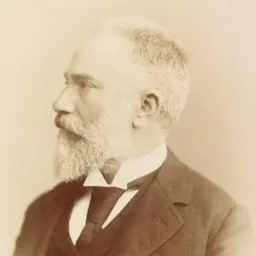
Lived 1882 – 1954 (aged 71–72). Sei Fujii was an American human rights defender.
Sei Fujii (藤井 整, 1882–1954) was a human rights activist for Japanese-American individuals. He also established a California daily newspaper in 1931. he moved to the United States in 1903. He studied law at the University of Southern California ) After this, he started to fight against discrimination for Japanese immigrants with his friend J. Marion Wright, a lawyer in California. In 1928, the Supreme Court permitted Japanese-Americans to establish hospitals in Los Angeles.
Several years after the war ended, the California Alien Land Law of 1913 was struck down, giving Japanese immigrants the ability to purchase land. The film was exhibited at the Los Angeles Asian Pacific Film Festival It was directed by Jeffrey Gee Chin, a Chinese-American, and starred Japanese-American Actor Chris Tashima as Fujii. According to the lawyer in the case, there are only a few cases of individuals being granted law licenses posthumously; the Los Angeles Times reported a similar case involving a Chinese immigrant.
Historic Designation of Japanese Hospital The historic Japanese Hospital was established in 1929 Japanese Hospital, located on 101 S. Fickett. In 2016, the Little Tokyo Historical Society (LTHS) members Kristen Hayashi and Michael Okamura submitted a nomination for a City of Los Angeles Historic Cultural Monument designation. In 2019, was designated City of Los Angeles Historic Cultural Monument #1131.
"A Rebel's Outcry: Biography of Issei Civil Rights Leader Sei Fujii (1882-1954)" In 2021, Little Tokyo Historical Society published a book entitled "A Rebel's Outcry: Biography of Issei Civil Rights Leader Sei Fujii (1882-1954)". The biography is based on the official biography written in 1983 known as "Rafu Gigyu Ondo" by Kenichi Sato. The text was translated by Saeko Higa-Dickinson, edited by Naomi Hirahara, original artwork by Takashi Uchida, and layouts by Amy Inouye. Jeffrey Gee Chin and Fumiko Carole Fujita are named the publishers. The book incorporated historical photographs, articles, and artwork uncovered by the publishers over a ten year period. The official release was on November 2, 2021 at the Japanese American Cultural & Community Center in Little Tokyo, Los Angeles. Present was the grand-daughter of attorney J. Marion Wright, Alice LaMoree and her sons, and the daughter of attorney Owen Kupfer, Coralie Kupfer.
A subsequent event was hosted in San Francisco on December 2, 2021 at the Japanese Cultural and Community Center of Northern California. On the panel was civil rights advocate Karen Korematsu, Kenji Taguma, Jeffrey Gee Chin, and Miya Iwataki (Master of Ceremonies).
Don’t just read it —
keep it.
Full-length biographies made to live with: read them, listen on the way to work, watch them tonight.
- E-book
- Audio
- Video
Instant download · yours to keep · every purchase keeps this site free
Important facts
Related people
Same field, nearest in time



Contemporaries
People whose lives overlapped Sei Fujii's




Frequently asked questions
Who was Sei Fujii?
activist for human rights of Japanese-American
When was Sei Fujii born?
Sei Fujii was born in 1882 in Shūtō.
When did Sei Fujii die?
Sei Fujii died in 1954.
What was Sei Fujii's occupation?
Sei Fujii was a human rights defender.
What nationality was Sei Fujii?
Sei Fujii was American.
Sources & further reading
Cite this page
APA: Biography.guide. (2026). Sei Fujii. https://biography.guide/sei-fujii/
MLA: "Sei Fujii." Biography.guide, https://biography.guide/sei-fujii/.
Chicago: "Sei Fujii." Biography.guide. https://biography.guide/sei-fujii/.
Data last updated: 2026-09-20 · Spot an error? Report a correction.
Page generated 2026-09-27 05:12 UTC