
About Grigore Iunian
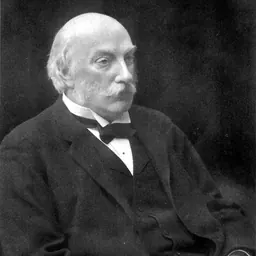
Lived 1882 – 1940 (aged 58). Grigore Iunian was a Romanian human rights defender and lawyer.
Grigore Iunian (1882–1940) was a Romanian lawyer and politician, Minister of Justice and Minister of Labour. Grigore Iunian (September 30, 1882 – 1939) was a Romanian left-wing politician and lawyer. A member of the National Liberal Party (PNL) during the 1910s, he rallied with the Peasants' Party (PȚ) after World War I, and followed it into the National Peasants' Party (PNȚ), before leaving in 1933 to create the Radical Peasants' Party (PȚR), over which he presided until his death.
Biography Born in Târgu Jiu, Iunian was the son of a lawyer. He studied law at the University of Bucharest, and joined the bar association after first entering politics with the PNL and being elected to the Chamber of Deputies. According to the politician and memoirist Constantin Xeni, "Gr. Iunian had ten years of fame in law practice. He honored the bar, and his memory deserves to live on. Among his contemporaries, between 1925 and 1938, there surely were more distinguished lawyers. But Iunian was not just a lawyer, not just a diligent jurist in studying the case and conscious in his exposition. He was a cultivated man, a warm-hearted and honest politician, a passionate fighter and a man with a heart as few others had." As the conflict ended and Greater Romania was established, he became enthusiastic with the Poporanist cause of the newly created PȚ, and left the PNL. He subsequently became noted in opposition to the Alexandru Averescu People's Party cabinet. In March 1921, it became known that Aron Schuller, an associate of the Finance and Interior Minister Constantin Argetoianu, had attempted to contract a 20 million lire loan with a bank in Italy by using as collateral Romanian war bonds that he had illegally obtained from the Finance Ministry reserve — consequently, Iunian proposed a motion of no confidence against the Averescu cabinet, but it was defeated when the PNL chose to continue backing the cabinet.
Together with other left-leaning activists (Constantin Titel Petrescu, Dem I. Dobrescu, Nicolae L. Lupu, Constantin Mille, Constantin Rădulescu-Motru, Victor Eftimiu, Constantin Costa-Foru, Radu R. Rosetti, and Virgil Madgearu), Iunian established, in 1923, Liga Drepturilor Omului (League for Human Rights), which voiced protests against the new Brătianu executive.
After the PȚ merged with Iuliu Maniu's Romanian National Party (1926), Iunian became vice president of the newly created PNȚ. Beginning in November 1928, when the PNȚ came to power, Iunian was Minister of Justice in the Maniu and Gheorghe Mironescu cabinets.
Confronted with the Great Depression and the insolvency of many small landowners, Iunian proposed to devalue the Romanian leu until most debts were to be paid; the idea failed to win him support. In October 1933, he took decision to leave and form the Radical Peasants' Party around the journal Deșteptarea on November 22, 1933. At the time, Xeni argued, Iunian's support for democratic government was becoming "a pointless struggle". and called for "socializing the means of production" Adding to this a call for economic planning, the PȚR indicated that its ultimate goal was "the democratic state of workers".
In 1936, Iunian was called as a witness in the trial of Petre Constantinescu-Iași and other seven members of the Romanian Communist Party, which was housed in Chișinău. Witnessing irregularities in procedures (such as Romanian Army soldiers guarding the hall), he stated: "I shall not lend myself to a farce. I did not know, upon arriving here, that it was to be a simulacrum".
The PȚR came to clash with the National Christian Party and the Octavian Goga cabinet in 1937-1938. In a 1975 speech, Communist leader Nicolae Ceaușescu stated: "A series of politicians such as Nicolae Titulescu, Nicolae Iorga, Grigore Iunian, Virgil Madgearu, Dem. Dobrescu, Grigore Filipescu and others took a stand against the aggressive expansion of Nazi Germany, unmasked the internal fascist activity, militated for developing collaboration with other states and strengthening the country's security."
Don’t just read it —
keep it.
Full-length biographies made to live with: read them, listen on the way to work, watch them tonight.
- E-book
- Audio
- Video
Instant download · yours to keep · every purchase keeps this site free
Important facts
People in Grigore Iunian's life
Named in this biography and alive at the same time



Related people
Same field, nearest in time


Contemporaries
People whose lives overlapped Grigore Iunian's





Frequently asked questions
Who was Grigore Iunian?
Romanian politician (1882–1940)
When was Grigore Iunian born?
Grigore Iunian was born on 30 September 1882 in Târgu Jiu.
When did Grigore Iunian die?
Grigore Iunian died on 19 December 1940 in Bucharest.
What was Grigore Iunian's occupation?
Grigore Iunian was a human rights defender and lawyer.
What nationality was Grigore Iunian?
Grigore Iunian was Romanian.
Sources & further reading
Cite this page
APA: Biography.guide. (2026). Grigore Iunian. https://biography.guide/grigore-iunian/
MLA: "Grigore Iunian." Biography.guide, https://biography.guide/grigore-iunian/.
Chicago: "Grigore Iunian." Biography.guide. https://biography.guide/grigore-iunian/.
Data last updated: 2026-09-20 · Spot an error? Report a correction.
Page generated 2026-09-27 05:21 UTC