
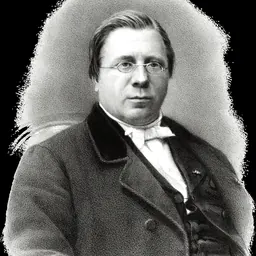
Alexandru Averescu
Marshal and former Prime Minister of Romania
About Alexandru Averescu
Lived 1859 – 1938 (aged 79). Alexandru Averescu was a military officer, politician, diplomat, head of government and foreign minister.
Alexandru Averescu (; 9 March 1859 – 2 October 1938) was a Romanian marshal, diplomat and populist politician. A Romanian Armed Forces Commander during World War I, he served as Prime Minister of three separate cabinets (as well as being interim Foreign Minister in January–March 1918 and Minister without portfolio in 1938). He first rose to prominence during the peasants' revolt of 1907, which he helped repress with violence. Credited with engineering the defense of Moldavia in the 1916–1917 Campaign, he built on his popularity to found and lead the successful People's Party, which he brought to power in 1920–1921, with backing from King Ferdinand I and the National Liberal Party (PNL), and with the notable participation of Constantin Argetoianu and Take Ionescu.
His controversial first mandate, marked by a political crisis and oscillating support from the PNL's leader Ion I. C. Brătianu, played a part in legislating land reform and repressed communist activities, before being brought down by the rally of opposition forces. His second term of 1926–1927 brought a much-debated treaty with Fascist Italy, and fell after Averescu gave clandestine backing to the ousted Prince Carol. Faced with the People Party's decline, Averescu closed deals with various right-wing forces and was instrumental in bringing Carol back to the throne in 1930. Relations between the two soured over the following years, and Averescu clashed with his fellow party member Octavian Goga over the king's attitudes. Shortly before his death, he and Carol reconciled, and Averescu joined the Crown Council.
Averescu, who authored over 12 works on various military topics (including his memoirs from the frontline), was also an honorary member of the Romanian Academy and an Order of Michael the Brave recipient. He became a Marshal of Romania in 1930.
Early life and career Averescu was born in Babele, United Principalities of Moldavia and Wallachia (later renamed to Alexandru Averescu, today , a village northwest of Izmail, Ukraine). The son of Constantin Averescu, who held the rank of sluger, he studied at the Romanian Orthodox seminary in Izmail, then at the School of Arts and Crafts in Bucharest (intending to become an engineer). He had partial Gagauz ancestry. In 1876, he decided to join the Gendarmes in Izmail. Averescu married an Italian opera singer, Clotilda Caligaris, who had been the prima donna of La Scala. According to the recollections of Eliza Brătianu, a split occurred between him and the PNL after Averescu attempted to advance various political goals — the conflict erupted when he sought support with King Carol I and then, as the National Liberals deeply resented Romania's alliance with the Central Powers, he approached the Germans for backing.
Subsequently, he was commander of the First Infantry Division (stationed in Turnu Severin) and, later, of the Second Army Corps in Craiova. Despite controlling an army of 500,000 plus 100,000 Russian reinforcements, they were defeated by a German-Austrian-Bulgarian army of 910,000 in less than four months of combat.
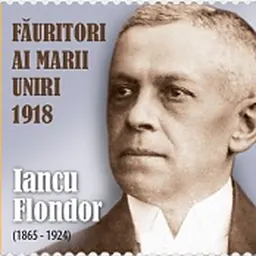
Averescu was widely seen as the person behind a relatively successful resistance to further offensives on Moldavia (the single piece of territory still held by the Romanian state), and he was considered by many of his contemporaries to have stood in contrast to what was seen as endemic corruption and incompetence. The state of affairs, together with the October Revolution in Russia, was to be blamed for the eventual Romanian surrender to the Central Powers; promoted Premier by King Ferdinand I during the period of crisis, Averescu began armistice talks with August von Mackensen in Buftea and Focșani, but was vehemently opposed to the terms — he resigned, leaving the Alexandru Marghiloman cabinet when it signed the Treaty of Bucharest. Despite Averescu's talks yielding no result, he was repeatedly attacked by his political adversaries for having initiated them. In order to prevent further losses, Averescu signed his name to a much-criticized temporary armistice with the Rumcherod; eventually, Rakovsky was himself faced with a German offensive (sparked by the temporary breakdown of negotiations at Brest-Litovsk), and had to abandon both his command and the base in Odessa. the moderate nationalist Duiliu Zamfirescu, the future diplomat Citta Davila, the journalist D. R. Ioaniţescu, the left-wing agrarian Petru Groza, the Bukovinian leader Iancu Flondor, and the lawyer Petre Papacostea. Nevertheless, in late 1919, Averescu and Argetoianu approached the Socialist Party of Romania and its associate, the Social Democratic Party of Transylvania and Banat, with an offer for collaboration, negotiating the matter with the parties' reformist leaders — Ioan Flueraș, Ilie Moscovici, and Iosif Jumanca.
According to Argetoianu, "in the autumn of 1919, [Averescu's] popularity had reached its peak. In the villages, people would dream of him, some swore that they had seen him descending from an airplane into their midst, others, who had fought in the war, told that they had lived by his side in the trenches, it was through him that hopes were solidified, and he was expected of to provide a miracle for people to live a carefree and fulfilling life. His popularity was something mystical, something supernatural, and all sorts of legends had begun to surround this Messiah of the Romanian people."
Although he was also Prime Minister of Romania for three mandates (1918, 1920–1921, 1926–1927), his political success is not as spectacular as the military one. Averescu ended up as one of the pawns maneuvered by Brătianu. Argetoianu later repeatedly expressed his distaste for Averescu's hesitant stance and openness to compromise. These moves caused a vocal response from the opposition: Nicolae Iorga, who was president of the Chamber of Deputies and sided with the National Party, called for a motion of no confidence to be passed on 26 March; in return, Averescu obtained the support of the monarch in dissolving the Parliament, and invested his cabinet's energies into winning the early elections by enlisting the help of county-level officials (local administration came to be dominated by People's Party officials). It carried the vote with 206 seats (223 together with Take Ionescu's Conservative-Democratic Party). This came after a long debate in Parliament over the imprisonment of Mihai Gheorghiu Bujor, a Romanian citizen who had joined the Russian Red Army in Bessarabia during the later stages of the October Revolution, and who had been tried for treason. At the same time, he ordered all troops to be demobilized.
The People's Party found itself hard pressed to limit the effects of the reform as promised by Duca — reason why Constantin Garoflid, seen by Argetoianu as "the Conservative and theorist of large-scale landed property", was promoted as Minister of Agriculture. the 250 million Italian lire owed to Italian investors in Romanian state bonds.
With Nicolae Titulescu as Finance Minister, Averescu resumed the interventionist course in economic policies, but broke with tradition when he attempted to legislate a major increase in taxes and proposed nationalizations — with potential negative effects on the PNL-voting middle class. The National Liberals, through the voice of Alexandru Constantinescu-Porcu, helped exploit the rivalry between the Peasants' Party and Iorga, using the latter's rejection of Constantin Stere (a conflict sparked by Stere's support for Germany during the World War); Stere won partial elections for the deputy seat in Soroca, Bessarabia, causing a political scandal which saw all parties (including the PNR) declare their dissatisfaction.
Averescu's party was instead joined by PNR dissidents, Vasile Goldiș and Ioan Lupaș, who represented a Romanian Orthodox segment of the Transylvanian voters (rather than the Greek Catholics supporting Iuliu Maniu). Contacts established (as early as June 1926, when Mihail Manoilescu had negotiated a loan in Rome) and created tension inside the Little Entente (Yugoslavia feared that Italy had attempted to gain Romania's neutrality in case of a potential irredentist conflict).
The treaty expired in 1932, and, after being prolonged by six months, it was not renewed. Averescu himself allegedly stated: "I didn't get much from Italy except a throne for a Princess of Rumania". (Averescu later claimed that he had been asked by Brătianu: "So, after I have brought you to power, you wish to rise and dominate?"). The PNL withdrew its support, and, through an order signed by Constantin Hiott, He and his supporter, the pro-authoritarian poet Octavian Goga, The trial was held in Cluj, and Gruia was represented in court by Radu R. Rosetti. during the time when Carol returned to rule as King — the appointment was attributed by Time to his political support for the latter's return. According to the same source, by the end of 1930, Averescu was again at the center of Romanian politics, owing to Carol's favor, to the deaths of Ion I. C. and Vintilă Brătianu, and to the unexpected support he gained from the PNL dissident Gheorghe I. Brătianu.
In 1937, despite his ongoing feud with Carol, Averescu was appointed a member of the Crown Council. Argetoianu recalled that he and the Marshal had reconciled — at a time when Argetoianu pondered rallying all opposition forces, including the National Peasants' Party, the National Liberal Party-Brătianu, and the Iron Guard, in a single electoral bloc (before the general election of December, the various groups successfully negotiated an electoral pact against the government of Gheorghe Tătărescu). Averescu, who, according to Argetoianu, declared was more interested in convincing Carol to allow his estranged wife Elena of Greece to return to Romania, remained opposed to the deal.
The following year, he was briefly minister without portfolio in the cabinet of Premier Miron Cristea, created by Carol to combat the ascension of the Iron Guard, and opposed the monarch's option to renounce the 1923 Constitution and proclaim his dictatorship (the latter move signaled the end of the People's Party), but was among the figures displayed by Carol's regime. He died soon after in Bucharest, and was buried in the World War I heroes' crypt in Mărăști. In December, the king created the National Renaissance Front as the political instrument of his authoritarian rule.
Don’t just read it —
keep it.
Full-length biographies made to live with: read them, listen on the way to work, watch them tonight.
- E-book
- Audio
- Video
Instant download · yours to keep · every purchase keeps this site free
Important facts
People in Alexandru Averescu's life
Named in this biography and alive at the same time


Related people
Same field, nearest in time





Contemporaries
People whose lives overlapped Alexandru Averescu's


Frequently asked questions
Who was Alexandru Averescu?
Marshal and former Prime Minister of Romania (1859-1938)
When was Alexandru Averescu born?
Alexandru Averescu was born on 9 March 1859 in Ozerne.
When did Alexandru Averescu die?
Alexandru Averescu died on 2 October 1938 in Bucharest.
What was Alexandru Averescu's occupation?
Alexandru Averescu was a military officer, politician, diplomat, head of government and foreign minister.
What nationality was Alexandru Averescu?
Alexandru Averescu's recorded nationality: United Principalities of Moldavia and Wallachia, Kingdom of Romania.
Sources & further reading
· Wikipedia: Alexandru Averescu
Cite this page
APA: Biography.guide. (2026). Alexandru Averescu. https://biography.guide/alexandru-averescu/
MLA: "Alexandru Averescu." Biography.guide, https://biography.guide/alexandru-averescu/.
Chicago: "Alexandru Averescu." Biography.guide. https://biography.guide/alexandru-averescu/.
Data last updated: 2026-09-20 · Spot an error? Report a correction.
Page generated 2026-09-27 05:22 UTC