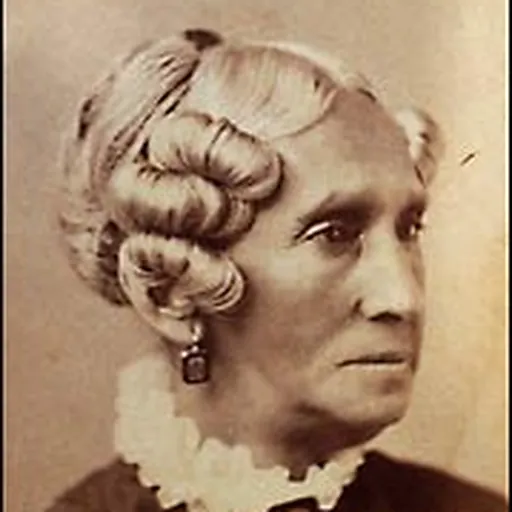
Sarah Harris Fayerweather
African-American anti-discrimination pioneer
About Sarah Harris Fayerweather
Lived 1812 – 1878 (aged 66). Sarah Harris Fayerweather was an American abolitionist and activist.
Sarah Harris Fayerweather (April 16, 1812 – November 16, 1878) was an African American activist, abolitionist, and school integrationist. Beginning in January 1833, at the age of twenty, she attended Prudence Crandall's Canterbury Female Boarding School in Canterbury, Connecticut, the first integrated school in the United States.
Early life Fayerweather was born Sarah Ann Major Harris on April 16, 1812, in Norwich, Connecticut. The daughter of William Monteflora Harris and Sally Prentice Harris, both of whom were free farmers, Fayerweather was of African and French West Indian descent and the second oldest of twelve children. The Harris family first attended the Second Congregational Church of Norwich, a predominantly white congregation that openly sought out African Americans. The abolitionist movement was an important part of the church's services and activities. The family fully embraced this ideology, as seen not only in Sarah Harris’ activism later in life but in her father, William Harris, and eldest brother Charles, who served as agents for William Lloyd Garrison’s newspaper, The Liberator, distributing copies of the newsletter to folks throughout Canterbury, including Prudence Crandall. In a letter to William Lloyd Garrison's newspaper, The Liberator, Crandall recalls Sarah's visit: "A colored girl of respectability – a professor of religion – and daughter of honorable parents, called on me sometime during the month of September last, and said in a very earnest manner, 'Miss Crandall, I want to get a little more learning, enough if possible to teach colored children, and if you will admit me into your school I shall forever be under the greatest obligation to you. If you think it will be the means of injuring you, I will not insist on the favor.'" After a brief deliberation, Crandall admitted her to the school as a day student. Sarah became the first African American girl to enter the academy, and Canterbury Boarding School became one of the first integrated schools in the United States. Sarah continued to attend the school in the face of harassment, legal troubles, and ostracization, including attempts to burn down the school. Eventually, Crandall, afraid for her pupils' safety after a mob converged on the school in September 1834, closed the school permanently.
Family Life and Career On November 28, 1833, Fayerweather married George Fayerweather Jr., a blacksmith ten years her senior. Their home was a known stop for the underground railroad where they acted as conductors, providing food, shelter, and care to those escaping slavery.
Sarah maintained an active church life, becoming a teacher of the Sunday school at Kingston's Congregational church. Like Fayerweather, Harris Williams became a notable educator and activist.
On April 19, 1845, Mary married her husband, Pelluman Williams, an African American teacher from Connecticut. Pelluman was the Vice President of the Connecticut Convention of Colored Men in 1849, advocating for Black suffrage and civil rights. Both Mary Harris Williams and her husband advocated for access to education for all African American people. In 1864, the Williams moved from New York City to New Orleans, Louisiana.
Four years later, in 1868, Harris Williams became a professor of English at Straight University alongside her husband, who was a principal there. At Straight University, Harris Williams helped educate newly freed enslaved people in the South. Straight University, is now known as Dillard University, a Historically Black college, founded after Straight University was burned down twice, once in 1877, and again in 1891. The Fayerweather Craft Guild, located in Kingston at the site of the Fayerweather family's former home and blacksmith shop, was also named in her honor.
Don’t just read it —
keep it.
Full-length biographies made to live with: read them, listen on the way to work, watch them tonight.
- E-book
- Audio
- Video
Instant download · yours to keep · every purchase keeps this site free
Important facts
People in Sarah Harris Fayerweather's life
Named in this biography and alive at the same time


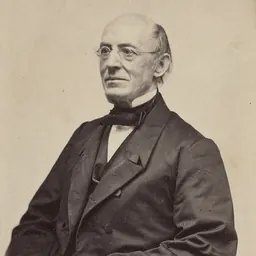

Related people
Same field, nearest in time

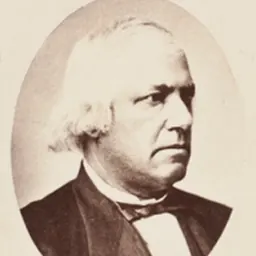
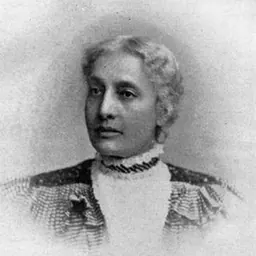

Contemporaries
People whose lives overlapped Sarah Harris Fayerweather's




Frequently asked questions
Who was Sarah Harris Fayerweather?
African-American anti-discrimination pioneer
When was Sarah Harris Fayerweather born?
Sarah Harris Fayerweather was born on 16 April 1812 in Norwich.
When did Sarah Harris Fayerweather die?
Sarah Harris Fayerweather died on 16 November 1878 in Kingston.
What was Sarah Harris Fayerweather's occupation?
Sarah Harris Fayerweather was an abolitionist and activist.
What nationality was Sarah Harris Fayerweather?
Sarah Harris Fayerweather was American.
Sources & further reading
· Wikipedia: Sarah Harris Fayerweather
· DBpedia: Sarah Harris Fayerweather
Cite this page
APA: Biography.guide. (2026). Sarah Harris Fayerweather. https://biography.guide/sarah-harris-fayerweather/
MLA: "Sarah Harris Fayerweather." Biography.guide, https://biography.guide/sarah-harris-fayerweather/.
Chicago: "Sarah Harris Fayerweather." Biography.guide. https://biography.guide/sarah-harris-fayerweather/.
Data last updated: 2026-09-20 · Spot an error? Report a correction.
Portrait: Wikimedia Commons · author & licence
Page generated 2026-09-27 04:58 UTC