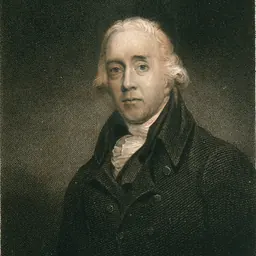
Samuel Sutton
Royal Navy officer during the American War of Independence, French Revolutionary Wars and Napoleonic Wars.
About Samuel Sutton
Lived 1760 – 1832 (aged 71–72). Samuel Sutton was a British naval officer.
Samuel Sutton (1760 – June 1832) was an officer in the Royal Navy. He entered the service shortly after the start of the American War of Independence, and spent most of his early career serving with Captain and later Admiral Joshua Rowley. He saw action at several engagements with the French fleets in the West Indies, and ended the war as a lieutenant. Left without active employment by the following years of peace, Sutton briefly returned to service during the Spanish Armament in 1790, but the outbreak of the French Revolutionary Wars in 1793 brought him steady work. After serving on a number of ships and being present at Cornwallis's Retreat in 1795, Sutton received command of a sloop, and with it the opportunity to render a service to a member of the French aristocracy, and the future Charles X of France. Promoted for his good service, Sutton served as a flag captain to several admirals, including Horatio Nelson. He briefly commanded , before surrendering her to Thomas Hardy, who would go on to command Victory at Trafalgar, and be present at Nelson's death. Sutton instead took command of a frigate, and in 1804 was involved in a controversial action that saw the capture of three Spanish frigates and the destruction of a fourth. Made wealthy from the spoils, Sutton nevertheless remained in the navy, taking part in the chase of the French fleet to the West Indies in 1805. His health declined during this period, and he went ashore in October that year. He retired from active service, and served as a magistrate and local official for his community, being promoted to rear-admiral in 1821 and dying in 1832.
Early life Sutton was born in 1760 in Scarborough, North Yorkshire, and entered the navy on 9 April 1777 as an able seaman and later a midshipman aboard the 74-gun , which was under the command of Captain Joshua Rowley. Sutton and Rowley served in the English Channel until Rowley's promotion to rear-admiral in December 1778 and his shifting his flag to the 74-gun , with Hugh Cloberry Christian as his flag captain. Sutton accompanied Rowley to the Suffolk, and moved with him again when Rowley raised his flag aboard Captain Thomas Watson's 74-gun in December 1779. Sutton became an acting-lieutenant while on board Princess Royal, retaining the position after being transferred to the 16-gun sloop under Captain Manley Dixon. While in the North Sea in 1797 his duties included transporting the Duc d'Angoulême, the future Charles X of France from Leith to Cuxhaven. His good service brought him a quick promotion to post-captain, on 27 June 1797, but left him without a ship for over a year.
Copenhagen and Nelson The Battle of Copenhagen, by Nicholas Pocock. The frigates were heavily engaged during the fighting. Alcmene was one of the ships assigned to Admiral Sir Hyde Parker's expeditionary force to the Baltic in 1801. Sutton commanded her as part of Rear-Admiral Horatio Nelson's force at the Battle of Copenhagen. The frigates engaged the Trekroner fortress during the battle, before obeying Parker's signal to withdraw, an order Nelson ignored. After the battle Nelson appointed Sutton to command the 38-gun , whose captain, Edward Riou, had been killed in the battle. Sutton remained serving in the Baltic as Nelson's flag captain, returning him to Britain and continuing to serve under him during Nelson's period in charge of the anti-invasion defences. Nelson went ashore in October 1802, after which Sutton took Rear-Admiral John Borlase Warren to St Petersburg. Nelson arrived at Portsmouth on 18 May and hoisted his flag aboard her, but Victory had been assigned to Admiral William Cornwallis in the Channel, and was not ready for sea. Nelson struck his flag two days later, and immediately took passage for the Mediterranean aboard Thomas Hardy's , leaving Sutton to finish preparing Victory and deliver her to Cornwallis. Embuscade, a former British ship, attempted to escape, but could not outrun the newly refitted Victory and was forced to surrender without a shot being fired. On 3 October 1804 Amphion was one of four frigates sent to intercept four Spanish frigates approaching Cádiz with a large cargo of specie. The British ships, consisting of Amphion, , and , sighted the Spanish early on the morning of 5 October, and gave chase. The Spanish were hailed, but refused to surrender to the British, and fighting broke out. After a short but fierce action, one Spanish ship blew up and the other three struck their colours. The treasure recovered from the three surviving ships was valued at £1,000,000, but its seizure contributed to the Spanish decision to ally with France and declare war on Britain.
West Indies, retirement, and later life Sutton and the Amphion remained with Nelson's fleet into 1805, and took part in the Trafalgar Campaign, chasing Villeneuve's forces to the West Indies and back. Sutton was in poor health by the time the fleet returned to anchor off Lisbon in October, and Nelson sent Sutton ashore to recuperate, replacing him with William Hoste as commander of Amphion. Sutton was rich from the prize money of the captured Spanish ships, and appears to have retired ashore, never serving at sea again. He served as a magistrate and a deputy lieutenant for the counties of Norfolk and Suffolk, and was promoted to rear-admiral on 19 July 1821. Samuel Sutton died at Ditchingham, Norfolk in June 1832 at the age of 72.
Don’t just read it —
keep it.
Full-length biographies made to live with: read them, listen on the way to work, watch them tonight.
- E-book
- Audio
- Video
Instant download · yours to keep · every purchase keeps this site free
Important facts
People in Samuel Sutton's life
Named in this biography and alive at the same time




Related people
Same field, nearest in time





Contemporaries
People whose lives overlapped Samuel Sutton's





Frequently asked questions
Who was Samuel Sutton?
Royal Navy officer during the American War of Independence, French Revolutionary Wars and Napoleonic Wars. (1760-1832)
When was Samuel Sutton born?
Samuel Sutton was born in 1760 in Scarborough.
When did Samuel Sutton die?
Samuel Sutton died on 1 June 1832 in Ditchingham.
What was Samuel Sutton's occupation?
Samuel Sutton was a naval officer.
What nationality was Samuel Sutton?
Samuel Sutton was British.
Sources & further reading
Cite this page
APA: Biography.guide. (2026). Samuel Sutton. https://biography.guide/samuel-sutton/
MLA: "Samuel Sutton." Biography.guide, https://biography.guide/samuel-sutton/.
Chicago: "Samuel Sutton." Biography.guide. https://biography.guide/samuel-sutton/.
Data last updated: 2026-09-23 · Spot an error? Report a correction.
Portrait: Wikimedia Commons · author & licence
Page generated 2026-09-27 05:05 UTC