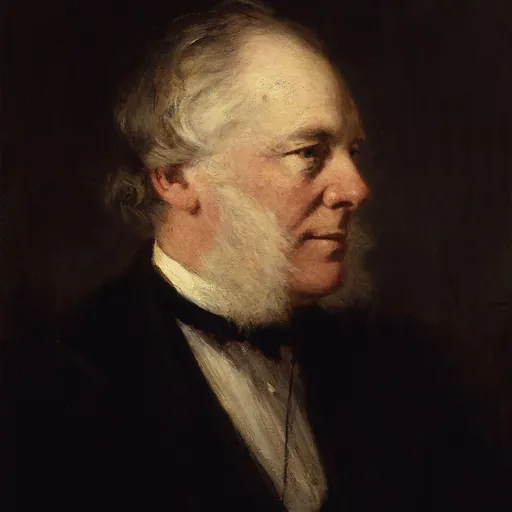
About Samuel Smiles
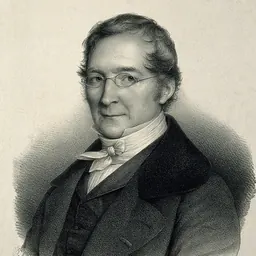
Lived 1812 – 1904 (aged 91). Samuel Smiles was a British writer, journalist, biographer, philosopher and physician.
Samuel Smiles (23 December 1812 – 16 April 1904) was a British author and government reformer. Although he campaigned on a Chartist platform, he promoted the idea that more progress would come from new attitudes than from new laws. His primary work, Self-Help, promoted thrift and claimed that poverty was caused largely by irresponsible habits, while also attacking materialism and laissez-faire government. It has been called "the bible of mid-Victorian liberalism" and had lasting effects on British political thought.
Early life and education Born in Haddington, East Lothian, Scotland, Smiles was the son of Janet Wilson of Dalkeith and Samuel Smiles of Haddington. He was one of eleven surviving children. While his family members were strict Reformed Presbyterians, he did not practice. He studied at a local school, leaving at the age of 14. He apprenticed to be a doctor under Dr. Robert Lewins. This arrangement enabled Smiles to study medicine at the University of Edinburgh in 1829. There he furthered his interest in politics, and became a strong supporter of Joseph Hume.
His father died in the 1832 cholera epidemic, but Smiles was enabled to continue with his studies because he was supported by his mother. She ran the small family general store firm in the belief that the "Lord will provide". Her example of working ceaselessly to support herself and his nine younger siblings strongly influenced Smiles's future life, but he developed a benign and tolerant outlook that was sometimes at odds with that of his Reformed Presbyterian forebears.
In 1838 Smiles was offered the editorship of the reformist paper, the Leeds Times. He spent the next twenty years in the city, moving to live on Woodhouse Cliff in 1847.
Career as a campaigner In 1837, he wrote articles for the Edinburgh Weekly Chronicle and the Leeds Times, campaigning for parliamentary reform. In 1861 Smiles published an article from the Quarterly, renamed Workers Earnings, Savings, and Strikes. He claimed poverty in many instances was caused by habitual improvidence:
In 1866, Smiles became president of the National Provident Institution but left in 1871, after suffering a debilitating stroke.
The Globe Permanent Benefit Building Society 493 New Cross Road Deptford SE14 Founded 1868 Incorporated 1878. Founded for the mutual benefit of investors and borrowers with the approval of the late Samuel Smiles. The 50th Anniversary Jubilee Report (1 August 1918) states that he was a founding Director and was involved for 3 years. All founders lived in Deptford or the neighbourhood as did the ten successors.
Writings In 1875, his book Thrift was published. In it, he said that "riches do not constitute any claim to distinction. It is only the vulgar who admire riches as riches". He claimed that the Poor Law Amendment Act 1834 was "one of the most valuable that has been placed on the statute-book in modern times". He also criticised laissez-faire:
In 1871, he edited the letters written by his son, Samuel Smiles Jr (born 1852), and sent home during his teenage sea voyage (taken for his health ), as well as the log he kept of his journey to Australia and the United States between February 1869 and March 1871, and published them in London in book form, under the title A Boy's Voyage Round the World.
In 1881 he claimed:
Self-Help Smiles was not very successful in his careers as a doctor and journalist. He joined several cooperative ventures, but they failed for lack of capital. Disillusioned, he turned away from middle-class utopianism. He finally found intellectual refuge and national fame in the isolation of self-help.
The origins of his most famous book, Self-Help, lay in a speech he gave in March 1845 in response to a request by a Mutual Improvement Society, published as, The Education of the Working Classes. In it Smiles said:
The newly founded Routledge publishing house rejected publishing Self-Help in 1855. Twenty years later Smiles was seated next to George Routledge at a dinner, and he said to him, "And when, Dr. Smiles, are we to have the honour of publishing one of your books?"; Smiles replied that Mr. Routledge already had the honour of rejecting Self-Help. Although John Murray was willing to publish Self-Help on a half-profits system, Smiles rejected this as he did not want the book to lose its anecdotes. In 1859, Smiles self-published the book, retaining the copyright, while he paid John Murray a ten per cent commission. Self-Help "elevated [Smiles] to celebrity status: almost overnight, he became a leading pundit and much-consulted guru". Smiles "suddenly became the fashion and he was deluged with requests that he should lay foundation stones, sit for his portrait, present prizes to orphan children, make speeches from platforms. The simple fellow was pleased with these invitations, but naturally he could not accept. He had his work to do ... his duty did not lie on any public platform ... It lay in his office with his Work".
Conduct manuscript Smiles intended to publish a book titled Conduct, in 1896. He submitted it to his publisher, but John Murray declined to publish the book. In 1898, publication was denied again.
After the death of Smiles in 1904, the manuscript of Conduct was found in his desk and, on the advice of John Murray, was destroyed. No copy is known to exist.
Later life, death and descendants Sir George Reid was commissioned to paint Smiles's portrait, completed in 1877 and now in the collection of the National Gallery, London. Copies of his handwriting can be found in the archives of East Lothian Council.
When, in 1892, William Gladstone returned to power and, as prime minister, introduced his Second Irish Home Rule Bill, Smiles wrote to his son in Ulster: "Don't you rebel. Keep quiet, though I see your name among the agitators ... Your letter is frightfully alarming ... Gladstone has come into power and we are threatened with Civil War. This cannot be the result of good statesmanship. Yet there are Liberal members to cheer on the maniac. Alas, alas for Liberalism! ... Must I give you six months notice to withdraw my loans to the B.R. Co., for I want to keep the little money I have for wife and bairns, not for arming the Ulstermen". Smiles wrote to Lucy Smiles in 1893, "This Home Rule Bill is horrid ... I am quite appalled at that wretched hound, miscalled statesman, throwing the country into a state of turmoil. I cannot understand how so many persons in this part of Britain follow that maniac, just like a flock of sheep. He is simply bursting with self-conceit. Alas! Alas for Liberalism!"
On 16 April 1904, Samuel Smiles died in Kensington in his 92nd year, London and was buried in Brompton Cemetery. Shortly before his death, he was reportedly offered a knighthood, which he declined to accept.
Smiles's grandchildren include Sir Walter Smiles, an Ulster Unionist Party MP. Through that branch of the family, Smiles is also the great-great-grandfather of Bear Grylls, a well-known adventurer.
Legacy
Self-Help has been called "the bible of mid-Victorian liberalism", and it raised Smiles to celebrity status almost overnight.
The Liberal MP J. A. Roebuck in 1862 called Smiles's Workmen's Earnings, Strikes and Savings "a very remarkable book" and quoted passages from it in a speech.
George Bernard Shaw, in his Fabian Essays in Socialism (1889), called Smiles "that modern Plutarch".
American inspirational writer Orison Swett Marden was inspired by Samuel Smiles as a result of having read Self-Help during his youth. Decades later, he wrote Pushing to the Front (1894) and became a professional author as a result of Smiles's influence.
The late nineteenth century and early twentieth century saw the rise of New Liberalism, Keynesian economics, and socialism, which all viewed thrift unfavourably. The New Liberal economists J. A. Hobson and A. F. Mummery in their Physiology of Industry (1889), claimed that saving resulted in the underemployment of capital and labour during trade depressions. General Theory of Employment, Interest and Money (1936) by John Maynard Keynes, attempted to replace classical liberal economics.
Building societies adopted the message of being thrifty to self-improve represented in Thrift. In 1897, The Halifax printed the "Misery Leaflet" in which a worn-out house and a well-off house are each illustrated next to each other under the labels "Want of Thrift" and "Thrift". The leaflet has "Little and often fills the purse.", "Before you marry have a house to live in.", and "Providence will thrive where genius will starve. When fortune smiles take the advantage." written on the margins. In reality, the majority of people could not save because banks did not accept small deposits at the time.
In 1905, William Boyd Carpenter, Bishop of Ripon, praised Smiles: "The Bishop said he had noticed a little tendency in some quarters to disparage the homely energies of life which at one time were so highly thought of. He recalled the appearance of Self-Help, by Samuel Smiles, who 40 or 50 years ago gave lectures at Leeds encouraging young men to engage in self-improvement. His books were read with extraordinary avidity, but there arose a school which taught the existence of the beautiful and to do nothing. That school disparaged thrift and did not pay much attention to character and, perhaps, not much attention to duty".
The Labour MP David Grenfell, in a debate on the Transitional Payments (Determination of Need) Bill, claimed that the 1932 bill "discriminated not against the unthrifty, the idler, and the waster, but against the industrious, thrifty person, who had to pay a heavy penalty. The Minister of Labour penalized self-help. He poured contempt on Samuel Smiles and all his works".
The liberal Ernest Benn invoked Smiles in 1949 when praising the virtues of self-help.
In 1962, the director of the British Institute of Management, John Marsh, said that young men who entered industry needed a sense of service and duty; they must be "men of character who know how to behave well as in phases of success"; they must possess self-discipline in thinking and behaviour: "There is something still to be said for Samuel Smiles's doctrine of self-help".
The liberal economist F. A. Hayek wrote in 1976 that: "It is probably a misfortune that, especially in the USA, popular writers like Samuel Smiles...have defended free enterprise on the ground that it regularly rewards the deserving, and it bodes ill for the future of the market order that this seems to have become the only defence of it which is understood by the general public. That it has largely become the basis of the self-esteem of the businessman often gives him an air of self-righteousness which does not make him more popular".
Writings
Self-help topics Self-Help, 1859 Character, 1871 Thrift, 1875 Duty, 1880 Life and Labour, 1887
Biographical works The Life of George Stephenson, 1857 The Story of The Life of George Stephenson, London, 1859 (abridgement of the above) Brief biographies, Boston, 1860 (articles reprinted from periodicals such as the Quarterly Review) Lives of the Engineers, 5 vol, London 1862 Vol 1, Early engineers – James Brindley, Sir Cornelius Vermuyden, Sir Hugh Myddleton, Capt John Perry Vol 2, Harbours, Lighthouses and Bridges – John Smeaton and John Rennie (1761–1821) Vol 3, History of Roads – John Metcalf and Thomas Telford Vol 4, The Steam Engine – Boulton and Watt Vol 5, The Locomotive – George Stephenson and Robert Stephenson Industrial Biography, 1863 Includes lives of Andrew Yarranton, Benjamin Huntsman, Dud Dudley, Henry Maudslay, Joseph Clement, etc.. Vol 4 Boulton and Watt, 1865 The Huguenots: Their Settlements, Churches and Industries in England and Ireland, 1867 The Huguenots in France. 1870 Lives of the Engineers, new ed. in 5 vols, 1874 (includes the lives of Stephenson and Boulton and Watt) Life of a Scotch Naturalist: Thomas Edward, 1875 George Moore, Merchant and Philanthropist, 1878 Robert Dick, Baker of Thurso, Geologist and Botanist, 1878 Men of Invention and Industry, 1884 Phineas Pett, Francis Pettit Smith, John Harrison, John Lombe, William Murdoch, Frederick Koenig, The Walter family of The Times, William Clowes, Charles Bianconi, and chapters on Industry in Ireland, Shipbuilding in Belfast, Astronomers and students in humble life James Nasmyth, engineer, an autobiography, ed. Samuel Smiles, 1885 A Publisher and his Friends. Memoir and Correspondence of the Late John Murray, 1891 Jasmin. Barber, poet, Philanthropist, 1891 Josiah Wedgwood, his Personal History, 1894 The Autobiography of Samuel Smiles, LLD, ed. T. Mackay, 1905 – New York edition
The growth of industrial archaeology and history in Britain from the 1960s caused a number of these titles to be reprinted, and a number are available on the Web from such sources as Project Gutenberg, noted below.
Don’t just read it —
keep it.
Full-length biographies made to live with: read them, listen on the way to work, watch them tonight.
- E-book
- Audio
- Video
Instant download · yours to keep · every purchase keeps this site free
Important facts
People in Samuel Smiles's life
Named in this biography and alive at the same time

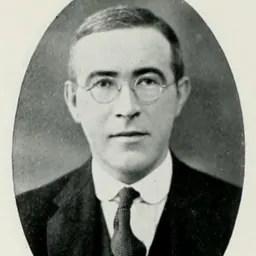



Related people
Same field, nearest in time

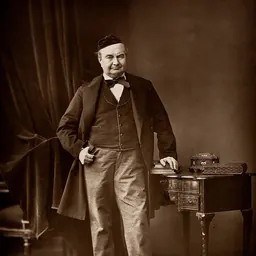
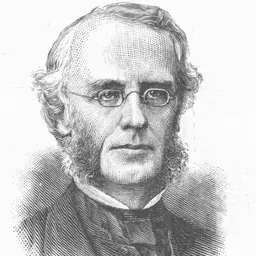
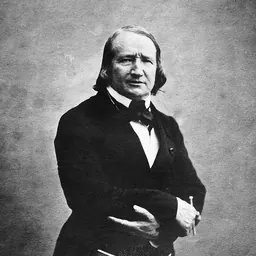

Contemporaries
People whose lives overlapped Samuel Smiles's



Frequently asked questions
Who was Samuel Smiles?
Scottish author (1812-1904)
When was Samuel Smiles born?
Samuel Smiles was born on 23 December 1812 in Haddington.
When did Samuel Smiles die?
Samuel Smiles died on 16 April 1904 in Kensington.
What was Samuel Smiles's occupation?
Samuel Smiles was a writer, journalist, biographer, philosopher and physician.
What nationality was Samuel Smiles?
Samuel Smiles was British.
Sources & further reading
Cite this page
APA: Biography.guide. (2026). Samuel Smiles. https://biography.guide/samuel-smiles/
MLA: "Samuel Smiles." Biography.guide, https://biography.guide/samuel-smiles/.
Chicago: "Samuel Smiles." Biography.guide. https://biography.guide/samuel-smiles/.
Data last updated: 2026-09-22 · Spot an error? Report a correction.
Portrait: Wikimedia Commons · author & licence
Page generated 2026-09-27 05:03 UTC