
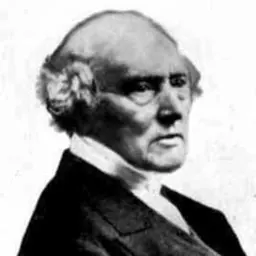
George Reid
Australian politician, 4th Prime Minister of Australia and 12th Premier of New South Wales
About George Reid
Lived 1845 – 1918 (aged 73). George Reid was a British politician, diplomat and barrister.
Sir George Houston Reid (25 February 1845 – 12 September 1918) was the fourth prime minister of Australia, serving from 1904 to 1905. He held office as the leader of the Free Trade Party, previously serving as the 12th premier of New South Wales from 1894 to 1899, and later as the high commissioner of Australia to the United Kingdom from 1910 to 1916.
Reid was born in Johnstone, Renfrewshire, Scotland. He and his family emigrated to Australia when he was young. They initially settled in Melbourne, but moved to Sydney when Reid was 13, at which point he left school and began working as a clerk. He later joined the New South Wales civil service, and rose through the ranks to become secretary of the Attorney-General's Department. Reid was also something of a public intellectual, publishing several works in defence of liberalism and free trade. He began studying law in 1876 and was admitted to the bar in 1879. In 1880, he resigned from the civil service to run for parliament, winning election to the New South Wales Legislative Assembly.
From 1883 to 1884, Reid was Minister of Public Instruction in the government of Alexander Stuart. He joined the Free Trade Party of Henry Parkes in 1887, but refused to serve in Parkes' governments due to personal enmity. When Parkes resigned as party leader in 1891, Reid was elected in his place. He became premier after the 1894 election and remained in office for just over five years. Despite never winning majority government, Reid was able to pass a number of domestic reforms concerning the civil service and public finances. He was an advocate of federation and played a part in drafting the Constitution of Australia, where he became known as a strong defender of his colony's interests. In 1901, he was elected to the new Federal Parliament representing the Division of East Sydney.
Reid retained the leadership of the Free Trade and Liberal Association after federation, and consequently became Australia's first Leader of the Opposition. For the first few years, the Protectionist Party governed with the support of the Australian Labor Party. Alfred Deakin's Protectionist minority government collapsed in April 1904, and he was briefly succeeded by Labor's Chris Watson, who proved unable to govern and resigned after four months. As a result, Reid became prime minister in August 1904, heading yet another minority government. He included four Protectionists in his cabinet, but was unable to achieve much before his government was brought down in July 1905. One notable exception was the passage of the landmark Commonwealth Conciliation and Arbitration Act 1904, which dealt with industrial relations.
At the 1906 election, Reid secured the most votes in the Australian House of Representatives and the equal-most seats, but was well short of a majority and could not form a government. He resigned as party leader in 1908, after opposing the formation of the Commonwealth Liberal Party (a merger with the Protectionists). Reid accepted an appointment as Australia's first High Commissioner to the United Kingdom in 1910, and remained in the position until 1916. He subsequently won election to the House of Commons of the United Kingdom, serving until his sudden death two years later.
Early life Reid was born on 25 February 1845 in Johnstone, Renfrewshire, Scotland. He was the fifth of seven children born to Marion (née Crybbace) and John Reid; he had four older brothers and two younger sisters. He was named after George Houstoun, a former Conservative MP for the Renfrewshire constituency who had died a few years earlier. Reid's father, the son of a farmer, was born in Tarbolton, Ayrshire. At the time of George's birth, he was a minister in the Church of Scotland, which he had joined in 1839 after previously ministering in various secessionist Presbyterian churches; he remained loyal to the established church in the Disruption of 1843. In 1834, he had married the daughter of another minister, Edward Crybbace; she was about nine years his junior.
In April 1845, Reid and his family moved to Liverpool, England, where his father had been appointed minister of an expatriate Presbyterian congregation. His two younger sisters were born there. The family struggled financially, and his father made the decision to emigrate to Australia. Reid arrived in Melbourne in May 1852, and his father subsequently led congregations in Essendon and North Melbourne. He moved the family to Sydney in 1858. Reid received his only formal schooling at the Melbourne Academy, now known as Scotch College. He received a classical education, and in later life recalled that he had "no appetite for that wide range of metaphysical propositions which juveniles were expected to comprehend"; he found Greek a "lazy horror". He left school aged about 13, when the family settled in Sydney, and began working as a junior clerk in a merchant's counting house. At the age of 15, he joined the debating society at the Sydney Mechanics' School of Arts, and according to his autobiography, "a more crude novice than he had never begun the practise of public speaking". In Sydney, Reid's father became a colleague of John Dunmore Lang at the Scots Church, and then from 1862 until his death in 1867 was the minister of the Mariners' Church on George Street. His mother, who died in 1885, was involved in the ragged schools movement. In later life, Reid praised his parents for his good upbringing.
Public service career In 1864, Reid joined the New South Wales Civil Service as an assistant accountant in the Colonial Treasury, with an annual salary of £200. He was promoted to clerk of correspondence and contracts in 1868, and then chief clerk of correspondence in 1874 on a salary of £400. In 1876, he began to study law seriously, which would provide the independent income necessary to pursue a parliamentary career (given that parliamentary service was unpaid at the time). He became head of the Attorney-General's Department in 1878. In one particular incident his quick wit and affinity for humour were demonstrated when a heckler pointed to his ample paunch and exclaimed "What are you going to call it, George?" to which Reid replied: "If it's a boy, I'll call it after myself. If it's a girl I'll call it Victoria. But if, as I strongly suspect, it's nothing but piss and wind, I'll name it after you." His humour, however, was not universally appreciated. Alfred Deakin detested Reid, describing him as "inordinately vain and resolutely selfish" He was not very active at first, as he was building up his legal practice, although he was concerned to reform the Robertson Land Acts, which had not prevented 96 land holders from controlling eight million acres (32,000 km2) between them. Henry Parkes and John Robertson attempted to make minor amendments to the land acts but were defeated and at the subsequent election Parkes' party lost many seats.
The new premier, Alexander Stuart, offered Reid the position of Colonial Treasurer in January 1883, but he thought it wiser to accept the junior office of Minister of Public Instruction. He served 14 months in this office and succeeded in passing a much improved Education Act, which included the establishment of the first government high schools in the leading towns, technical schools (which became a model for the other colonies) At the resulting by-election Reid was defeated by a small majority as a result of the government's financial hardships due to the loss of revenue from the suspension of land sales. In 1885, he was re-elected in East Sydney and took a great part in the free trade or protection issue. He supported Sir Henry Parkes on the free trade side but, when Parkes came into power in 1887, declined a seat in his ministry. Parkes offered him a portfolio two years later and Reid again refused. He did not like Parkes personally and felt he would be unable to work with him. When payment of members of parliament was passed, Reid, who had always opposed it, paid the amount of his salary into the treasury. Whilst the government survived the motion, parliament was dissolved on 6 June 1891.
Premier
In September 1891, the Parkes ministry was defeated, the Dibbs government succeeded it, and Parkes retired from the leadership of the Free Trade Party. Reid was elected leader of the opposition in his place. He managed to form his party into a coherent group although it "ran the whole gamut from conservative Sydney merchants through middle-class intellectuals to reformers who wished to replace indirect by direct taxation for social reasons." Reid took on the position of Attorney-General in addition to being Premier in the last months of his government.
Federation
Reid supported the federation of the Australian colonies, but since the campaign was led by his Protectionist opponent Edmund Barton he did not take a leading role. He was dissatisfied by the draft constitution, especially the power of a Senate, elected on the basis of States rather than population, to reject money bills.
Following the Adelaide session in 1897 of the National Australasian Convention, Colonial Secretary Joseph Chamberlain sent the Colonial Office's extensive and sometimes critical comments on the current draft of the federal constitution to Reid (then in London for Queen Victoria's Diamond Jubilee), for his "private & independent" consideration. At the Sydney and Melbourne sessions of the Convention in 1897 and 1898, Reid moved amendments based on those comments, covertly obtaining several concessions to British wishes. He denied a suggestion that he had been "talking with ‘Joe’". Reid did copy Chamberlain's comments to a select few other delegates, but they never revealed this. They included Edmund Barton, chair of the Drafting Committee, which accommodated some of Chamberlain's more technical points.
In the aftermath of the Convention, Reid made his famous "Yes-No" speech at Sydney Town Hall, on 28 March 1898. He told his audience that he intended to deal with the bill "with the deliberate impartiality of a judge addressing a jury". After speaking for an hour and three-quarters the audience was still uncertain about his verdict. He concluded by declaring "my duty to Australia demands me to record my vote in favour of the bill". Barton congratulated him on stage, but later he and other Federationists were frustrated by Reid saying that, while he felt he could not desert the cause, he would not recommend any course to the electors: "Now, I say to you, having pointed out my mind, and having shown you the dark places as well as the light places of this constitution, I hope every man in this country, without coercion from me, without any interference from me, will judge for himself." He consistently kept this attitude until the poll was taken on 3 June 1898. This earned him the nickname "Yes-No Reid". The referendum in New South Wales resulted in a small majority in favour, but the yes votes fell about 8000 short of the required 80,000. Reid fought for federation at the second referendum and it was carried in New South Wales, with 56.5 percent of valid votes cast for 'Yes'. "A bizarre combination of the Labor Party, protectionists, Federation enthusiasts and die-hard anti-Federation free traders" censured Reid for paying the expenses of John Neild who had been commissioned to report on old-age pensions, prior to parliamentary approval. Governor Beauchamp refused Reid a dissolution of parliament, and Reid was defeated in a no confidence motion, 75 to 41, in September 1899. He was the only person in Australian federal parliamentary history to win back his seat at a by-election triggered by his own resignation, until John Alexander in 2017. Weeks after the by-election, Barton resigned to accept a seat on the High Court and was replaced as prime minister by Alfred Deakin.
At the 1903 federal election, Reid again campaigned as "a champion of a policy of free trade", citing the tariff policy of the Barton Deakin governments as unsuccessful. The election resulted in a near three-way tie: the Free Traders emerged with 24 seats, while the Protectionists held 25 seats and the Australian Labor Party (ALP) led by Chris Watson emerged with 24 seats. Deakin compared the situation to a cricket game where there were "three elevens in the field instead of two". This analogy passed into common usage to describe the unstable party system in the first decade after Federation. Deakin continued in office as prime minister at the head of a minority government, primarily drawing on the support of the ALP, with Reid continuing as opposition leader and increasingly critical of Labor's role in propping up Deakin's government. However, in April 1904 the ALP and several Free Traders voted to amend the government's Conciliation and Arbitration Bill, which Deakin took as a motion of no confidence; Reid personally voted against the amendment. Deakin resigned as prime minister, with Watson succeeding him as Australia's first Labor prime minister.
After Deakin's defeat, Reid sought to negotiate an alliance or coalition with the Protectionists, with formal talks beginning in May 1904. He believed a "fiscal truce" was necessary between the two parties, with the question of free trade or protection to be put aside until the next election in order to remove Labor from office and guarantee stable government. The negotiations were unsuccessful, due to factional divisions within the Protectionists and unresolved questions over whether Reid or Deakin would lead a coalition government. However, when parliament resumed Watson alienated many Protectionists by attempting to enshrine trade union preference in the Conciliation and Arbitration Bill. Deakin continued to play kingmaker and a speech in August 1904 signalled that he was willing to vote down the Watson government.
Prime Minister, 1904–1905
Government formation Reid was appointed prime minister on 18 August 1904, six days after the Watson government was defeated by 36 votes to 34 on a confidence motion. Watson attempted to call an early election but was refused a dissolution by Governor-General Lord Northcote, who instead called upon Reid as the third prime minister in the nine months since the 1903 election.
Reid was reliant on the support of Deakin and the Protectionists for his continuation in office, holding a minority both in the House and Senate. Rather than the full coalition government considered earlier in the year, Deakin gave approval for four designated Protectionists to join the new ministry. Former Victorian premier Allan McLean was the most senior Protectionist to take a portfolio and was given the second rank in cabinet, with the administration becoming known as the Reid–McLean government. Reid was forced to exclude several Free Traders from the cabinet, although it had considerable ministerial experience with McLean and George Turner also being former premiers. The formation of the government led to a split in the Protectionists, with around half supporting the government and the other half joining the Labor Party on the opposition benches.
Policy and legislation In his first parliamentary speech as prime minister, Reid laid out a limited legislative agenda intended to avoid an immediate defeat of his government. This included passing of the previously postponed budget, reforms to electoral boudnaries, and progression of the Conciliation and Arbitration Bill and Manufactures Encouragement Bill which had been introduced earlier in the parliament. Reid succeeding in passing the former as the Conciliation and Arbitration Act 1904, creating the Commonwealth Court of Conciliation and Arbitration and resolving a longstanding issue. With support from the other parties, he also passed significant amendments to the Defence Act 1903 which created a Military Board responsible to parliament.
Reid sought to defuse the tariff issue by appointing a royal commission in December 1904, comprising equal numbers of protectionists and free traders. His cabinet was credited with administrative reforms that increased the efficiency and independence of the Commonwealth Public Service, including the introduction of standard national procedures for departments inherited from the colonial public services and the removal of discretionary powers held by government ministers that had led to accusations of favouritism.
As with his predecessors, Reid appointed himself minister for external affairs and focused his government's external policy on the Pacific islands. He hoped to pass the Papua Bill, which had been introduced by the Watson government and provided for a new territory of Papua to succeed the interim Australian administration of British New Guinea. The bill failed to progress before parliament was prorogued in December 1904 but was later passed as the Papua Act 1905. Reid also sought to increase Australian influence over the New Hebrides, having previously supported their annexation as premier of New South Wales. His government secured additional funding for the shipping service provided by Burns, Philp & Co., but was unable to secure tariff relief for imports from the Australian settlers on the islands.
Prorogation and defeat The House of Representatives was prorogued in December 1904 and would not be reconvened for another six months. During the parliamentary recess Reid continued to work in earnest to bring about a realignment and institute a two-party system, intending to unite the Free Traders and Protectionists under his leadership and present a united anti-socialist front against the Labor Party. He held a series of public meetings in support of his efforts and made repeated overtures to Deakin and other leading Protectionists, anticipating that he could call an early election if his unification efforts succeeded.
In early 1905, Reid's attorney-general Josiah Symon was involved in a spat with the three justices of the High Court over what Symon viewed as excessive expenditure on travel, accommodation and staffing. This culminated in threats by Chief Justice Samuel Griffith to suspend the court's activities and the release of correspondence to the press which reflected poorly on Symon. Reid's attempts to mediate resulted in a breakdown in his relationship with Symon, but with his government's insecure parliamentary status he considered it untenable to dismiss a minister. The dispute likely prejudiced Reid's unification attempts, as the High Court judges had close ties with the Protectionists.
Reid recalled parliament on 28 June 1905. Days earlier, Deakin had given a speech in Ballarat that was critical of Reid's anti-socialist campaign and rejected an early election as unwise; it implied the Protectionists would not continue to support the government and was widely reported as a "notice to quit". The throne speech drafted for Northcote to deliver effectively suspended the government's legislative agenda outside of an electoral redistribution, a clear signal that Reid intended to seek an early dissolution in response to Deakin's speech.
On 30 June 1905, the House of Representatives voted by 42 votes to 27 in favour of an amendment to the address-in-reply introduced by Deakin. This was taken by Reid as a motion of no confidence. He sought a dissolution from Northcote, but this was refused on the basis that the parliament was not due to expire for over a year and Deakin could command a majority in the House through a renewed alliance with Labor. Deakin succeeded Reid as prime minister on 5 July 1905.
Leader of the Opposition, 1905–1908 Reid adopted a strategy of trying to reorient the party system along Labor vs. non-Labor lines – prior to the 1906 election, he renamed his Free Trade Party to the Anti-Socialist Party. Reid envisaged a spectrum running from socialist to anti-socialist, with the Protectionist Party in the middle. This attempt struck a chord with politicians who were steeped in the Westminster tradition and regarded a two-party system as very much the norm. Zachary Gorman has argued that this attempt to impose clear 'lines of cleavage' in Federal politics was inspired by Reid's friend Joseph Carruthers who had achieved a political realignment in New South Wales that destroyed the Progressive middle party and created a Liberal-Labor divide. For Reid, anti-socialism was a natural product of his long-standing belief in Gladstonian liberalism.
Reid referred to Labor publicly using a damaging visual negative image of Labor as a hungry socialist tiger that would devour all. The anti-socialist campaign led to the Protectionist vote and seat count dropping significantly at the 1906 election, while both Reid's party and Labor won 26 seats each. The Deakin government continued with Labor support for the time being, despite only holding 16 seats after losing 10, although with another 5 independent Protectionists. Reid's anti-socialist campaign had nevertheless laid the groundwork for the desired realignment, and liberalism would come to sit on the centre-right of Australian politics.
On 24 December 1909 Reid resigned from Parliament (he was the first Member to have resigned twice), however his seat was left vacant until the 1910 election. His seat of East Sydney was won by Labor's John West, in an election which saw Labor win 42 of 75 seats, against the CLP on 31 seats. Labor also won a majority in the Senate.
Later life
In 1910, Reid was appointed as Australia's first High Commissioner in London. aged 73, of cerebral thrombosis.
Works The Australian Commonwealth and her relation to the British Empire (address, 1912)
Don’t just read it —
keep it.
Full-length biographies made to live with: read them, listen on the way to work, watch them tonight.
- E-book
- Audio
- Video
Instant download · yours to keep · every purchase keeps this site free
Important facts
Family & relationships
People in George Reid's life
Named in this biography and alive at the same time




Related people
Same field, nearest in time




Contemporaries
People whose lives overlapped George Reid's


Frequently asked questions
Who was George Reid?
Australian politician, 4th Prime Minister of Australia and 12th Premier of New South Wales (1845-1918)
When was George Reid born?
George Reid was born on 25 February 1845 in Johnstone.
When did George Reid die?
George Reid died on 12 September 1918 in London.
What was George Reid's occupation?
George Reid was a politician, diplomat and barrister.
What nationality was George Reid?
George Reid was British.
Sources & further reading
Cite this page
APA: Biography.guide. (2026). George Reid. https://biography.guide/george-reid-politician-1845/
MLA: "George Reid." Biography.guide, https://biography.guide/george-reid-politician-1845/.
Chicago: "George Reid." Biography.guide. https://biography.guide/george-reid-politician-1845/.
Data last updated: 2026-09-20 · Spot an error? Report a correction.
Page generated 2026-09-27 05:19 UTC