
About Henry Parkes
Lived 1815 – 1896 (aged 80). Henry Parkes was a British politician, journalist and writer.
Sir Henry Parkes, (27 May 1815 – 27 April 1896)
Parkes delivered his famous Tenterfield Oration in 1889, which yielded a federal conference in 1890 and a Constitutional Convention in 1891, the first of a series of meetings that led to the federation of Australia. He died in 1896, five years before this process was completed. He was described during his lifetime by The Times as "the most commanding figure in Australian politics". Alfred Deakin described Sir Henry Parkes as having flaws but nonetheless being "a large-brained self-educated Titan whose natural field was found in Parliament".
Early life
Parkes was born in Canley (now a suburb of Coventry) in Warwickshire, England, and christened in the nearby village of Stoneleigh. His father, Thomas Parkes, was a small-scale tenant farmer. His mother, Martha Falconbridge, died in 1842 and would serve as the namesake for his home in New South Wales. He received little formal education.
As a young adult, Parkes educated himself by reading extensively, and also developed an interest in poetry. In 1835, he wrote poems (later included in his first volume of poems) that were addressed to Clarinda Varney, the daughter of a local butcher. On 11 July 1836 they married.
Resignation, re-election and first premiership His ongoing financial woes had become a matter of some public notoriety, causing the barrister and fellow politician, William Dalley, to remark of Parkes, in 1872, that, "If he lives long, he will rule not over a nation of admirers and friends, but of creditors".
His government also sponsored the building of railway and telegraph lines and reduced some taxes.
Parkes was accused of manoeuvring to get rid of Butler, who was seen as an opponent within Parkes's faction, but no evidence was found to support this.
The ministry continued to government, though it did not succeed in creating an elected upper house. In February 1875, Governor Robinson's decision to release of the bushranger Frank Gardiner led to the defeat of the ministry. Subsequent discussions between Robinson, Parkes and the Colonial Office clarified the governor's responsibilities in pardoning prisoners. .
Third premiership
It produced two years of stable government after years of instability.
In the 1880 election, Parkes was returned for St Leonards. Along with many politicians of his day, Parkes avoided the claim that the Chinese and other Asians should be excluded because they were an "inferior" race.
He said: "They are a superior set of people . . . a nation of an old and deep-rooted civilisation. . . . It is because I believe the Chinese to be a powerful race capable of taking a great hold upon the country, and because I want to preserve the type of my own nation . . . that I am and always have been opposed to the influx of Chinese."
Fifth premiership and Federation
The proposal to join the colonies of Australia into a federation became a major political issue.
A wood engraving of Sir Henry Parkes moving the first resolution at the federation conference in Melbourne, 1 March 1890On 24 October 1889, at the Tenterfield School of Arts, Parkes delivered the Tenterfield Oration. The oration was seen as a clarion call to federalists and he called for a convention "to devise the constitution which would be necessary for bringing into existence a federal government with a federal parliament for the conduct of national undertaking".
Parkes proposed the name of Commonwealth of Australia for the new nation.
On the backbench Kenilworth, the Gothic home in Annandale where Parkes lived until his death in 1896. Parkes in 1893, photographed by Henry Walter BarnettParkes, now 77 years old, was replaced by Reid as the leader of the Free Trade Party, and he henceforth sat as an independent member. Parkes's political energies were now wholly occupied by Federation. In response to pressure from Parkes, Reid endorsed a scheme of a second, directly elected federal convention, followed by a referendum. Parkes had already mooted a referendum, but strongly favoured a convention delegates being chosen by premiers, rather than elected by the public. In quest of his political enemy, Parkes stood against Reid at the 1895 general election for Sydney-King, winning 44 percent of the vote. In 1896 he sought to re-enter parliament at the bye-election for the seat of Waverley, winning just 11.5 percent of the vote. This proved to be the anti-climactic end of his 40 year long career in the New South Wales Parliament.
Parkes resided at Kenilworth, a Gothic mansion in Johnston Street, Annandale, a Sydney suburb. Its owner sought the prestige of having Parkes as a tenant, and gave favourable terms.
He died on 27 April; by that time he was living in poverty.
His portrait by the artist Julian Ashton is in a public collection in Sydney.
Evaluations Parkes was described during his lifetime by The Times as "the most commanding figure in Australian politics". Alfred Deakin described him as "though not rich or versatile, his personality was massive, durable and imposing, resting upon elementary qualities of human nature elevated by a strong mind. He was cast in the mould of a great man and though he suffered from numerous pettinesses, spites and failings, he was in himself a large-brained self-educated Titan whose natural field was found in Parliament and whose resources of character and intellect enabled him in his later years to overshadow all his contemporaries".
Marriages and children Parkes was first married to Clarinda Varney on 11 July 1836 in Birmingham. She died on 2 February 1888 in Balmain, New South Wales, aged 74. They had twelve children:
Thomas Campbell Parkes (18 April 1837 – 5 May 1837), born and died in Birmingham aged 17 days. Clarinda Martha Parkes (23 June 1838 – 24 June 1838), born and died in Birmingham aged one day. Clarinda Sarah Parkes (23 July 1839 – 11 October 1915), married William Thom and had issue. Robert Sydney Parkes (21 December 1843 – 2 January 1880), married and had issue. Mary Parkes (16 February 1846 – 5 December 1846), died aged under 10 months. Mary Edith Parkes (3 March 1848 – 15 December 1919), married George Murray and had issue. Milton Parkes (14 December 1849 – 19 January 1851), died aged 13 months. Lily Maria Parkes (27 October 1851 – 25 March 1854), died aged 2 years. Annie Thomasine Parkes (9 January 1854 – 6 February 1929), remained unmarried. Gertrude Amelia Parkes (13 April 1856 – 31 July 1921), married Robert Hiscox and had issue. Varney Parkes (4 June 1859 – 14 May 1935), married firstly Mary Murray and then her sister Isabella Murray, and had issue. An architect and Member of the New South Wales Legislative Assembly – "feeble son of an illustrious man". Lily Faulconbridge Parkes (7 February 1862 – 14 October 1932), remained unmarried. After his first wife's death, Parkes married Eleanor Dixon on 6 February 1889 in Sydney. They remained married until her death on 16 July 1895 in Annandale, New South Wales, aged 38. They had five children, three born before their marriage: Sydney Parkes (1884 – 20 April 1937), married Marion Edith Morrissey and had issue. Kenilworth Parkes (1886 – 4 November 1910), married Maude Howard (later Armstrong) and had issue. Aurora Parkes (1888 – 29 October 1974), married Emanuel Evans, without issue. Henry Parkes (1890 – 8 July 1954), married Katherine Rush and had issue. Cobden Parkes (2 August 1892 – 15 August 1978), married Victoria Lillyman and had issue. Public servant and New South Wales Government Architect. Parkes married thirdly in Parramatta on 23 October 1895 to Julia Lynch, his 23-year-old former cook and housekeeper. They had no children, but Lady Parkes raised her stepchildren from Sir Henry's second marriage. They remained married until his death a year later. Lady (Julia) Parkes died on 11 July 1919 in Lewisham, New South Wales.
Honours Henry Parkes was created Knight Commander of the Order of St Michael and St George in 1877, and Knight Grand Cross of the same order in 1888.
His image appears on the Australian one-dollar coin of 1996; and on the Centenary of Federation commemoration Australian $5 note issued in 2001.
Literary works
Stolen Moments (1842) Murmurs of the Stream (1857) Studies in Rhyme (1870) The Beauteous Terrorist and Other Poems (1885) Fragmentary Thoughts (1889) Sonnets and Other Verses (1895) Australian Views of England (1869) Fifty Years in the Making of Australian History (1892) Speeches on Various Occasions (1876, and another collection dealing mostly with federation appeared in 1890 under the title of The Federal Government of Australasia. (1890)
Selected list of poems TitleYearFirst publishedReprinted/collected in "The Buried Chief " 1886 The Sydney Morning Herald, 19 December 1891 Fragmentary Thoughts, Samuel E. Lees, 1889, pp. 17-18
Others "Sunrise, from Bourke's Statue" (1850) "Fatherland" (1856) "Weary" (1892) "Four Score" (1895)
Legacy and memorials Henry Parkes Oration
The Henry Parkes Foundation hosted the inaugural Henry Parkes Oration in 2001, when it was delivered by Gordon Samuels, and has held the event annually since 2004.
Named after him The following places and other things were named after Henry Parkes: Division of Parkes (1901–1969), a former Sydney electorate in the Australian House of Representatives Division of Parkes, a current regional electorate in the House of Representatives Parkes, New South Wales, a regional town Parkes, Australian Capital Territory, a suburb of Canberra Parkes Observatory, a radio telescope near Parkes, New South Wales Parkes Way, an arterial road in Canberra Parkesbourne, New South Wales, a locality near Goulburn Parkeston, Western Australia, an outlying area of Kalgoorlie Sir Henry Parkes Avenue, , New South Wales Sir Henry Parkes Memorial School in Tenterfield Sir Henry Parkes School of Arts, aka the Tenterfield School of Arts museum and theatre complex, where Parkes made the famous "Tenterfield Oration"
Parkes is also commemorated in his birthplace Canley, Coventry by the naming of a road (Sir Henry Parkes Road) and a school (Sir Henry Parkes Primary School) in Coventry. Canley railway station also commemorates the link with Sir Henry Parkes with Australian-themed decor.
He is a character in the play Duke of Edinburgh Assassinated or The Vindication of Henry Parkes (1971).
Don’t just read it —
keep it.
Full-length biographies made to live with: read them, listen on the way to work, watch them tonight.
- E-book
- Audio
- Video
Instant download · yours to keep · every purchase keeps this site free
Important facts
People in Henry Parkes's life
Named in this biography and alive at the same time



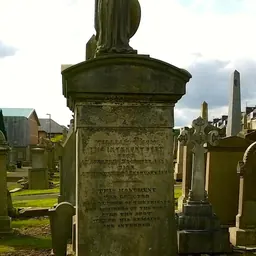
Related people
Same field, nearest in time



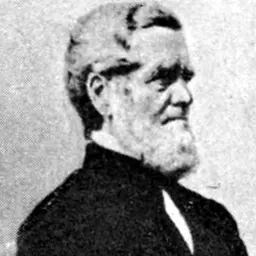


Contemporaries
People whose lives overlapped Henry Parkes's




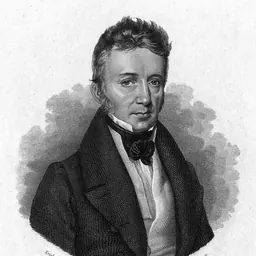
Frequently asked questions
Who was Henry Parkes?
Australian statesman and politician (1815-1896)
When was Henry Parkes born?
Henry Parkes was born on 27 May 1815 in Warwickshire.
When did Henry Parkes die?
Henry Parkes died on 27 April 1896 in Sydney.
What was Henry Parkes's occupation?
Henry Parkes was a politician, journalist and writer.
What nationality was Henry Parkes?
Henry Parkes was British.
Sources & further reading
Cite this page
APA: Biography.guide. (2026). Henry Parkes. https://biography.guide/henry-parkes/
MLA: "Henry Parkes." Biography.guide, https://biography.guide/henry-parkes/.
Chicago: "Henry Parkes." Biography.guide. https://biography.guide/henry-parkes/.
Data last updated: 2026-09-25 · Spot an error? Report a correction.
Page generated 2026-09-27 05:11 UTC