
About Rudolph Koenig
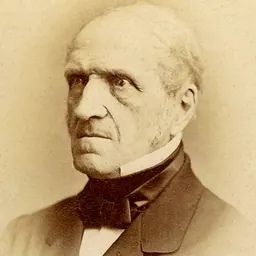
Lived 1832 – 1901 (aged 68). Rudolph Koenig was a German physicist and instrument maker, known for Koenig's manometric flame apparatus.
Karl Rudolph Koenig (26 November 18322 October 1901) was a German businessman, instrument maker, and physicist, chiefly concerned with acoustic phenomena. He was best known for designing and building acoustical instruments such as the tuning fork and sound analyser.
Family and personal life Karl Rudolph Koenig was born in Königsberg of Prussia on 26 November 1832, a descendant of a prominent Königsberg family. Koenig was raised along with his three sisters by his mother: Mathilde (Preuss) Koenig, who came from a craftsman and musical family background, and his father Johann Friedrich Koenig, a professor of mathematics and physics who had studied under the famous Friedrich Bessel. In 1851, Koenig moved to Paris, living in an apartment along the Île Saint-Louis. He lived alone and was never married. Eventually, he turned to focus more on mechanics and physics. In 1968, he was awarded an honorary doctorate at the University of Koenigsberg.
Career
Karl Rudolph Koenig was known to be a great craftsman, but a lesser known interest of his was physics. Sounds in particular were a fascination of his, to the point that he spent a large amount of time and money doing research on acoustics. Early on in life, he took a position as an apprentice in the workshop of violin maker Jean-Baptiste Vuillaume. Koenig spent seven years working under Vuillaume until 1858 when he started his own business.
The business started in his apartment which consisted of a living room, bedroom, and a workshop along with the laboratory. It was a small and quiet place where Koenig worked with his passion of acoustics and music. He would spend most of his free time and money on this same passion. In 1861, Koenig grasped an opportunity to expand and moved his business to Lycée Louis-le-Grand/ Sound analyser with 8 resonator balls, by Koenig, 1880, Conservatoire national des Arts et Métiers.
Koenig's manometric flame apparatus (1862), used to visualize sound waves. Air pressure from an acoustic phone altered the flame provided by a Bunsen gas flame, which was amplified by a rotating mirror and recorded
One of Koenig's more interesting devices was a watch with the escapement consisting of a tuning fork that could calibrate the main frequencies of any sound. This apparatus helped Koenig establish the frequencies of musical tones and allowed him to build a musical scale.
Timeline In 1859, Koenig both published his first catalog, and inverted the phonograph which would play a crucial role for the graphical analysis of sound. Around 1860, along with Hermann von Helmholtz, Rudolph Koenig worked to devise an electronically controlled sound. After working alongside him, Koenig became the main maker and seller of Helmholtz's instruments such as the Helmholtz resonantor. Two years following this in 1862, he began to exhibit the manometric flame apparatus at the London Exhibition. This was the first time his manometric flame apparatus was displayed to the public.
In 1865, Koenig published his second catalog, and was awarded a gold medal from the Societe d'Encouragement pOllr l'lndustrie ntuionale for the use of his instruments in working with the study of acoustics. In 1867, his apparatus collection was exhibited in Paris. After few exhibitions, many of Koenig's products began to be sold internationally. A few years following in 1868 he presented all this catalog at the Paris universal exhibition where about 70% of his production was sold.
After his death in 1901, some of Koenig's equipment was sent and is now maintained in Conservatoire des Arts et Métiers, Paris. The Smithsonian Institution has since began a collection of Koenig's apparatus including some of his tuning forks. These were donated to the museum by the U.S. Military Academy. Another large collection of Koenig's apparatuses is owned by the University of Toronto's physics department.
Don’t just read it —
keep it.
Full-length biographies made to live with: read them, listen on the way to work, watch them tonight.
- E-book
- Audio
- Video
Instant download · yours to keep · every purchase keeps this site free
Important facts
People in Rudolph Koenig's life
Named in this biography and alive at the same time



Related people
Same field, nearest in time




Contemporaries
People whose lives overlapped Rudolph Koenig's


Frequently asked questions
Who was Rudolph Koenig?
German physicist (1832–1901)
When was Rudolph Koenig born?
Rudolph Koenig was born on 26 November 1832 in Königsberg.
When did Rudolph Koenig die?
Rudolph Koenig died on 2 October 1901 in Paris.
What was Rudolph Koenig's occupation?
Rudolph Koenig was a physicist and instrument maker.
What was Rudolph Koenig known for?
Rudolph Koenig was known for Koenig's manometric flame apparatus.
What nationality was Rudolph Koenig?
Rudolph Koenig was German.
Sources & further reading
Cite this page
APA: Biography.guide. (2026). Rudolph Koenig. https://biography.guide/rudolph-koenig/
MLA: "Rudolph Koenig." Biography.guide, https://biography.guide/rudolph-koenig/.
Chicago: "Rudolph Koenig." Biography.guide. https://biography.guide/rudolph-koenig/.
Data last updated: 2026-09-20 · Spot an error? Report a correction.
Page generated 2026-09-27 05:33 UTC