
About Ruairí Brugha
Lived 1917 – 2006 (aged 88). Ruairí Brugha was an Irish politician.
Ruairí Brugha (; 15 October 1917 – 31 January 2006) was an Irish politician who served as a Member of the European Parliament (MEP) for Ireland from 1977 to 1979, Senator for the Industrial and Commercial Panel from 1969 to 1973 and 1977 to 1981 and a Teachta Dála (TD) for the Dublin County South constituency from 1973 to 1977. Brugha was a member of the Irish republican parties Clann na Poblachta (1946–1961) and Fianna Fáil.
Family and early life He was born in Dublin in 1917. He was the son of Cathal Brugha, who was Minister for Defence in the First Dáil and was killed in 1922, during the Civil War; his mother Caitlín Brugha (née Kingston) was an anti-Treaty TD from 1923 to 1927.
Brugha was brought up as an Irish speaker, and educated at Rockwell College and in Coláiste Mhuire, and joined the IRA at the age of 16. When IRA members were interned at the outbreak of World War II, he went on the run. He was eventually arrested in 1940, and interned at the Curragh for the duration of The Emergency. While on parole for health reasons he met Máire MacSwiney, the only child of Lord Mayor of Cork Terence MacSwiney who died while on hunger strike in 1920, and they married in Cork in July 1945. Despite differences with Clann na Poblachta leader Seán MacBride — particularly over MacBride's antagonism to Fianna Fáil — he remained on the party executive during the 1950s.
In 1962, he joined Fianna Fáil, and at the 1969 general election, Brugha stood unsuccessfully as a Fianna Fáil candidate in Dublin County South. He was then elected to the 12th Seanad on the Industrial and Commercial Panel, and at the 1973 general election, he won a seat in the Dáil, succeeding his former Fianna Fáil running mate Kevin Boland, who stood for his new Aontacht Éireann party. After that election, Fine Gael and Labour formed the National Coalition government led by Liam Cosgrave, and Fianna Fáil went into opposition for the first time in 16 years. In 1974, Jack Lynch appointed Brugha as Fianna Fáil Spokesman on Northern Ireland, where he helped reshape the party's policy and supported the Cosgrave government's position in favour of the Sunningdale Agreement.
After boundary changes, he lost his Dáil seat at the 1977 general election, to his party colleague, Niall Andrews. However, he was elected to the 14th Seanad, again on the Industrial and Commercial Panel. On the recommendation of John Hume, he was also appointed as an MEP, serving until the first direct elections to the European Parliament in 1979, when he stood unsuccessfully in the Dublin constituency. He was also active in the European Movement Ireland into his late eighties, serving as an honorary president of the organisation.
Brugha did not contest the 1981 or February 1982 general elections, but at the November 1982 election he stood in Dublin South, where he polled less than 3% of the first-preference votes, and did not stand for election again.
Death He died in Dublin on 31 January 2006, at the age of 88. On his death Taoiseach Bertie Ahern said Ruairí Brugha was "a man of firm convictions who was passionate about politics and had a deep patriotic concern for the welfare of this country". His wife, Máire, died on 20 May 2012, aged 93.
In 2006, Máire's memoir History's Daughter: A Memoir from the Only Child of Terence MacSwiney was published by O'Brien Press. It includes a detailed account of her husband's life, before and after their marriage.
Don’t just read it —
keep it.
Full-length biographies made to live with: read them, listen on the way to work, watch them tonight.
- E-book
- Audio
- Video
Instant download · yours to keep · every purchase keeps this site free
Important facts
People in Ruairí Brugha's life
Named in this biography and alive at the same time


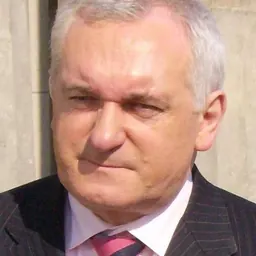



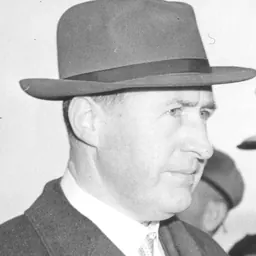
Related people
Same field, nearest in time



Contemporaries
People whose lives overlapped Ruairí Brugha's

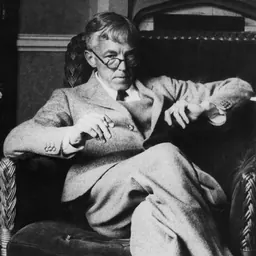
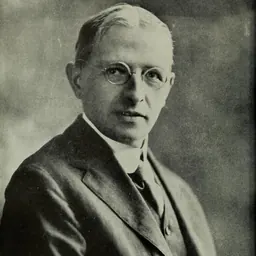
Frequently asked questions
Who was Ruairí Brugha?
Irish politician
When was Ruairí Brugha born?
Ruairí Brugha was born on 15 October 1917 in Dublin.
When did Ruairí Brugha die?
Ruairí Brugha died on 31 January 2006 in Dublin.
What was Ruairí Brugha's occupation?
Ruairí Brugha was a politician.
What nationality was Ruairí Brugha?
Ruairí Brugha was Irish.
Sources & further reading
Cite this page
APA: Biography.guide. (2026). Ruairí Brugha. https://biography.guide/ruairi-brugha/
MLA: "Ruairí Brugha." Biography.guide, https://biography.guide/ruairi-brugha/.
Chicago: "Ruairí Brugha." Biography.guide. https://biography.guide/ruairi-brugha/.
Data last updated: 2026-09-20 · Spot an error? Report a correction.
Page generated 2026-09-27 05:19 UTC