
About Rouget de Lisle
Lived 1760 – 1836 (aged 76). Rouget de Lisle was a French composer, poet, writer, playwright, engineer and military personnel.
Early life Rouget de Lisle was born at Lons-le-Saunier, reputedly on a market day. His parents lived in the neighbouring village of Montaigu. A plaque was placed at the precise spot of his birth and a statue erected in the town's center in 1882. He was the eldest son of Claude Ignace Rouget (5 April 1735 – 6 August 1792) at Orgelet and Jeanne Madeleine Gaillande (2 July 1734 – 20 March 1811).
In 1784, he was initiated into "Les Frères discrets", a masonic lodge in Charleville, just after being promoted officer.
Career
He enlisted into the army as an engineer and attained the rank of captain. A royalist like his father, he refused to take the oath of allegiance to the new constitution. Rouget de Lisle was cashiered and thrown into prison in 1793, narrowly escaping the guillotine. He was freed during the Thermidorian Reaction and retired to Montaigu. was composed 11 years before by the Italian composer Giovan Battista Viotti at the court of Marie Antoinette. France had just declared war on Austria, and the mayor of Strasbourg and worshipful master of the local masonic lodge, baron Philippe-Frédéric de Dietrich, held a dinner for the officers of the garrison, at which he lamented that France had no national anthem. Rouget de Lisle returned to his quarters and wrote the words in a fit of patriotic excitement. The piece was at first called ("War Song for the Army of the Rhine") and only received its name of Marseillaise from its adoption by the Provençal volunteers whom Barbaroux introduced into Paris and who were prominent in the storming of the Tuileries Palace on 10 August 1792.
After the war, Rouget de Lisle wrote a few other songs of the same kind as the "Marseillaise", and in 1825 he published Chants français (French Songs) in which he set to music fifty poems by various authors. His Essais en vers et en prose (Essays in Verse and Prose, 1797) contains the Marseillaise; a prose tale Adelaide et Monville of the sentimental kind; and some occasional poems. He returned to public life after the July Revolution and was awarded the Legion of Honour by Louis Philippe I. His mortal remains were transferred from Choisy-le-Roi cemetery to the Invalides on 14 July 1915, during World War I.
Don’t just read it —
keep it.
Full-length biographies made to live with: read them, listen on the way to work, watch them tonight.
- E-book
- Audio
- Video
Instant download · yours to keep · every purchase keeps this site free
Important facts
People in Rouget de Lisle's life
Named in this biography and alive at the same time

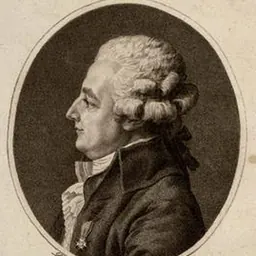
Related people
Same field, nearest in time

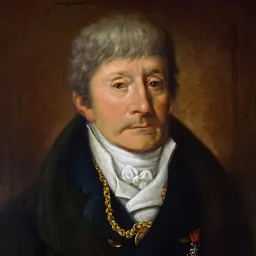


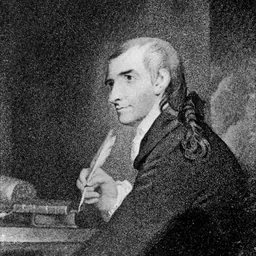
Contemporaries
People whose lives overlapped Rouget de Lisle's





Frequently asked questions
Who was Rouget de Lisle?
French army officer (1760-1836)
When was Rouget de Lisle born?
Rouget de Lisle was born on 10 May 1760 in Lons-le-Saunier.
When did Rouget de Lisle die?
Rouget de Lisle died on 26 June 1836 in Choisy-le-Roi.
What was Rouget de Lisle's occupation?
Rouget de Lisle was a composer, poet, writer, playwright, engineer and military personnel.
What nationality was Rouget de Lisle?
Rouget de Lisle was French.
Sources & further reading
· DBpedia: Claude Joseph Rouget de Lisle
Cite this page
APA: Biography.guide. (2026). Rouget de Lisle. https://biography.guide/rouget-de-lisle/
MLA: "Rouget de Lisle." Biography.guide, https://biography.guide/rouget-de-lisle/.
Chicago: "Rouget de Lisle." Biography.guide. https://biography.guide/rouget-de-lisle/.
Data last updated: 2026-09-20 · Spot an error? Report a correction.
Page generated 2026-09-27 05:17 UTC