
About Rosina Buckman
Lived 1881 – 1948 (aged 67). Rosina Buckman was a New Zealand opera singer, music educator, singer and musician.
Rosina Buckman (16 March 1881 – 31 December 1948) was a New Zealand soprano who became a prima donna during World War I and later a professor of singing at the Royal Academy of Music. She was born in Blenheim, grew up mostly in the North Island and went to England when still a teenager to get a formal singing education from Charles Swinnerton Heap. After Heap's death, she moved to the Birmingham School of Music. Graduating in 1903, she could immediately sustain herself from singing engagements but fell ill and returned to New Zealand the following year. She advanced her career in the country of her birth and had her operatic debut in 1905. Also performing in Australia, she worked for the dominant soprano, Nellie Melba. Encouraged by Melba to apply her talent in England, Buckman moved in 1912. From 1914, she performed alongside Melba, who called her New Zealand's "Queen of Song". Her breakthrough came after she joined the Beecham Opera Company in 1915. She had a broad repertoire but is most noted for her lead performances in Madama Butterfly and Tristan und Isolde. She toured widely and in 1922, Buckman, her tenor-husband Maurice d'Oisly, a pianist and a cellist embarked on a tour of New Zealand and Australia with 110 performances during a ten-month period. She continued performing into the 1920s, and recorded prolifically. From the 1930s, she concentrated on teaching.
Early life Buckman was born in 1881 in Blenheim Central, New Zealand, to John and Henrietta Buckman (née Chuck). She was the second of their eight children; she had five sisters and two brothers. Her mother was a singer and organist. Her father was a carpenter by trade. Her paternal grandfather, Samuel Buckman, had a fine singing voice. After her birth, her grandfather rode from his farm to Blenheim and requested that the baby girl be named Rosina, his sister, who also was a good singer. When she was just 18 months, her parents realised that she would become a singer as her "baby sounds were tuneful and sweet". Her mother taught her music from a young age. When Buckman was seven, the family moved to Waikanae where her father joined the flax trade. Aged nine, the children were playing on a bed and one of her sisters landed on top of her; the doctors predicted she would not survive the night. She spent eight months in Wellington Hospital and recovered after four operations. Next, the family moved to Foxton. A drop in the value of flax fibre caused a moved to Ōtaki and then Palmerston North, where Buckman attended Campbell Street School (which later became Central Normal School). In 1898, the family moved to Āpiti in the Manawatū where her father took up dairy farming. Her teacher was James Grace, who was the choirmaster for the St Paul's Methodist Church in Palmerston North. It was Grace who, realising Buckman's immense talent, persuaded her to move to England. Grace made the arrangements for Buckman to study in Birmingham under Charles Swinnerton Heap, and Grace and his wife accompanied her to England. A fellow student from the school of music described her as "pleasant, but not inclined to mix freely". She arrived in New Zealand in early March 1904. By 28 March 1904, she gave her first concert in Auckland alongside the American baritone Hamilton Hodges; also involved was Clarice Buckman, her younger sister (then aged 12). (Her sister would also become a professional singer.) After her marriage, she was known as Mrs David Niven. Buckman performed in her first opera on 20 September 1905 in Palmerston North (The Dictionary of New Zealand Biographies incorrectly records that her first operatic performance was on 25 September 1905 in Wellington but the same cast gave two performances in Palmerston North in the previous week.) Hill also wrote the popular Māori song "Waiata poi" and he is said to have written it for Buckman.
In England, she soon obtained work and, among other roles, sang in a concert conducted by Thomas Beecham. After auditioning at the Royal Opera House in Covent Garden, she gained supporting roles in a series of Richard Wagner operas from early 1914. From spring 1914, she took the role of Musetta in La bohème, alongside Melba who sang as Mimi. Roles in three other operas followed before the Royal Opera House closed when World War I broke out. Beecham was also affected by the closure of the Royal Opera House as it was his primary venue for mounting operas. In 1915, he founded his own opera company—Beecham Opera Company—and picked those who in his opinion were the best British singers, but gave Buckman the role of a principal dramatic soprano. Working for the Beecham Opera Company, Buckman's career blossomed and she became a prima donna. She was versatile and performed the repertoire that was standard at the time. The lead roles in which she was regarded as most successful were as Madame Butterfly and as Isolde of Tristan und Isolde. On one occasion, she kept performing Isolde when an air raid was sounded. The theatre's manager eventually forced the performers off the stage; it added to Buckman's profile that she had kept going. During the war, she started recording and she produced an extensive catalogue covering arias, duets, ballads and concert songs. A 1924 recording of Madama Butterfly was the first full recording of an opera in English. The Royal Opera House reopened in May 1919 and Buckman alternated with Melba performing as Mimì, the leading role in Giacomo Puccini's La bohème. It was not until the following February that this became known. They performed together and separately. The Beecham Opera Company was succeeded in December 1921 by the British National Opera Company and Buckman and d'Oisly sang regularly for them. After a tour in New Zealand, they performed in Australia and then undertook another tour of New Zealand. They left Auckland on the RMS Niagara on 6 March 1923 for the United States.
Buckman reduced the number of her performances from here on. From the 1930s, she taught at the Royal Academy of Music
In April 1940, Buckman made a brief return to the stage when she appeared in a matinée gala at His Majesty's Theatre in London, in aid of comforts for New Zealand troops in World War II. All the artists and authors involved in the performance, organised by actor Shayle Gardner, were born in New Zealand, and included David Low, Warwick Braithwaite, Hector Bolitho, Hugh Walpole, and Merton Hodge.
Private life Buckman and d'Oisly lived west of Cemaes in Wales. Their house was sold during World War II and taken over by the Royal Air Force; the area is now occupied by the Wylfa nuclear power station. She never returned to New Zealand, though. and her funeral took place at St Marylebone Parish Church on 5 January 1949. Her husband survived her only by a few months; he died on 12 July 1949 aged 67.
Footnotes
Don’t just read it —
keep it.
Full-length biographies made to live with: read them, listen on the way to work, watch them tonight.
- E-book
- Audio
- Video
Instant download · yours to keep · every purchase keeps this site free
Important facts
People in Rosina Buckman's life
Named in this biography and alive at the same time



Related people
Same field, nearest in time
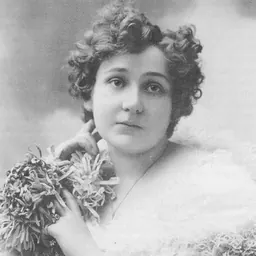

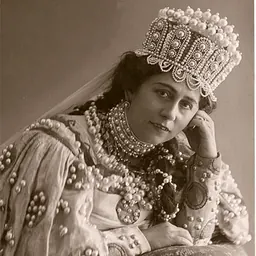
Contemporaries
People whose lives overlapped Rosina Buckman's


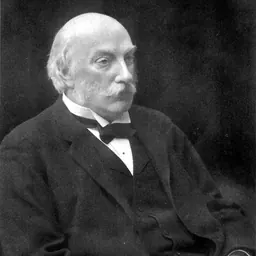


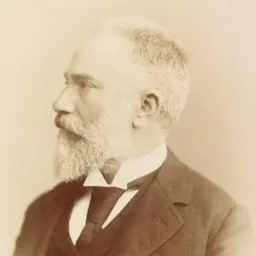
Frequently asked questions
Who was Rosina Buckman?
New Zealand singer
When was Rosina Buckman born?
Rosina Buckman was born on 16 March 1881 in Blenheim Central.
When did Rosina Buckman die?
Rosina Buckman died on 30 December 1948 in London.
What was Rosina Buckman's occupation?
Rosina Buckman was an opera singer, music educator, singer and musician.
What nationality was Rosina Buckman?
Rosina Buckman was New Zealand.
Sources & further reading
Cite this page
APA: Biography.guide. (2026). Rosina Buckman. https://biography.guide/rosina-buckman/
MLA: "Rosina Buckman." Biography.guide, https://biography.guide/rosina-buckman/.
Chicago: "Rosina Buckman." Biography.guide. https://biography.guide/rosina-buckman/.
Data last updated: 2026-09-22 · Spot an error? Report a correction.
Page generated 2026-09-27 05:32 UTC