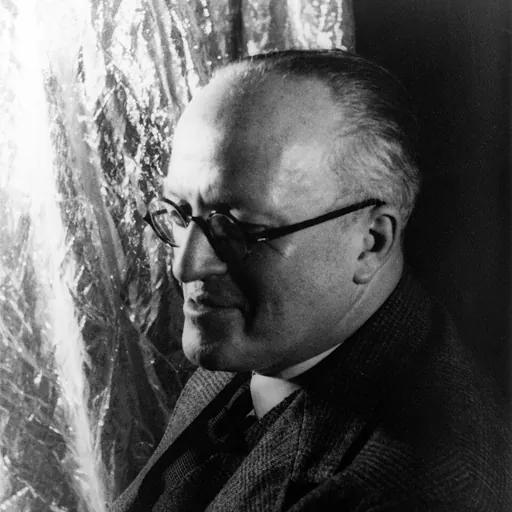
About Hugh Walpole
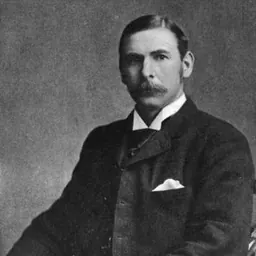
Lived 1884 – 1941 (aged 57). Hugh Walpole was a British and New Zealand author, novelist, screenwriter, prose writer and writer.
Sir Hugh Seymour Walpole, CBE (13 March 18841 June 1941) was an English novelist. He was the son of an Anglican clergyman, intended for a career in the church but drawn instead to writing. Among those who encouraged him were the authors Henry James and Arnold Bennett. His skill at scene-setting and vivid plots, as well as his high profile as a lecturer, brought him a large readership in the United Kingdom and North America. He was a best-selling author in the 1920s and 1930s but has been largely neglected since his death.
After his debut novel, The Wooden Horse, was published in 1909, Walpole wrote prolifically, producing at least one book every year. He was a spontaneous story-teller, writing quickly to get all his ideas on paper, seldom revising. His first novel to achieve major success was his third, Mr Perrin and Mr Traill, a tragicomic story of a fatal clash between two schoolmasters. During the First World War he served in the Red Cross on the Russian-Austrian front, and worked in British propaganda in Petrograd and London. In the 1920s and 1930s Walpole was much in demand not only as a novelist but also as a lecturer on literature, making four exceptionally well-paid tours of North America.
As a gay man at a time when sex between men was illegal in Britain, Walpole conducted a succession of intense but discreet relationships with other men, and was for much of his life in search of what he saw as "the perfect friend". He eventually found one, a married policeman, with whom he settled in the English Lake District. Having as a young man eagerly sought the support of established authors, he was in his later years a generous sponsor of many younger writers. He was a patron of the visual arts and bequeathed a substantial legacy of paintings to the Tate Gallery and other British institutions.
Walpole's output was large and varied. Between 1909 and 1941 he wrote thirty-six novels, five volumes of short stories, two original plays and three volumes of memoirs. His range included disturbing studies of the macabre, children's stories and historical fiction, most notably his Herries Chronicle series, set in the Lake District. He worked in Hollywood writing scenarios for two Metro-Goldwyn-Mayer films in the 1930s, and had a cameo in the 1935 film adaptation of David Copperfield.
Biography
Early years Walpole was born in Auckland, New Zealand, the eldest of three children of the Rev Somerset Walpole and his wife, Mildred Helen (née Barham). Somerset had been an assistant to the Bishop of Truro, Edward White Benson, from 1877 until 1882, when he was offered the incumbency of St Mary's Cathedral, Auckland; on Benson's advice he accepted.
Mildred Walpole found it hard to settle in New Zealand, and something of her restlessness and insecurity affected the character of her eldest child. In 1889, two years after the birth of the couple's daughter, Dorothea ("Dorothy"), Somerset Walpole accepted a prominent and well-paid academic post at the General Theological Seminary, New York. Robert ("Robin"), the third of the couple's children, was born in New York in 1892. Hugh and Dorothy were taught by a governess until the middle of 1893, when the parents decided that he needed an English education.
In 1896 Somerset Walpole discovered his son's horror of the Marlow school and he moved him to the King's School, Canterbury. For two years he was a fairly content, though undistinguished, pupil there. In 1897 Walpole senior was appointed principal of Bede College, Durham, and Hugh was moved again, to be a day boy for four years at Durham School. He found that day boys were looked down on by boarders, and that Bede College was the subject of snobbery within the university. His sense of isolation increased. He continually took refuge in the local library, where he read all the novels of Jane Austen, Henry Fielding, Walter Scott and Charles Dickens, and many of the works of Anthony Trollope, Wilkie Collins and Henry Kingsley. |
Though Walpole was no admirer of the schools he had attended there, the cathedral cities of Truro, Canterbury and Durham made a strong impression on him. He drew on aspects of them for his fictional cathedral city of Polchester in Glebeshire, the setting of many of his later books. Walpole's memories of his time at the King's School, Canterbury grew mellower over the years; it was the only school he mentioned in his Who's Who entry.
Cambridge, Liverpool and teaching
From 1903 to 1906 Walpole studied history at Emmanuel College, Cambridge. While there he had his first work published, (This discounts his earlier writings in a family magazine he edited between 1898 and 1903, called The Social Weekly.) Steele comments, "This periodical, complemented by several historical novels Walpole also wrote during this time, constitutes a solid body of juvenilia." As an undergraduate he met and fell under the spell of A.C.Benson, formerly a greatly loved master at Eton, and by this time a don at Magdalene College. Walpole's religious beliefs, hitherto an unquestioned part of his life, were fading, and Benson helped him through that personal crisis. Walpole was also attempting to cope with his homosexual feelings, which for a while focused on Benson, who recorded in his diary in 1906 an unexpected outburst by his young admirer: "e broke out rather eagerly into protestations – He cared for me more than anyone in the world. I could not believe it... It is extraordinarily touching.... It is quite right that he should believe all this passionately; it is quite right that I should know that it will not last ... I tried to say this as tenderly as I could..."
Benson gently declined Walpole's advances. They remained friends, but Walpole, rebuffed in his "excessive desire to be loved", turned the full force of his enthusiasms elsewhere, and the relationship with Benson became less important to him. Less than two years later Benson's diary entry on Walpole's subsequent social career reveals his thoughts on his protégé's progress:
With Benson's help, Walpole had come to terms with the loss of his faith. Somerset Walpole, himself the son of an Anglican priest, hoped that his eldest son would follow him into the ministry. Walpole was too concerned for his father's feelings to tell him he was no longer a believer, and on graduation from Cambridge in 1906 he took a post as a lay missioner at the Mersey Mission to Seamen in Liverpool. He described that as one of the "greatest failures of my life... The Mission to Seamen was, and is, a splendid institution... but it needs men of a certain type to carry it through and I was not of that type." The head of the mission reprimanded him for lack of commitment to his work, and Walpole resigned after six months. As well as the clerical forebears, Walpole had notable authors in his family tree: on his father's side, the novelist and letter writer Horace Walpole, and on his mother's Richard Barham, author of The Ingoldsby Legends. It was as an author that Walpole felt impelled to make his career. He moved to London and found work as a book reviewer for The Standard, writing fiction in his spare time. He had by this time recognised unreservedly that he was homosexual.
Early literary career A. C. Benson was a friend of Henry James, to whom Walpole wrote a fan letter late in 1908, with Benson's encouragement. A correspondence ensued and in February 1909 James invited Walpole to lunch at the Reform Club in London. They developed a close friendship, described by James's biographer Leon Edel as resembling a father and son relationship in some, but not all, respects. James was greatly taken with the young Walpole, though clear-eyed about the deficiencies in the artistry and craftsmanship of his protégé's early efforts. According to Somerset Maugham, Walpole made a sexual proposition to James, who was too inhibited to respond. Nevertheless, in their correspondence the older man's devotion was couched in extravagant terms.
Walpole published his first novel, The Wooden Horse, in 1909. It told of a staid and snobbish English family shaken up by the return of one of its members from a less hidebound life in New Zealand. The book received good reviews but barely repaid the cost of having it typed. The other pre-war novel was The Prelude to Adventure (1912), described by Walpole's biographer Elizabeth Steele as a murder mystery that attracted the interest of the psychologist Carl Jung. The Observer gave the book a favourable review: "The slow growth of the poison within [Perrin] is traced with wonderful skill and sympathy ... one feels throughout these pages a sense of intolerable tension, of impending disaster"; The Manchester Guardian was less enthusiastic, praising the scene-setting but calling the story "an unconscientious melodrama". The San Francisco Chronicle praised its "technical excellence, imagination and beauty – Walpole at his best." Arnold Bennett, a well-established novelist seventeen years Walpole's senior, admired the book, and befriended the young author, regularly chiding, encouraging, sometimes mocking him into improving his prose, characters and narratives.
The Guardian reviewer observed that the setting of Mr Perrin and Mr Traill – a second-rate public school – was clearly drawn from life, as indeed it was. The boys of Epsom College were delighted with the thinly disguised version of their school, but the college authorities were not, and Walpole was persona non grata at Epsom for many years. This was of no practical consequence, as he had no intention of returning to the teaching profession, but it was an early illustration of his capacity, noted by Benson, for unthinkingly giving offence, though being hypersensitive to criticism himself.
In early 1914 James wrote an article for The Times Literary Supplement surveying the younger generation of British novelists and comparing them with their eminent elder contemporaries. In the latter category James put Bennett, Joseph Conrad, John Galsworthy, Maurice Hewlett and HGWells. The four new authors on whom he focused were Walpole, Gilbert Cannan, Compton Mackenzie and D H Lawrence. It was a very lengthy article, to the extent that it had to be spread across two issues of the Supplement in March and April 1914.
Priestley contended that Walpole had fulfilled his early potential, unlike Compton Mackenzie, Gilbert Cannan and other promising young novelists of his generation. The reviewer in Punch, by contrast, wrote, "I consulted a Russian, who is very much alive, and received the opinion that, if Mr. Walpole has not succeeded in drawing the real average Russian, he has given us a type whose faults and virtues sound the keynote of the situation as it is to-day." The Observer rated The Dark Forest as "one of the finest novels of our generation".
In 1924 Ernest Hemingway wrote into a short story a comparison of G. K. Chesterton and Walpole, concluding that the former was the better man, the latter a better writer and both were classics. Walpole could be sensitive about his literary reputation and often took adverse criticism badly. When Hilaire Belloc praised P.G.Wodehouse as the best English writer of their day, Walpole took it amiss, to the amusement of Wodehouse who regarded Belloc's plaudit as "a gag, to get a rise out of serious-minded authors whom he disliked". Wodehouse was not a great admirer of Walpole; his own scrupulous craftsmanship, with drafts polished over and over again, was the opposite of Walpole's hastily written and seldom-revised prose. He also viewed Walpole's sensitivity to criticism as absurd. (Agate's parody, duly printed at Walpole's insistence, began: "'Twas early morn.) The dew was still on the grass, and the grass was still underneath the dew. Presently the sun would get hotter and there would be no more dew. But the grass would remain. When the dew had gone the grass would be dry, and Susan Saddleback would be able to sit down." condemned Walpole's work as providing "jam for the masses"
During his career contemporaries saw both negative and positive sides to Walpole's outgoing nature and desire to be in the public eye. Wodehouse commented, "I always think Hugh Walpole's reputation was two thirds publicity. He was always endorsing books and speaking at lunches and so on." Maugham called Walpole "...the most prominent member of that body of writers who attempt by seizing every opportunity to keep in the public eye, by getting on familiar terms with the critics so that their books may be favourably reviewed, by currying favour wherever it can serve them, to attain a success which their merit scarcely deserves. They attempt to push and pull to make up for their lack of talent."
By the time of his death The Timess estimation of Walpole was no higher than, "he had a versatile imagination; he could tell a workmanlike story in good workmanlike English; and he was a man of immense industry, conscientious and painstaking". Within a few years of his death, Walpole was seen as old-fashioned, and his works were largely neglected. In the Oxford Dictionary of National Biography Elizabeth Steele summed up: "His psychology was not deep enough for the polemicist, his diction not free enough for those returning from war, and his zest disastrous to a public wary of personal commitment". In 2011 the BBC broadcast a reappraisal of Walpole, The Walpole Chronicle, presented by Eric Robson. In 2013 a new stage version of Rogue Herries was presented by the Theatre by the Lake company in Walpole's adopted home of Keswick. The BBC speculated that this could mark a revival in interest in his works.
Biographies Two full-length studies of Walpole were published after his death. The first, in 1952, was written by Rupert Hart-Davis, who had known Walpole personally. It was regarded at the time as "among the half dozen best biographies of the century" and has been reissued several times since its first publication. Writing when homosexual acts between men were still outlawed in England, Hart-Davis avoided direct mention of his subject's sexuality, so respecting Walpole's habitual discretion and the wishes of his brother and sister. He left readers to read between the lines if they wished, in, for example, references to Turkish baths "providing informal opportunities of meeting interesting strangers". Hart-Davis dedicated the book to "Dorothy, Robin and Harold", Walpole's sister, brother, and long-term companion.
In 1972 Elizabeth Steele's study of Walpole was published. Much shorter than Hart-Davis's biography, at 178 pages to his 503, it dealt mainly with the novels, and aimed "to show the sources of Hugh Walpole's success as a writer during the thirty-five years and fifty books of his busy career". Steele concentrated on half a dozen of Walpole's best books, each illustrating aspects of his writing, under the headings "Acolyte", "Artist", "Witness", "Evangelist", "Critic" and "Romanticist". Steele also wrote a study of Walpole's North American lecture tours (2006) and the article on Walpole in the Oxford Dictionary of National Biography (2004), which treats his private life briefly but candidly.
Notes and references
Don’t just read it —
keep it.
Full-length biographies made to live with: read them, listen on the way to work, watch them tonight.
- E-book
- Audio
- Video
Instant download · yours to keep · every purchase keeps this site free
Important facts
People in Hugh Walpole's life
Named in this biography and alive at the same time





Related people
Same field, nearest in time




Contemporaries
People whose lives overlapped Hugh Walpole's

Frequently asked questions
Who was Hugh Walpole?
British writer (1884-1941)
When was Hugh Walpole born?
Hugh Walpole was born on 13 March 1884 in Auckland.
When did Hugh Walpole die?
Hugh Walpole died on 1 June 1941 in London.
What was Hugh Walpole's occupation?
Hugh Walpole was an author, novelist, screenwriter, prose writer and writer.
What nationality was Hugh Walpole?
Hugh Walpole was British and New Zealand.
Sources & further reading
Cite this page
APA: Biography.guide. (2026). Hugh Walpole. https://biography.guide/hugh-walpole/
MLA: "Hugh Walpole." Biography.guide, https://biography.guide/hugh-walpole/.
Chicago: "Hugh Walpole." Biography.guide. https://biography.guide/hugh-walpole/.
Data last updated: 2026-09-22 · Spot an error? Report a correction.
Portrait: Wikimedia Commons · author & licence
Page generated 2026-09-27 05:03 UTC