
About Charles Swinnerton Heap
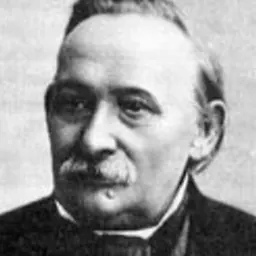
Lived 1847 – 1900 (aged 53). Charles Swinnerton Heap was a British composer, music educator, conductor, musician and organist.
Charles Swinnerton Heap (10 April 1847 – 11 June 1900) was an English organist, pianist, composer and conductor.
Life
Heap was born in Birmingham in 1847 and educated at the town's King Edward VI School, where he studied the organ under Walter Brooks. In 1862 he went to study under Dr. Edwin George Monk at York Minster. In 1865 he won the Mendelssohn Scholarship for young composers.
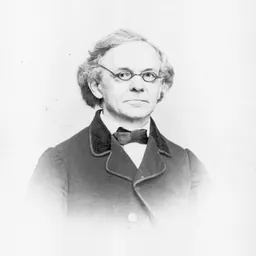
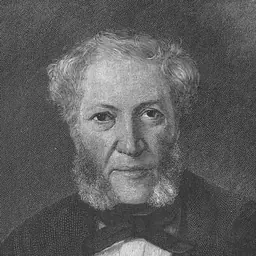
Between 1865 and 1867 he studied at the Leipzig Conservatoire with Ignaz Moscheles, Moritz Hauptmann, Ernst Richter and Carl Reinecke, sometimes deputizing for Reinecke as organist at the Gewandhaus. He then returned to study organ with W T Best, and to attend St John's College, Cambridge, where he was awarded Mus Bac. in 1871 and Mus.D in 1872. On the 24 November 1875, at the Town Hall, Birmingham, the first part of his oratorio The Captivity was performed.
He was a regular conductor at the Birmingham Musical Union (1870–86), the Wolverhampton Festival (1883, 1886, succeeding William Stockley), the North Staffordshire Festival in Hanley (1888–99), and the Birmingham Festival Choral Society (1895).
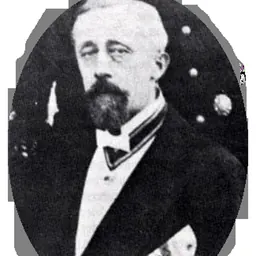
After Heap's death - unexpectedly, of pneumonia at his home, 22 Clarendon Road, Edgbaston - the composer Havergal Brian wrote to the secretary of the Royal Philharmonic Society, comparing Heap favourably to the better-known Frederic Cowen and Alexander Mackenzie: "What was the old Phil doing to miss such a genius? Cowen, Mackenzie and Co. weren't within a thousand miles of Heap – who died unknown outside the Midlands."
Heap's memorial was sculpted by Albert Toft, and is in Walsall Town Hall. His son was James Sebastian Heap (1879 – 1964), organ scholar at Exeter College, Oxford, organist at Llandovery College in Wales, Mossley Hill parish church in Liverpool, and music master, King Edward School in Bath.
A printed booklet of his testimonials relating to his job application to be the organist at Birmingham Town Hall in 1868 is kept at the University of Birmingham, Cadbury Research Library.
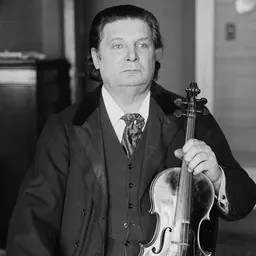
Compositions His works include chamber and orchestral music, sacred and secular choral settings, songs and organ music. His Piano Trio was performed in Leipzig in the 1860s. His Clarinet Sonata of 1879, written for Henry Lazarus, is one of the very earliest examples of the British clarinet sonata. It was first heard at the Clef Club in Birmingham. and revived and broadcast in the 1930s by the clarinetist S. C. Cotterell. Heap also composed a sonata for violin and piano, a quintet for piano and wind instruments, and two orchestral overtures, one played first at the Birmingham Festival of 1879, then repeated at Crystal Palace.
Choral works include his oratorio The Captivity, a motet Salvum fac Regem (performed at Leipzig), cantatas The Voice of Spring (1882, Liverpool) and The Maid of Astolat (1886, for the Wolverhampton Musical Festival). A dramatic cantata, Fair Rosamond, was composed for The North Staffordshire Musical Festival in October 1890. There were many other anthems, songs, and organ pieces.
Appointments
Organist of Queen's College, Birmingham (a predecessor college of the University of Birmingham) (1859–1862) Organist of St John's Church, Wolverhampton (1868–?) Conductor of the Birmingham Philharmonic Union (1870–1886) Conductor of the Wolverhampton Festival Choral Society (1881–1886) Conductor of the North Staffordshire Festival, Hanley (1888–1899) Conductor of the Birmingham Festival Choral Society (1895) Conductor of the Birmingham Triennial Music Festival (1897) Conductor of the Walsall Philharmonic Union.
Don’t just read it —
keep it.
Full-length biographies made to live with: read them, listen on the way to work, watch them tonight.
- E-book
- Audio
- Video
Instant download · yours to keep · every purchase keeps this site free
Important facts
People in Charles Swinnerton Heap's life
Named in this biography and alive at the same time






Related people
Same field, nearest in time

Contemporaries
People whose lives overlapped Charles Swinnerton Heap's





Frequently asked questions
Who was Charles Swinnerton Heap?
British composer (1847-1900)
When was Charles Swinnerton Heap born?
Charles Swinnerton Heap was born on 10 April 1847 in Birmingham.
When did Charles Swinnerton Heap die?
Charles Swinnerton Heap died on 11 June 1900 in Birmingham.
What was Charles Swinnerton Heap's occupation?
Charles Swinnerton Heap was a composer, music educator, conductor, musician and organist.
What nationality was Charles Swinnerton Heap?
Charles Swinnerton Heap was British.
Sources & further reading
· Wikipedia: Charles Swinnerton Heap
· DBpedia: Charles Swinnerton Heap
Cite this page
APA: Biography.guide. (2026). Charles Swinnerton Heap. https://biography.guide/charles-swinnerton-heap/
MLA: "Charles Swinnerton Heap." Biography.guide, https://biography.guide/charles-swinnerton-heap/.
Chicago: "Charles Swinnerton Heap." Biography.guide. https://biography.guide/charles-swinnerton-heap/.
Data last updated: 2026-09-25 · Spot an error? Report a correction.
Page generated 2026-09-27 05:11 UTC