
About Ronald Wilson
Lived 1922 – 2005 (aged 82). Ronald Wilson was an Australian judge and jurist.
Early life and academic background Wilson was born in Geraldton, in Western Australia (WA) on 23 August 1922. His early life was marked by sorrow and hardship. When he was four years old his mother died. At the age of seven his father, also a lawyer, suffered a stroke and spent the next five years in a hospice. The battalion was part of a Special Mobile Force stationed in coastal areas between Perth and Geraldton, to respond in the event of an attack by Japanese forces.
Transferring to the Royal Australian Air Force (RAAF) in July 1942, Wilson (service no. 427404) received pilot training under the Empire Air Training Scheme, and was posted to the UK, for operations with Royal Air Force (RAF) formations. At the end of the war he was serving with No. 287 Squadron RAF, an anti-aircraft cooperation unit (i.e. it assisted in the training of anti-aircraft gunners). He was discharged from the RAAF on 14 February 1946, with the rank of Flying Officer.
In 2002 and 2005, two men whom Wilson had prosecuted for murder have had their convictions overturned: John Button, who was convicted in 1963 of the manslaughter of his girlfriend Rosemary Anderson had his conviction overturned by the Western Australian Court of Appeal. Darryl Beamish who had been convicted of the 1959 murder of Jillian Brewer had his conviction overturned in 2005. Perth serial killer, Eric Edgar Cooke, confessed to both offences before he was hanged for other murders, but was not believed by authorities. The convictions were eventually overturned in 2002.
In 1969, Wilson became the Solicitor-General of Western Australia. He served in that position for ten years Wilson adopted a federalist position on the court; and was frequently in the minority on issues relating to the scope of the Commonwealth's external affairs legislative power. Wilson was in the minority in holding that the external affairs power in the Australian constitution applied only to relationships outside Australia. The majority of the High Court found that the treaty need only apply to issues of clear international concern. The majority held the Federal Parliament had the power to pass the Racial Discrimination Act 1975 as a result of Australia being a signatory to the Convention on the Elimination of All Forms of Racial Discrimination.
In Commonwealth v Tasmania, the external affairs power was again the central issue. The new Hawke Government had used the external affairs power as the basis for passing legislation preventing the Tasmanian Government from building a hydro-electric dam on the Franklin River. Wilson considered that the external affairs power did not give the Federal Parliament authority to pass such legislation as it could obtain power to pass any form of legislation it wished by simply entering into a treaty with another power. During his term as Human Right Commissioner, Wilson also served as Deputy Chairperson of the Council for Aboriginal Reconciliation from 1991 to 1994. The "Ronald Wilson Prize in Law" was first awarded by Murdoch University in 1993 to the graduate who best combines distinguished academic performance in law units with qualities of character, leadership and all-round contribution to the life of the university.
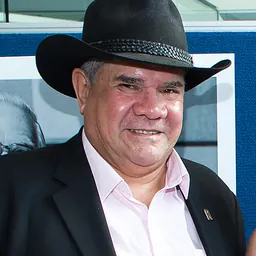
Bringing Them Home report Wilson and Mick Dodson, the Aboriginal Social Justice Commissioner, jointly led the National Inquiry into the forced removal of Aboriginal children from their families and communities. Wilson and Dodson visited every state in Australia over the 17-month duration of the Inquiry and heard testimony from 535 aboriginals with 600 more making submissions. Wilson wrote after the completion of the report: "In chairing the National Inquiry (...) I had to relate to hundreds of stories of personal devastation, pain and loss. It was a life-changing experience." The Inquiry produced a report called Bringing Them Home: Report of the National Inquiry into the Separation of Aboriginal and Torres Strait Islander Children from their Families which was tabled in Federal Parliament. "Between 1910 and 1970, up to 100,000 Aboriginal children were taken from their parents and put in white foster homes". It found that Australia was in breach of international law, called for a national compensation fund and recommended a national "sorry day".
The report was welcomed by Aboriginal Australians but widely criticised by conservatives. Anthropologist Ron Brunton said the claims of genocide were an "embellishment"; with social commentator Robert Manne and academic Hal Wootten disputing Brunton's claims. The Prime Minister at the time, John Howard, refused to issue an apology instead stating his regret. The Parliaments of NSW, Northern Territory, South Australia and Victoria passed motions apologising for the maltreatment. The first National Sorry Day was held in 1998 and attracted widespread participation while, in 2000, an estimated people walked across the Sydney Harbour Bridge in support of reconciliation. In 2008, Kevin Rudd as Prime Minister issued an apology to the Stolen Generation on behalf of the Australian people.
The WA Inc Royal Commission Carmen Lawrence appointed Wilson as one of the three eminent jurists conducting The WA Inc Royal Commission. The Royal Commission was chaired by Geoffrey Kennedy and the third member was Peter Brinsden with a brief "to inquire into and report" whether there had been "corruption, illegal conduct, improper conduct, or bribery" on the part of any person or corporation in the "affairs, investment decisions and business dealings of the Government of Western Australia or its agencies". In its 1992 report, the Royal Commission said "The commission has found conduct and practices on the part of certain persons involved in government in the period 1983 to 1989 such as to place our government system at risk." It was particularly critical of the behaviour of former Premier Brian Burke who was subsequently convicted for two years on charges of fraudulent behavior in 1994.
Church and social leadership Throughout his life, Wilson was an active participant in first the Presbyterian Church of Australia and then the Uniting Church in Australia. He held a range of senior positions in the Church including Moderator of Assembly, Presbyterian Church in Western Australia (1965); Moderator, Synod of Western Australia, Uniting Church in Australia (1977-1979); President of the Assembly, Uniting Church in Australia (1988-1991), the first layperson to hold that post; In retirement, he travelled widely to Aboriginal and church events, and was an active member of a refugee education scheme near his home.
Honours In 1978 Wilson was appointed a Companion of the Order of St Michael and St George (CMG) for services to the community in Western Australia. The following year he was appointed a Knight Commander of the Order of the British Empire (KBE) for services as a Justice of the High Court of Australia. On 26 January 1988, Wilson was appointed a Companion of the Order of Australia (AC) for services to the law.
In addition, Wilson was awarded the Centenary Medal on 1 January 2001 for service as a Justice of the High Court of Australia and to human rights.
He has been conferred with honorary degrees from the University of Western Australia (Doctor of Laws), Keimyung University (Doctor of Education), and Murdoch University (Doctor of the University).
Personal life Sir Ronald married Leila Smith in April 1950; and together they had five children and nine grandchildren.
Selected published works
Legal findings and reports
Other works
Don’t just read it —
keep it.
Full-length biographies made to live with: read them, listen on the way to work, watch them tonight.
- E-book
- Audio
- Video
Instant download · yours to keep · every purchase keeps this site free
Important facts
Family & relationships
People in Ronald Wilson's life
Named in this biography and alive at the same time






Related people
Same field, nearest in time

Contemporaries
People whose lives overlapped Ronald Wilson's




Frequently asked questions
Who was Ronald Wilson?
Australian judge and church leader (1922-2005)
When was Ronald Wilson born?
Ronald Wilson was born on 23 August 1922 in Geraldton.
When did Ronald Wilson die?
Ronald Wilson died on 15 July 2005 in Perth.
What was Ronald Wilson's occupation?
Ronald Wilson was a judge and jurist.
What nationality was Ronald Wilson?
Ronald Wilson was Australian.
Sources & further reading
Cite this page
APA: Biography.guide. (2026). Ronald Wilson. https://biography.guide/ronald-wilson/
MLA: "Ronald Wilson." Biography.guide, https://biography.guide/ronald-wilson/.
Chicago: "Ronald Wilson." Biography.guide. https://biography.guide/ronald-wilson/.
Data last updated: 2026-09-20 · Spot an error? Report a correction.
Page generated 2026-09-27 05:00 UTC