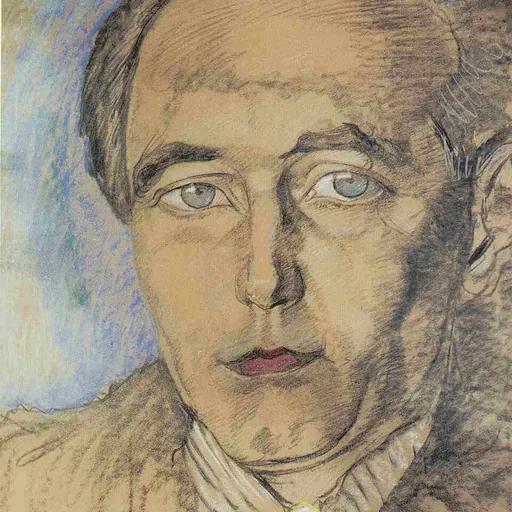
About Roman Ingarden
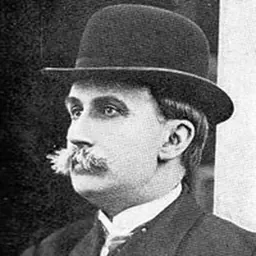
Lived 1893 – 1970 (aged 77). Roman Ingarden was a Polish philosopher, writer, university teacher and aesthetician.
Roman Witold Ingarden (5 February 1893 – 14 June 1970) was a Polish philosopher who worked in aesthetics, ontology, and phenomenology.
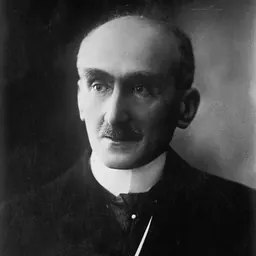
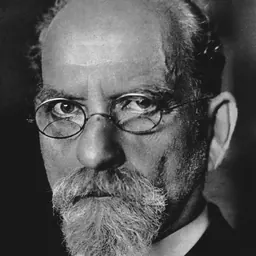
Before World War II, Ingarden published his works mainly in the German language and in books and newspapers. During the war, he switched to Polish out of solidarity with his homeland after the German invasion, He first studied mathematics and philosophy at the Lwów University under Kazimierz Twardowski, then moved to the University of Göttingen in Germany to study philosophy under Edmund Husserl. He was considered by Husserl to be one of his best and greatest students and accompanied Husserl to the University of Freiburg, where, in 1918, Ingarden submitted his doctoral dissertation with Husserl as director. The title of his thesis was Intuition und Intellekt bei Henri Bergson (Intuition and Intellect in Henri Bergson). During this period, one of his works - aside from his post-doctoral work in epistemology - was a review of the Festschrift written for Twardowski. This involved an analysis of Zygmunt Lempicki's "W sprawie uzasadnienia poetyki czystej" (On the Justification of Pure Poetics). In 1933, the university promoted him as professor of philosophy.
From 1939 to 1941 during the Soviet occupation of Lwów he continued his university activity and lived in the Kraków area. In 1957 he was reappointed at the Jagiellonian University after the ban was lifted, and so he went on to teach, write and publish.
Ingarden died on June 14, 1970, in Kraków as a result of a cerebral hemorrhage. In this book, Ingarden argued that a literary work of art is a purely intentional object and is a product of the author's conscious acts. In his stratification of literary work of art, he cited that aesthetic value is the polyphonic harmony that arises between these strata of meaning.
The exclusive focus on Ingarden's work in aesthetics does not reflect Ingarden's overall philosophical standpoint, which is focused on the ideas regarding formal, existential, and material ontology set forth in his The Controversy over the Existence of the World. In his aesthetic investigations, Ingarden considered aesthetics as an integral part of philosophy. He argued that his aesthetic theory is not only an analysis of art but an approach that answers basic philosophical issues. Ingarden also attempted to establish a phenomenological circle at Lvov. The group, which focused on aesthetics and descriptive psychology, attracted some of Twardowski's students including Leopold Blaustein and Eugénie Ginsberg. Ingarden was a close associate of Edith Stein. He came to her defense when her work with Husserl was challenged.
Ingarden wrote his autobiography in 1949. This work, which was written in third person, was one of the three biographies he submitted to Władysław Tatarkiewicz, who was then revising his Historia filozofii (History of philosophy). The philosopher had also undertaken work for Husserl.
Main works in German Intuition und Intellekt bei Henri Bergson, Halle: Max Niemeyer, 1921 Essentiale Fragen. Ein Beitrag zum Problem des Wesens, Halle: Max Niemeyer, 1925 Das literarische Kunstwerk. Eine Untersuchung aus dem Grenzgebiet der Ontologie, Logik und Literaturwissenschaft, Halle: Max Niemeyer, 1931 Untersuchungen zur Ontologie der Kunst: Musikwerk. Bild. Architektur. Film, Tübingen: Max Niemeyer, 1962 Der Streit um die Existenz der Welt, Bd. I, II/I, II/2. Tübingen: Max Niemeyer, 1964 Vom Erkennen des literarischen Kunstwerks, Tübingen: Max Niemeyer, 1968 Erlebnis, Kunstwerk und Wert. Vorträge zur Ästhetik 1937-1967, Tübingen: Max Niemeyer, 1969 Über die Verantwortung. Ihre ontischen Fundamente, Stuttgart: Reclam, 1970 Über die kausale Struktur der realen Welt. Der Streit um die Existenz der Welt, Band III, Tübingen: Max Niemeyer, 1974
Main works in Polish
O poznawaniu dzieła literackiego (The Cognition of the Literary Work of Art), Ossolineum, Lwów: 1937 O budowie obrazu. Szkic z teorii sztuki (On the Structure of Paintings: A Sketch of the Theory of Art), Rozprawy Wydziału Filozoficznego PAU Vol. LXVII, No.2, Kraków, 1946 O dziele architektury (On Architectural Works), Nauka i Sztuka, Vol. II, 1946, No. 1, pp. 3-26 and No. 2, pp. 26-51 Spór o istnienie Świata (Controversy over the Existence of the World), PAU, Vol. I, Kraków: 1947, Vol. II, Kraków, 1948 Szkice z filozofii literatury (Sketches on the Philosophy of Literature), Vol. 1, Spółdzielnia wydawnicza "Polonista," Łódz, 1947 Elementy dzieła muzycznego (The Elements of Musical Works), Sprawozdania Towarzystwa Naukowego w Toruniu, Vol. IX, 1955, Nos. 1-4, pp. 82-84 Studia z estetyki (Studies in Aesthetics), PWN, Vol. I Warszawa, 1957, Vol. II, Warszawa, 1958 O dziele literackim (On Literary Works). PWN, Warszawa, 1960 Przeżycie - dzieło - wartość (Experience - Work of Art - Value). Wydawnictwo Literackie, Kraków, 1966 Studia z estetyki Tom III (Studies in Aesthetics, Vol. III), PWN, Warszawa, 1970 U podstaw teorii poznania (At the Foundations of the Theory of Knowledge), PWN, Warszawa, 1971 Książeczka o człowieku (Little Book About Man), Wydawnictwo Literackie, Kraków, 1972. Utwór muzyczny i sprawa jego tożsamości (The Work of Music and the Problem of Its Identity), Polskie Wydawnictwo Muzyczne, Warszawa, 1973.
Main works translated into English Controversy over the Existence of the World. Volumes I and II, translated by Arthur Szylewicz, Bern: Peter Lang, 2013 / 2016. Time and Modes of Being, (selection from Der Streit), translated by Helen R. Michejda. Springfield, Illinois: Charles C. Thomas, 1964. The Cognition of the Literary Work of Art, Translated by Ruth Ann Crowley and Kenneth R. Olson. Evanston, Illinois: Northwestern University Press, 1973. The Literary Work of Art, Translated by George G. Grabowicz. Evanston, Illinois: Northwestern University Press, 1973. Letter to Husserl about the VI [Logical] Investigation and ‘Idealism’ In Tymieniecka, 1976. Man and Value, Translated by Arthur Szylewicz. München: Philosophia Verlag, 1983. On the Motives which led Edmund Husserl to Transcendental Idealism, Translated by Arnor Hannibalsson. The Hague: 1976. The Ontology of the Work of Art, Translated by Raymond Meyer with John T. Goldthwait. Athens, Ohio: Ohio University Press, 1989. Selected Papers in Aesthetics, Ed. by Peter J. McCormick, München: Philosophia Verlag,1985. The Work of Music and the Problem of Its Identity, Translated by Adam Czerniawski. London: Macmillan, 1986.
Don’t just read it —
keep it.
Full-length biographies made to live with: read them, listen on the way to work, watch them tonight.
- E-book
- Audio
- Video
Instant download · yours to keep · every purchase keeps this site free
Important facts
People in Roman Ingarden's life
Named in this biography and alive at the same time






Related people
Same field, nearest in time

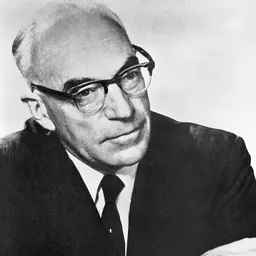
Contemporaries
People whose lives overlapped Roman Ingarden's
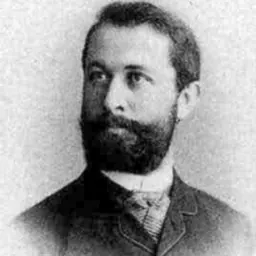

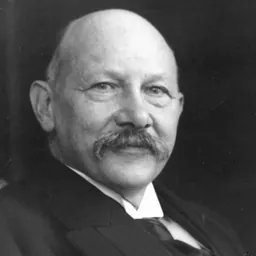
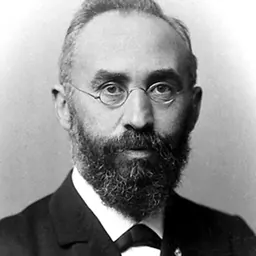
Frequently asked questions
Who was Roman Ingarden?
Polish philosopher (1893–1970)
When was Roman Ingarden born?
Roman Ingarden was born on 5 February 1893 in Kraków.
When did Roman Ingarden die?
Roman Ingarden died on 14 June 1970 in Kraków.
What was Roman Ingarden's occupation?
Roman Ingarden was a philosopher, writer, university teacher and aesthetician.
What nationality was Roman Ingarden?
Roman Ingarden was Polish.
Sources & further reading
Cite this page
APA: Biography.guide. (2026). Roman Ingarden. https://biography.guide/roman-ingarden/
MLA: "Roman Ingarden." Biography.guide, https://biography.guide/roman-ingarden/.
Chicago: "Roman Ingarden." Biography.guide. https://biography.guide/roman-ingarden/.
Data last updated: 2026-09-23 · Spot an error? Report a correction.
Portrait: Wikimedia Commons · author & licence
Page generated 2026-09-27 05:07 UTC