
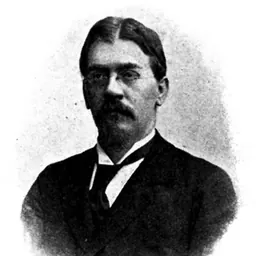
Rodolfo Sánchez Taboada
Mexican politician and military personnel
About Rodolfo Sánchez Taboada
Lived 1895 – 1955 (aged 59–60). Rodolfo Sánchez Taboada was a Mexican politician, military personnel and minister.
Rodolfo Sánchez Taboada (22 March 1895 – 2 May 1955) was a Mexican military officer and politician who served as secretary of the navy from 1952 until his death in 1955, during the presidency of Adolfo Ruiz Cortines. He previously served as the governor of the territory of Baja California from 1937 to 1944 and as president of the Institutional Revolutionary Party (PRI) from 1946 to 1952.
Born in the state of Puebla, Sánchez Taboada attended the University of Puebla before dropping out to join the Constitutional Army during the Mexican Revolution. He took part in the assassination of Emiliano Zapata in 1919, and subsequently rose through the ranks, supporting the government during several rebellions. He was appointed as governor of Baja California, then a federal territory, in 1937 by President Lázaro Cárdenas. As governor, Sánchez Taboada promoted the Good Neighbor policy with the United States. He resigned in 1944 and returned to service in the army.
In 1946, Sánchez Taboada became the president of the ruling PRI, and was reelected the position in 1950, the first to do so. He implemented an anti-communist platform for the party and directed the successful presidential campaign of Ruiz Cortines in 1952. He also mentored and gave appointments to a generation of future PRI politicians, the most prominent of which was Luis Echeverría, a future president of Mexico. In 1952, he left his position to become secretary of the navy under Ruiz Cortines. He oversaw the implementation of the March to the Sea program, which sought to modernize and expand the usage of the country's maritime resources. He died in office in 1955. Several locations have been named after him, including Mexicali International Airport and a borough in Tijuana.
Family and education Rodolfo Sánchez Taboada was born on 22 March 1895 in Acatzingo de Hidalgo in the municipality of Acatzingo, Puebla. His parents, Tirso "Charro" Sánchez Limón and Margarita Taboada, Margarita, and Matilde "Maty" Sánchez Cruz. Sánchez Taboada had three grandchildren through his son Rodolfo Sánchez Cruz; Laura Alicia, Manuel, and Rodolfo Sánchez Corro.
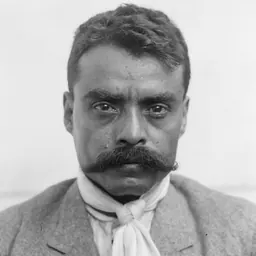
On 10 April 1919, Guajardo's troops assassinated the revolutionary general Emiliano Zapata in Chinameca, Morelos. Sánchez Taboada participated in the operation. Sánchez Taboada is said by some to have been the one who gave Zapata the coup de grâce, according to the magazine Zeta. its name was changed to the Party of the Mexican Revolution in 1938, Sánchez Taboada assumed the office on 1 March 1937. However, this did not happen. Sánchez Taboada's term ended on 31 July 1944. He resigned, being given permission by Baja California's legislature to leave office,
Domestic affairs
At the time of his governorship, Baja California was a federal territory. During his administration, the second Pro-State Committee was formed in 1940, following the first in 1929.
Sánchez Taboada supported Cárdenas's vision for land reform. By April 1937, more than 100,000 acres of American-owned land in Baja California had been taken under government control for redistribution. This led to 11,000 ranchers protesting throughout April and May, demanding immediate cash payment for the work that they had done on the land they no longer controlled. Sánchez Taboada averted a general strike by agreeing to the ranchers' general demands.
Parts of Mexicali, the state's capital, were damaged in the 1940 El Centro earthquake, including by fire and flooding. Sánchez Taboada placed affected areas under governmental care and promised immediate aid in rebuilding.
During World War II, a national directive was issued that ordered governors to remove their Japanese populations to designated zones of Mexico City and Guadalajara. Sánchez Taboada quickly rounded up his state's Japanese population and forced them on trains and trucks bound for the zones. He gave them only twenty-four hours to evacuate, but ex-president Cárdenas, who was in charge of military operations in the Pacific zone, expanded the timeframe to one week.
Mexico–United States relations In March 1937, Sánchez Taboada traveled to the city of Calexico, California, and met with the city's officials in an effort to promote the Good Neighbor policy in place between Mexico and the United States at the time. In May 1938, Sánchez Taboada met the governor of California, Frank Merriam, in San Ysidro, San Diego. In February 1941, Sánchez Taboada and California governor Culbert Olson met at the border of the two countries, then Sánchez Taboada once again visited Calexico, followed by Olsen's visit to Mexicali. In December 1942, the governor-elect of California, Earl Warren, visited Sánchez Taboada in Mexicali, and Sánchez Taboada again traveled to Calexico. In April 1943, for Pan American Day, Sánchez Taboada attended a good neighbor luncheon in El Centro, pledging close ties between the two countries, which was received warmly by now-governor Warren.
President of the PRI First term Sánchez Taboada served as president of the Regional Committee of the PRI for the Federal District in 1946 during the presidential campaign of Miguel Alemán Valdés. on 4 December 1946, succeeding Rafael Pascasio Gamboa Cano.
During Alemán's presidency, the PRI branded itself as more decentralized, but the party remained heavily centralized. The PRI's National Assembly only met twice under Alemán and Sánchez Taboada, grassroots PRI organizations were virtually nonexistent, and only the state committees and the CEN held real power within the party structure. Sánchez Taboada and the CEN led a vast party membership drive in 1947, but this did not turn the PRI into a "party of citizens".
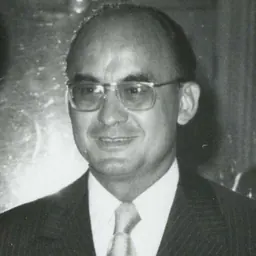
Sánchez Taboada was a mentor to Luis Echeverría Álvarez (pictured), who later became president of Mexico.
Sánchez Taboada was a mentor to one of the most influential political groups in Mexican politics, In 1946, while he was serving as president of the PRI, he hired Luis Echeverría Álvarez to serve as his personal secretary. Echeverría would later serve as president of Mexico from 1970 to 1976. Echeverría's father, Rodolfo Echeverría, had served as paymaster to an army unit that Sánchez Taboada commanded. Sánchez Taboada also made him director general of press and propaganda of the PRI in 1949. and Sánchez Taboada became the first president of the PRI to be reelected to the position. His reelection had been opposed by some older PRI members,
In 1951, Sánchez Taboada called for a national convention to select the PRI's presidential candidate for the 1952 election, to be held from 11 October to 14 October. On 13 October, he proposed the secretary of the interior, Adolfo Ruiz Cortines, as the candidate. He subsequently became the candidate the following day. Sánchez Taboada served as the director of his presidential campaign. Ruiz Cortines used the slogan "austerity and work" which represented 74.3% of the total vote. and Cervantes del Río as his personal secretary.
During his term, Sánchez Taboada carried out the project Programa de Progreso Marítimo ("Maritime Progress Program"), popularly known as the Marcha al Mar ("March to the Sea"). It also called for the improvement of ports, and the modernization of rail and highway communications between ports and inland cities. The six-year project was given a budget of 750,000,000 pesos, with 150,000,000 pesos being spent in its first year under Sánchez Taboada.
Sánchez Taboada also commissioned the ship Orizaba as a training ship at the Heroica Escuela Naval Militar under the name Zaragoza II. In October 1954, Sánchez Taboada and several other high-ranking naval officials visited Washington, D.C. to tour American naval institutions and promote the Marcha al Mar.
Sánchez Taboada died in office of a myocardial infarction
Mexicali International Airport is named after Sánchez Taboada. A borough in the area of the Tijuana River also bears his name. Boulevard General Rodolfo Sánchez Taboada is a street in Tijuana, Baja California. A bust of Sánchez Taboada existed on a street named after him in Guaymas, Sonora, but it was stolen in 2012. In 2020, a replacement bust was unveiled.
Don’t just read it —
keep it.
Full-length biographies made to live with: read them, listen on the way to work, watch them tonight.
- E-book
- Audio
- Video
Instant download · yours to keep · every purchase keeps this site free
Important facts
People in Rodolfo Sánchez Taboada's life
Named in this biography and alive at the same time


Related people
Same field, nearest in time






Contemporaries
People whose lives overlapped Rodolfo Sánchez Taboada's

Frequently asked questions
Who was Rodolfo Sánchez Taboada?
Mexican politician and military personnel (1895-1955)
When was Rodolfo Sánchez Taboada born?
Rodolfo Sánchez Taboada was born in 1895 in Acatzingo Municipality.
When did Rodolfo Sánchez Taboada die?
Rodolfo Sánchez Taboada died on 2 May 1955 in Mexico City.
What was Rodolfo Sánchez Taboada's occupation?
Rodolfo Sánchez Taboada was a politician, military personnel and minister.
What nationality was Rodolfo Sánchez Taboada?
Rodolfo Sánchez Taboada was Mexican.
Sources & further reading
· Wikipedia: Rodolfo Sánchez Taboada
· DBpedia: Rodolfo Sánchez Taboada
Cite this page
APA: Biography.guide. (2026). Rodolfo Sánchez Taboada. https://biography.guide/rodolfo-sanchez-taboada/
MLA: "Rodolfo Sánchez Taboada." Biography.guide, https://biography.guide/rodolfo-sanchez-taboada/.
Chicago: "Rodolfo Sánchez Taboada." Biography.guide. https://biography.guide/rodolfo-sanchez-taboada/.
Data last updated: 2026-09-20 · Spot an error? Report a correction.
Page generated 2026-09-27 05:31 UTC