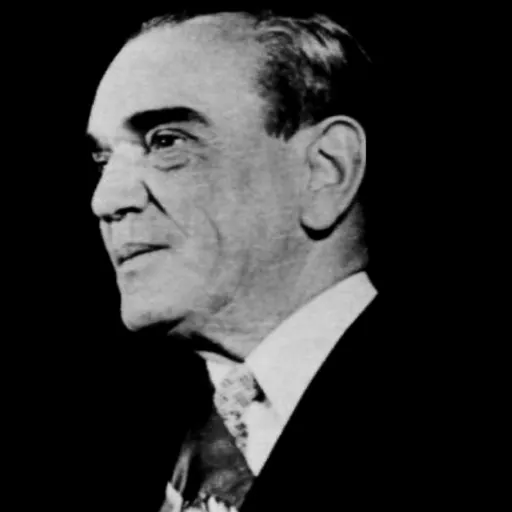
About Adolfo Ruiz Cortines
Lived 1890 – 1973 (aged 82). Adolfo Ruiz Cortines was a Mexican politician and military personnel.
Adolfo Tomás Ruiz Cortines ( 30 December 1889 – 3 December 1973) was a Mexican politician who served as President of Mexico from 1952 to 1958. A member of the Institutional Revolutionary Party (PRI), he previously served as Governor of Veracruz and Secretary of the Interior. During his presidency, which constituted the Mexican Miracle, women gained the right to vote, and he instituted numerous public health, education, infrastructure, and works projects.
A member of the Constitutional Army, Ruiz Cortines was the last Mexican president to have fought in the Mexican Revolution. He worked at the Ministry of Industry and Commerce during the administration of Adolfo de la Huerta and served as an official in the Department of Statistics from 1921 to 1935. Ruiz Cortines joined the Institutional Revolutionary Party and became Senior Official of the Government of the Federal District in 1935 and member of the Chamber of Deputies for Veracruz in 1937. In 1939 he was appointed treasurer of the presidential campaign of Manuel Ávila Camacho and worked as Governor of Veracruz from 1944 to 1948, a position he left to become Secretariat of the Interior during the administration of Miguel Alemán Valdés. He was criticized for slower implementation of reforms than some of his predecessors.
Early life and education María Cortines Cotera with her children María and Adolfo in a photograph taken in 1895.
Adolfo Tomás Ruiz Cortines was born on 30 December 1889 at 3:00 pm, in the city of Veracruz, into a family of Andalusian descent. His father, Adolfo Ruiz Tejada (1851–1889), regidor of Veracruz during the Porfiriato, died two and a half months prior to his birth. His mother was María Cortines de la Cotera (1859–1932).
Ruiz's grandfather was José Ruiz y Gómez de la Parra, better known as José Ruiz Parra, a member of the State of Veracruz's first Congress in 1824, who co-wrote the state's constitution. José Ruiz Parra was president of the junta that ruled over the Port of Alvarado during the American Invasion of Veracruz, having to personally sign the surrender of the port in 1847. He was also reputed for organizing fundraisers in favor of the Mexican Army during the Second French Intervention, as well as for his deep involvement in the education of the local children. José Ruiz Parra was the maternal grandson of Isidro Gómez de la Parra, subdelegado of the Spanish Crown to the province of Tuxtlas (appointed by Bernardo de Gálvez, viceroy of New Spain), and of his wife Dominga Casado de Toro y Tamariz, herself a descendant of the Luna y Arellano family, holders of the hereditary title of Mariscal de Castilla.
Because of his father's premature death, Ruiz Cortines was raised and educated by his mother. María Cortines de la Cotera was the daughter of Diego Francisco Cortines y Gutiérrez de Celis (1829, Bielva, Cantabria, Spain), and María Dolores de la Cotera y Calzada (1824, Veracruz, Mexico), whose father was from Peñarrubia, also in Cantabria. His mother taught him to read and write at the age of 3. Later, he entered a school directed by Joaquín Jerónimo Díaz and Florencio Veyro, called Escuela Amiga, but did his secondary educational studies at the Colegio de los Jesuitas, and at the age twelve, he attended the reputed Instituto Veracruzano, famously directed by the poet Salvador Díaz Mirón. Adolfo learned from his mentors about liberalism, a political principle he would apply during his entire political career. In addition, it was at school where he acquired his fanatical interest in baseball. He always wanted to attend a university, but the American Invasion of 1914 forced him to abandon his studies. His first job was as an accounting assistant at a commercial textile company. During his administration, he expanded public education in the state. Some of the institutions he founded were the Technical Studies Institute (Departamento para Estudios Técnicos) which provided people with a practical education that allowed them to improve their quality of life. Furthermore, he founded the Institute of Anthropology and the State Planning Committee, among others. He also modified the local constitution to allow women to participate in the local and municipal elections. He built roads and bridges to develop Veracruz's infrastructure since it was one of the main ports of Mexico at that time.
Secretary of the Interior On 12 February 1948, Miguel Alemán's Secretary of the Interior, , died in office, and Alemán needed to fill the position. Manuel Ávila Camacho recommended Ruiz Cortines, to which Alemán agreed. It was in this position that Ruiz Cortines distinguished himself and became a contender for the next presidential election.
1952 presidential election
In 1951, Miguel Alemán Valdés expressed his desire to be allowed to serve a second term, but Lázaro Cárdenas and Manuel Ávila Camacho had former president Abelardo L. Rodríguez tell Alemán Valdés that they didn't think, "extension of the presidential term or re-election is convenient for the country". The PRI was the dominant party and Ruiz Cortines's electoral victory was entirely expected.
Ruiz Cortines is believed to have been chosen due to his more bland image in contrast to Alemán's more colorful personality, and was not seen as divisive to differin sectors of the PRI. Reportedly, Ruiz Cortines accepted the nomination, but he "apparently did not seek it and certainly did not intrigue to secure it." However, by September, Ruiz Cortines's base of support within the party had grown considerably, and included many young senators such as Adolfo López Mateos and Gustavo Díaz Ordaz. His campaign began on 14 October 1951, with his slogan being "austerity and work" . His campaign was directed by Rodolfo Sánchez Taboada, the president of the PRI. In one of his first speaking events during his campaign, he stated to around 20,000 women in attendance, "If the vote favors us in the next elections, we intend to initiate before the Chambers the necessary legal reforms so that women enjoy the same political rights as men," a campaign promise he would later fulfill with an amendment to Article 34 of the Constitution.
General Miguel Henríquez Guzmán, formerly of the PRI, who had twice before attempted to secure the party's presidential nomination, was the candidate of the Federation of Parties of the Mexican People. His support was in largely urban areas, and included Cárdenas supporters alienated during Alemán Valdés' presidency, established military men, and members of the middle class who desired a multi-party democracy. When asked for his opinion of Ruiz Cortines, Henríquez Guzmán stated:
He would be a candidate to my measure. I have the best concept. I think he is quite a gentleman. In González Luna's campaign, he addressed social and national problems, including women's suffrage, like Ruiz Cortines.
The election took place on 7 July 1952. When the results were announced, it was revealed that Ruiz Cortines won, with 74.31% of the popular vote (2,713,419 votes). Henríquez Guzmán won 15.87% (579,745 votes), González Luna won 7.82% (285,555 votes), and Lombardo Toledano won 1.98% (72,482 votes).
The day after the election, Henríquez Guzmán's supporters gathered in the Alameda Central park in Mexico City to protest reported electoral fraud, including the theft of ballot boxes. The government suppressed the peaceful protests, with an estimated 200 being killed, and more forced disappearances and arrests of people related to the protestors occurring in the following days.
Presidency (1952–1958) Inauguration and cabinet
On 1 December 1952, he assumed the presidency of the republic, at age 62. and that he would continue to maintain close relations with the United States.
Ruiz Cortines modified the law to promote responsibility and honesty among public servants to combat increasing amounts of corruption. He created a law that forced public servants to declare their assets before beginning to work in the government, including himself. Ruiz Cortines's purpose was to compare the public servants' fortune before and after their participation in public charges to combat illicit enrichment and corruption. On 9 May, undersecretary of the Navy Alfonso Poire Ruelas was nominated to succeed Sánchez Taboada, a position which he held until the 22 December of that year. On 1 January 1956, Ruiz Cortines nominated Viceadmiral Roberto Gómez Maqueo to fill the position, and he held it until 1 April 1958. From 1 April to 15 September 1958, Ruiz Cortines's Secretary of the Navy was Héctor Meixuerio Alexandres.
After becoming president, Ruiz Cortines proposed an alliance to Henríquez Guzmán between their parties. Henríquez Guzmán stated he would only accept if political and economic monopolies were ended. Ruiz Cortines rejected this, and repression against the party continued. The government de-registered them in 1954, and in 1955 the party closed their offices. He suspended all government contracts in 1953 to cut waste and to root out corruption.
He exercised tight control of public expenditure, supported the construction of roads, railways, dams, schools and hospitals. He also implemented a plan called "March to the Sea", which had the aim of shifting population from the highlands to the coast, and making better use and development of marine and coastal resources. Under this program, malaria was eradicated. He created the Rural Social Welfare Program to improve the living conditions of the rural population and encouraged land distribution. Large foreign estates were expropriated. Furthermore, he implemented the Farm Security program to protect farmers from natural disasters. In response to the technical advances in the field of nuclear energy, and considering that Mexico could not remain unaffected by this development, he created the National Nuclear Energy Commission. Primary and secondary education were boosted greatly. He specially supported the polytechnic university. Ruiz Cortines equipped the facilities of the National Autonomous University of Mexico (UNAM) and began subsidies to support universities through the republic. In December 1955, in a push for a balanced budget, Ruiz Cortines announced the next year's budget, 6,696,374,000 pesos ($535,709,920 in 1955), which was an increase from the previous year, but was still considered somewhat conservative given Mexico's rapidly growing economy.
By the end of his term in 1958, he had faced three social-political conflicts with peasants, teachers and the labor union of the railroad workers.
Mexico's real national income had increased 7% halfway through 1954, and 10% halfway through 1955. In 1954, Mexico's electric power output increased 10%, manufacturing increased 9.8%, and crude-oil production increased 15%. By 1955, Mexico's crop, coffee, and cotton production and yield had increased 20% since the start of Ruiz Cortines's term, at that point an all-time high for Mexico.
The regulatory law of constitutional article 28 underwent a reform concerning monopolies: people who monopolized basic necessity goods would be punished more severely. During 1953, fines were imposed on merchants for violations of fixed prices on such goods, amounting to 16,242 pesos, reflecting the severity of the Ruiz Cortines government. Shortly thereafter, he ordered the suspension of all payments to government contractors in order to review the status of each project. He reported to the Secretariat of Communications and Transportation the receipt of an invoice regarding a 120-kilometer highway that did not exist; he immediately ordered that the contractor be fined triple the amount he intended to charge.
The struggle of women to obtain voting rights and the right to make decisions began around the world several centuries ago. In Mexico, the first manifestations of this occurred between 1884 and 1887, when a magazine written exclusively for women demanded female suffrage. Also during the Mexican Revolution, many women sympathetic to the movement of Francisco I. Madero demanded, without success, their right to vote.
In 1937 President Lázaro Cárdenas requested from the Senate an initiative to reform constitutional article 34 so that women could obtain citizenship. In 1938 the reform was approved by the senators and by the majority of the states. On 24 December 1946, the Chamber of Deputies approved the initiative proposed by Miguel Alemán Valdés, which modified constitutional article 115 so that women could participate in municipal elections under equal conditions with men, with the right to vote and to be elected. The law entered into force on 12 February 1947.
Already as president, Ruiz Cortines sent his initiative on 9 December 1952; it was immediately and unanimously approved by the Congress of the Union. On 17 October 1953, President Ruiz Cortines fulfilled his promise and promulgated the constitutional reforms that granted women the right to vote in federal elections. That same day, the reform of constitutional article 34 was published in the Official Journal of the Federation: Quote|“Citizens of the Republic are men and women who, having the status of Mexicans, additionally meet the following requirements: having reached 18 years of age if married, or 21 if not, and having an honest way of living.”.
For the federal elections of 3 July 1955, in which deputies, senators, and seven governors were to be elected, women went to the polls for the first time. The first to cast her vote was his wife María de los Dolores Izaguirre. The women elected as deputies were Remedios Albertina Ezeta for the State of Mexico; Margarita García Flores for Nuevo León, Guadalupe Ursúa Flores for Jalisco, and Marcelina Galindo Arce for Chiapas.
There were small student demonstrations over the invasion of Guatemala in 1954 in Mexico City. The National Teachers School, the Higher Normal School, and several campuses dependent on the National Polytechnic Institute were closed due to the lack of classrooms and other facilities.
Social policy Ruiz Cortines instructed Antonio Ortiz Mena, director of the Mexican Social Security Institute, to extend insurance coverage to all parts of the country and to initiate social security for peasants; he also ordered the proper use of the money allocated to that institution in order to avoid wasteful spending on medical care and medicines. In his first government report, on 1 September 1953, Ruiz Cortines reported that 42% of Mexicans were illiterate, that 19 million peasants lived day to day, and that 60% of the population had an income equivalent to only one fifth of the national income. In the previous ten years, the population had grown by 6 million people.
During his six-year term, Mexico had a population of 32.656 million people, many of whom found no option other than crossing the border as wetbacks, as they were called because many crossed the Rio Grande by swimming. The first year had served to begin the process of honesty and austerity that he had promised in his inaugural speech, in addition to identifying the principal problems and proposing solutions. Beginning in 1954, he would start carrying out major public works.
During his administration, the real wages of workers increased; petroleum works were financed through the issuance of bonds and without incurring foreign debt. By the end of his six-year term in 1958, Ruiz Cortines left a debt of $798 million dollars. National campaigns to eradicate malaria, tuberculosis, and other diseases were highly successful. The implementation throughout the country of civic and moral improvement boards, as he had done during his time as Governor of Veracruz, was well received. His administration encouraged national savings from childhood, founded the Mexican Housing Institute, and established the Investment Commission.
CEIMSA In 1956, the reorganized Mexican Export and Import Company S.A. (CEIMSA), founded in 1937 during the administration of Lázaro Cárdenas, resumed operations. It was directed toward the poorest neighborhoods of Mexico City, where trucks arrived loaded with lentils, rice, beans, eggs, and milk; prices were between 30 and 40% lower than in commercial establishments. During the time CEIMSA operated, many families benefited from the offers of basic products that they could purchase at low prices.
Ruiz Cortines's program was affected by corruption. The same people from the neighborhoods to whom CEIMSA trucks distributed goods were in collusion with the official distributors. The company operated under the same name until 1962, when the purposes of CEIMSA were resumed by President López Mateos, leading to the creation of CONASUPO. The plan was specifically aimed at:
Increasing the production of basic food crops such as maize, wheat, and beans. Channeling a greater number of credits from private banking toward the rural sector. Applying modern procedures aimed at better use of properties.
Price controls during his administration were managed by the General Directorate of Prices, responsible for setting prices and ensuring that merchants respected them; and by the Secretariat of the Interior, which was dedicated to eradicating hoarding and monopoly. The next devaluation would not occur until 1976. The government decided to devalue during Holy Week because banks would remain closed and thus uncontrolled purchases of dollars would be avoided.
Promotion of industry
Ruiz Cortines gave a major boost to industry, just as had occurred in previous administrations. In 1954, 20.2% of the budget for the parastatal sector was allocated to it; tax facilities were granted to private companies, which allowed considerable increases in extensions and taxes, reducing the ISR and other less significant subsidies. In addition, it was established that taxes would not be paid on salaries of $300 pesos per month, with the aim of improving the income of buyers of Mexican products. For the 10,000 kilometers of coastline possessed by Mexico, 70 ports were identified with the aim of improving them or constructing them from the beginning; links were established from the Mexican Plateau to the coasts and interoceanic communications.
In April 1952 the Revolutionary Confederation of Workers and Peasants was created, an association affiliated with the PRI, which soon entered into dispute with the CTM. In an attempt to achieve workers' unity, the government promoted the formation of the Workers' Unity Bloc, which for a time succeeded in grouping together federations and unions with differences among them.
During his administration, the proportion of the budget allocated to the army was reduced from 9.7 to 8%. Other old generals of the Mexican Revolution, such as Jacinto B. Treviño and Juan G. Barragán, allied to form the Authentic Party of the Mexican Revolution. Ruiz Cortines facilitated their registration, personally granting it to them.
Agrarian problem At the beginning of 1958, dissatisfied laborers and peasants in the north of the country began a period of invasions of private latifundia.
The SNTE separated from the union controlled by the CTM and created the Revolutionary Teachers' Movement. Taking advantage of the approaching presidential elections, mobilization began in 1958 in search of salary improvements and recognition of the MRM within the SNTE.
With the large demonstration held in the Plaza de la Constitución in April 1958, the government sent the police of the Federal District and riot police to repress the dissidents and imprison their leaders. Othón Salazar was imprisoned in the Lecumberri prison. Since public opinion sided with the teachers, on the occasion of the celebration of Teacher's Day, Ruiz Cortines granted the social improvements demanded by Section IX of the National Union of Education Workers on 15 May 1958.
Railroad movement
The railroad movement was the most important during his administration. Workers were tired of the repressive methods that Jesús Díaz de León, secretary general of the Railroad Workers' Union of the Mexican Republic, implemented to repress any opposition and because their salaries had decreased by 1.35% during the six-year term from 1951 to 1957.
Earthquake of 1957
In 1957, an earthquake struck Mexico City and the Angel of Independence was toppled and destroyed at its base, so Ruiz Cortines ordered its immediate restoration.
At 2:44 in the morning on 28 July 1957, an earthquake with epicenter in the state of Guerrero shook Mexico City for about 90 seconds. It measured 7.7 on the Richter scale. Ruiz Cortines was in his office in the national palace at the time.
From three in the morning, Ruiz Cortines ordered that assistance be rapidly provided to the victims. Uruchurtu and Ruiz Cortines toured the city to assess the damage; they ordered unstable buildings evacuated and instructed the police chief and the commander of the presidential guards to help those affected. Personnel from the Secretariats of Health, the Interior, and Communications received orders to assist victims in other parts of the country. The following day, civilians, members of the Mexican Army, the Red Cross, the fire department, and police collaborated with the authorities to quickly assist the victims.
Foreign relations During Ruiz' Cortines's term, Mexico had cold diplomatic relationships with the United States because Ruiz Cortines refused to make any agreements that committed Mexico to participate in international wars. During his term, Ruiz Cortines completed the construction of projects like Falcon Dam, built with 58.6% American funds and 41.4% Mexican funds. The dam on the Rio Grande (Río Bravo in Mexico) was inaugurated on October 19, 1953, by Ruiz Cortines and United States President Dwight D. Eisenhower.
In 1956, Ruiz Cortines attended a meeting with US President Eisenhower and Canadian Prime Minister Louis St. Laurent of Canada. During the meeting, the leaders discussed immigration issues, economic cooperation, civil aviation and illegal fishing in coastal areas. In general, President Ruiz Cortines's foreign policy was conservative and respectful of the sovereignty of other nations.
In 1935, under Lázaro Cárdenas, Mexico was one of only five countries to condemn Fascist Italy's invasion of Ethiopia (then the Ethiopian Empire or Abyssinia) during the Second Italo-Ethiopian War. In 1953, Ruiz Cortines invited Haile Selassie, the Emperor of Ethiopia, to visit Mexico, who used the opportunity to thank Mexico for condemning the invasion against him.
Date Destination Main purpose 1953 19 October Laredo Ceremony for the inauguration of the Falcon Dam with President of the United States Dwight D. Eisenhower. 1956 26–28 March White Sulphur Springs Working meeting with President of the United States Dwight D. Eisenhower and Prime Minister of Canada Louis St. Laurent. During the meeting, the three leaders discussed migration issues, Mexican cotton sales to the United States, economic cooperation from the Eximbank, the development of civil aviation, and illegal fishing off the coasts. 21–24 July Panama City Participation in the first Summit of the Organization of American States Heads of State and Government.
1958 presidential succession
In 1957, Ruiz Cortines, as was tradition, was to announce the PRI's next presidential candidate. Taking input from ex-presidents Lázaro Cárdenas and Miguel Alemán Valdés, each symbolizing the left and right sectors of the PRI respectively, he announced his hard-working but little-known Labor Minister Adolfo López Mateos as the next candidate, with international observers seeing López Mateos as the sure winner despite his relative obscurity. López Mateos eventually won the election with 90% of the popular vote.
Post-presidency
On 1 December 1958, Ruiz handed over power to his successor López Mateos, and then he retired from public life almost altogether. In 1964, he attended the inauguration of López Mateos' successor, President Gustavo Díaz Ordaz.
According to Miguel Alemán Velasco, President Luis Echeverría once consulted Ruiz Cortines via telephone on an unspecified policy. Ruiz Cortines disagreed with Echeverría's idea, but Echeverría didn't take his advice. Their first child, María Cristina Ruiz Carrillo, was born on 6 December 1917. Their second child, Lucía Ruiz Carrillo, was born on 1 May 1919. Their third child, Adolfo Ruiz Carrillo, was born on 28 November 1922.
He married his second wife, an old girlfriend named María de Dolores Izaguirre, in 1941, who would serve as his first lady.
Ruiz Cortines was known to frequently play domino games.
Don’t just read it —
keep it.
Full-length biographies made to live with: read them, listen on the way to work, watch them tonight.
- E-book
- Audio
- Video
Instant download · yours to keep · every purchase keeps this site free
Important facts
Family & relationships
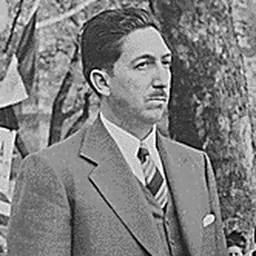
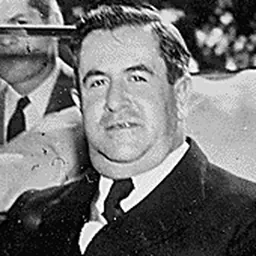
People in Adolfo Ruiz Cortines's life
Named in this biography and alive at the same time




Related people
Same field, nearest in time



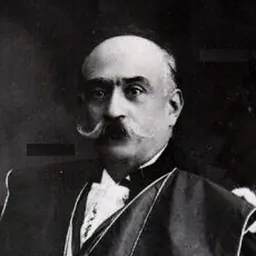
Contemporaries
People whose lives overlapped Adolfo Ruiz Cortines's

Frequently asked questions
Who was Adolfo Ruiz Cortines?
54th President of Mexico
When was Adolfo Ruiz Cortines born?
Adolfo Ruiz Cortines was born on 30 December 1890 in Veracruz.
When did Adolfo Ruiz Cortines die?
Adolfo Ruiz Cortines died on 3 December 1973 in Mexico City.
What was Adolfo Ruiz Cortines's occupation?
Adolfo Ruiz Cortines was a politician and military personnel.
What nationality was Adolfo Ruiz Cortines?
Adolfo Ruiz Cortines was Mexican.
Sources & further reading
· Wikipedia: Adolfo Ruiz Cortines
· DBpedia: Adolfo Ruiz Cortines
Cite this page
APA: Biography.guide. (2026). Adolfo Ruiz Cortines. https://biography.guide/adolfo-ruiz-cortines/
MLA: "Adolfo Ruiz Cortines." Biography.guide, https://biography.guide/adolfo-ruiz-cortines/.
Chicago: "Adolfo Ruiz Cortines." Biography.guide. https://biography.guide/adolfo-ruiz-cortines/.
Data last updated: 2026-09-20 · Spot an error? Report a correction.
Page generated 2026-09-27 05:09 UTC