
About Robert Sayer
Lived 1725 – 1794 (aged 68–69). Robert Sayer was a British cartographer, publisher, visual artist, printer and bookseller.
Robert Sayer (1725 – 29 January 1794) was a leading publisher and seller of prints, maps, and maritime charts in Georgian Britain. He was based near the Golden Buck on 53 Fleet Street in London.
John Bennett, who began as a servant to Sayer in 1760, and later an apprentice (1765) and a free journeyman (1774), eventually partnered with Sayer with one-third share in the Fleet Street business. The business traded as Sayer & Bennett. In 1781, Bennett was admitted to Dr Thomas Monro's Brook House asylum in Clapton. Sayer would seek to dissolve the partnership in 1785 based on Bennett's mental condition. Bennett later died in 1787. Upon the partnership dissolution, the business was renamed Sayer & Co. or Robert Sayer & Co., probably a reference to his assistants Robert Laurie and James Whittle.
Sayer also had an "almost complete set of copies" of painter William Hograth's plates and sold prints at prices that undercut those of Hogarth's widow and printseller, Jane Hogarth.
Harlequinades and turn-up books
Around 1765, Robert Sayer began experimenting with a novelty format for the juvenile book market, an early forerunner to interactive movable books, according to book historian Peter Haining. The outcome was the creation of the “metamorphoses” format, “a thin book of four sections each with two flaps which folded over, and on each section an interchangeable picture. Beneath those pictures appeared some descriptive lines of verse, and as the reader turned up the flaps in the correct order in the text difference scenes were revealed.”
Originally called “metamorphosis”, Sayer would create books featuring the “Harlequins” from popular theater pantomimes. The black and white publications, which were also called Harlequinades or turn-up books, sold for sixpence and the hand-colored ones for one shilling. Theater historian George Speaight noted that Sayers published at least sixteen titles.
Titles Sayer printed and published include Harlequin Cherokee; or, The Indian Chiefs in London, published in 1772. Academic Dr. Jacqueline Reid-Walsh has located eleven of Sayer's "harlequinades" in the rare book collections of Cambridge University Library, Cambridge, the Cotsen Children's Library, the Lilly Library in Bloomington, Indiana, the Opie Collection in the Bodleian Library, Oxford, the Osborne Collection in the Toronto Public Library, and the University of California, Los Angeles.
By late 1770, Sayer had published four turn-up or metamorphosis books, which became a "craze with children." Rival booksellers, such as Thomas Hughes and George Martin soon copied the "turn-up" format. Behind the family group is the substantial villa on Richmond Hill overlooking the River Thames, built for Sayer between 1777 and 1780 to the designs of William Eves, a little-known architect and property developer. From 1794, after Robert Sayer's death, the house was the country residence for three years of the Duke of Clarence (later King William IV) and Mrs Jordan, and their three eldest (of ten) children. The third child was born at the house. Having fallen into disrepair, the house was demolished in 1970 when it was unknown that it had been built for Sayer and that it had subsequently been the home of a future king of Great Britain.
Death On his death, Sayer's business was taken over by Robert Laurie and James Whittle, both of whom had worked for him.
Selected works
Engravings and Prints
Don’t just read it —
keep it.
Full-length biographies made to live with: read them, listen on the way to work, watch them tonight.
- E-book
- Audio
- Video
Instant download · yours to keep · every purchase keeps this site free
Important facts
People in Robert Sayer's life
Named in this biography and alive at the same time

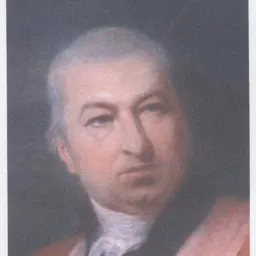
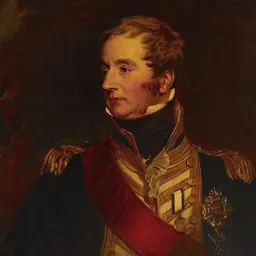

Related people
Same field, nearest in time


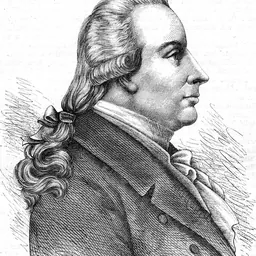
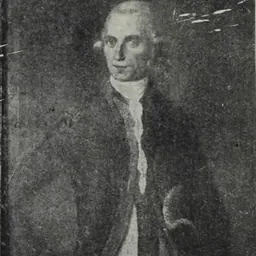
Contemporaries
People whose lives overlapped Robert Sayer's




Frequently asked questions
Who was Robert Sayer?
English publisher, map and printseller (1725-1794)
When was Robert Sayer born?
Robert Sayer was born in 1725 in Sunderland.
When did Robert Sayer die?
Robert Sayer died on 29 January 1794 in Bath, England.
What was Robert Sayer's occupation?
Robert Sayer was a cartographer, publisher, visual artist, printer and bookseller.
What nationality was Robert Sayer?
Robert Sayer was British.
Sources & further reading
Cite this page
APA: Biography.guide. (2026). Robert Sayer. https://biography.guide/robert-sayer/
MLA: "Robert Sayer." Biography.guide, https://biography.guide/robert-sayer/.
Chicago: "Robert Sayer." Biography.guide. https://biography.guide/robert-sayer/.
Data last updated: 2026-09-26 · Spot an error? Report a correction.
Page generated 2026-09-27 05:16 UTC