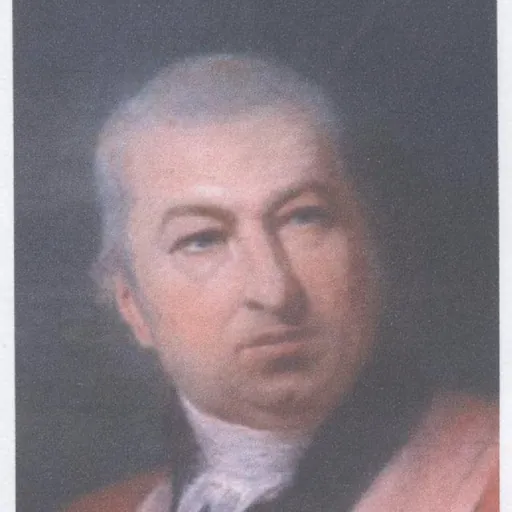
About Thomas Monro
Lived 1759 – 1833 (aged 73–74). Thomas Monro was a British physician, painter, patron of the arts and artist, known for Art collector.
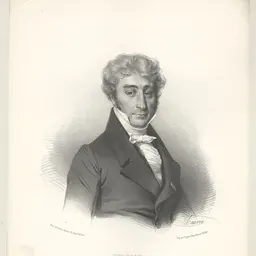
Thomas Monro (1759–1833) was a British art collector and patron. He was Principal Physician of the Bethlem Royal Hospital and one-time consulting physician to George III.
Physician Thomas Monro was born 1759, in London, youngest son of Dr John Monro (9th of Fyrish) and Elizabeth Culling Smith. He was educated at Harrow under Samuel Parr and attended Oriel College, Oxford where he graduated as a Doctor of Medicine in 1787. Admitted as a Fellow of the Royal College of Physicians in 1791, and acted as Censor on three separate occasions. He delivered the Harveian Oration in 1799. In 1811, he was named as an Elect of the college.
Like his father and grandfather he was employed at Bedlam starting as Assistant Physician in 1787. He attended on George III in a joint consultation of specialists during the king's second illness in 1811–12, although Queen Charlotte ensured that his further involvement did not extend beyond that of a passive observer.
In 1792 he became Principal Physician as successor to his father, while he also inherited his father's private asylum at Brooke House in Clapton. He resigned in June 1816, as a result of scandal when he was accused of ‘wanting in humanity’ towards his patients.
Patron
Monro was also known as a patron to numerous artists (including Peter De Wint, Thomas Girtin, John Sell Cotman and William Turner). . The group of artists around him was known as 'The Monro Circle' and included students from his 'Academy' in London, where evening classes were given.
Other painters who visited his home included J. M. W. Turner, Joseph Farington, Thomas Hearne (1744–1817), James Bourne, Henry Edridge, William Henry Hunt, John Laporte and John Varley.
John Robert Cozens was under his care for the last years of his life in the 1790s, after a mental collapse. Munro had access to Cozens' sketchbooks and paid the young Girtin and J. M. W. Turner to copy them and turn them into watercolours.
Monro had a house in Adelphi Terrace, London and a cottage in Fetcham, Surrey (until 1805). From 1807 until his death, on 14 May 1833, he lived in a 'country house' in Merry Hill near Bushey in Hertfordshire.
Monro was himself an amateur artist, and a pupil of John Laporte.
Family Monro had several children, and three of his sons also became artists, in particular Henry (1791–1814). Coincidentally, Monro's distant kinsman Hugh Andrew Johnstone Munro of Novar would later be one of Turner's chief patrons.
Don’t just read it —
keep it.
Full-length biographies made to live with: read them, listen on the way to work, watch them tonight.
- E-book
- Audio
- Video
Instant download · yours to keep · every purchase keeps this site free
Important facts
more
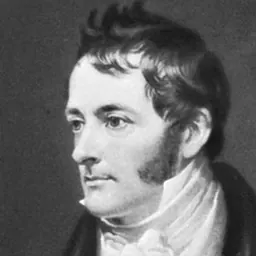
Dr Monro, Monro, Dr MunroePeople in Thomas Monro's life
Named in this biography and alive at the same time



Related people
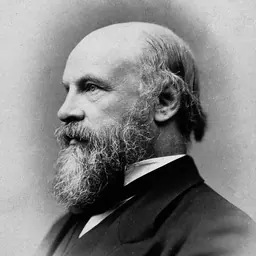
Same field, nearest in time



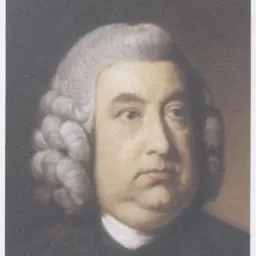
Contemporaries
People whose lives overlapped Thomas Monro's





Frequently asked questions
Who was Thomas Monro?
British artist (1759-1833)
When was Thomas Monro born?
Thomas Monro was born in 1759 in London.
When did Thomas Monro die?
Thomas Monro died on 13 May 1833 in Bushey.
What was Thomas Monro's occupation?
Thomas Monro was a physician, painter, patron of the arts and artist.
What was Thomas Monro known for?
Thomas Monro was known for Art collector.
What nationality was Thomas Monro?
Thomas Monro was British.
Sources & further reading
· DBpedia: Thomas Monro (art collector)
Cite this page
APA: Biography.guide. (2026). Thomas Monro. https://biography.guide/thomas-monro/
MLA: "Thomas Monro." Biography.guide, https://biography.guide/thomas-monro/.
Chicago: "Thomas Monro." Biography.guide. https://biography.guide/thomas-monro/.
Data last updated: 2026-09-24 · Spot an error? Report a correction.
Portrait: Wikimedia Commons · author & licence
Page generated 2026-09-27 05:09 UTC