
Hugh Andrew Johnstone Munro
British classical scholar (1819-1885); sold most of his father's art collection from 1864-1878
About Hugh Andrew Johnstone Munro
Lived 1819 – 1885 (aged 65). Hugh Andrew Johnstone Munro was a British classical philologist, university teacher, philologist and art collector.
Hugh Andrew Johnstone Munro (29 October 1819 – 30 March 1885) was a British classical scholar.
Biography Munro was born at Elgin, Moray, Scotland, the illegitimate son of Hugh Andrew Johnstone Munro of Novar by Penelope Forbes, and educated at Shrewsbury School, where he was one of Benjamin Hall Kennedy's first pupils. He went on to Trinity College, Cambridge, in 1838, becoming a scholar in 1840, second classic and first chancellor's medallist in 1842, and fellow of his college in 1843. He became classical lecturer at Trinity College, and in 1869 was elected to the newly founded chair of Latin at Cambridge, but resigned it in 1872.
The great work on which his reputation rests is his edition of Lucretius, the fruit of many years' efforts (text only, 1 vol., 1860; text, commentary and translation, 2 vols, 1864). As a textual critic his knowledge was profound and his judgment unrivalled; and he studied archaeology, being a frequent traveller in Italy and Greece. In 1867 he published an improved text of Aetna with commentary, and in the following year a text of Horace with critical introduction, illustrated by specimens of ancient gems selected by Charles William King. His knowledge and taste are nowhere better shown than in his Criticisms and Elucidations of Catullus (1878). He was a master of the art of Greek and Latin verse composition. His contributions to the famous volume of Shrewsbury verse, Sabrinae corolla, are among the most remarkable of the collection. He communicated with Thomas Saunders Evans.
His Translations into Latin and Greek Verse were privately printed in 1884. Like his translations into English, these are characterized by minute fidelity to the original, but never cease to be idiomatic. He died while visiting Rome.
A Memoir by J. D. Duff was prefixed to a re-issue of the translation of Lucretius in "Bohn's Classical Library" (1908).
Don’t just read it —
keep it.
Full-length biographies made to live with: read them, listen on the way to work, watch them tonight.
- E-book
- Audio
- Video
Instant download · yours to keep · every purchase keeps this site free
Important facts
People in Hugh Andrew Johnstone Munro's life
Named in this biography and alive at the same time
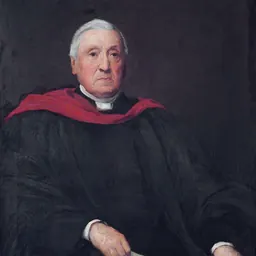

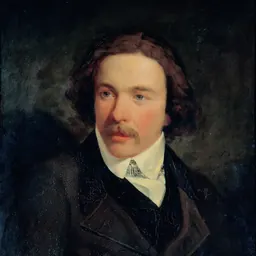
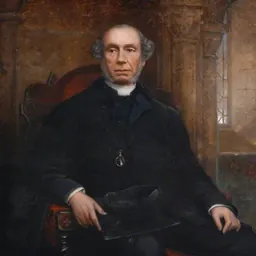
Related people
Same field, nearest in time

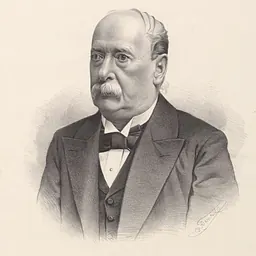

Contemporaries
People whose lives overlapped Hugh Andrew Johnstone Munro's



Frequently asked questions
Who was Hugh Andrew Johnstone Munro?
British classical scholar (1819-1885); sold most of his father's art collection from 1864-1878
When was Hugh Andrew Johnstone Munro born?
Hugh Andrew Johnstone Munro was born on 29 October 1819 in Elgin.
When did Hugh Andrew Johnstone Munro die?
Hugh Andrew Johnstone Munro died on 30 March 1885 in Rome.
What was Hugh Andrew Johnstone Munro's occupation?
Hugh Andrew Johnstone Munro was a classical philologist, university teacher, philologist and art collector.
What nationality was Hugh Andrew Johnstone Munro?
Hugh Andrew Johnstone Munro was British.
Sources & further reading
· Wikipedia: Hugh Andrew Johnstone Munro
· DBpedia: Hugh Andrew Johnstone Munro
Cite this page
APA: Biography.guide. (2026). Hugh Andrew Johnstone Munro. https://biography.guide/hugh-andrew-johnstone-munro/
MLA: "Hugh Andrew Johnstone Munro." Biography.guide, https://biography.guide/hugh-andrew-johnstone-munro/.
Chicago: "Hugh Andrew Johnstone Munro." Biography.guide. https://biography.guide/hugh-andrew-johnstone-munro/.
Data last updated: 2026-09-20 · Spot an error? Report a correction.
Page generated 2026-09-27 05:21 UTC