About Robert Kalloch
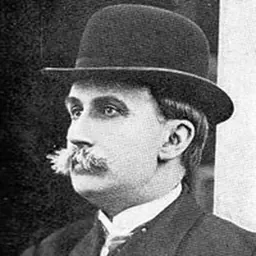
Lived 1893 – 1947 (aged 54). Robert Kalloch was an American costume designer and fashion designer, known for Costume design.
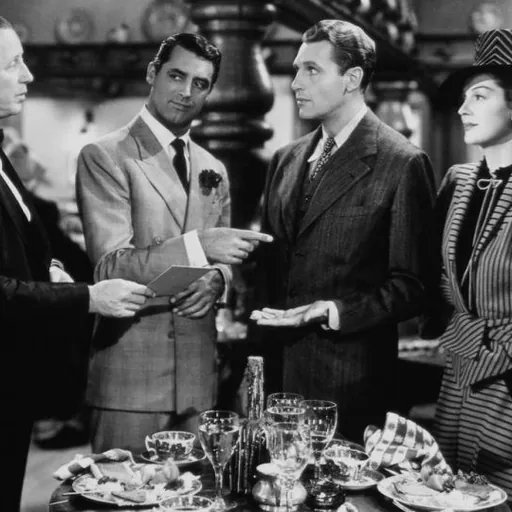
L. to R. : Irving Bacon, Cary Grant, Ralph Bellamy & Rosalind Russell in His Girl Friday; Russell is wearing a costume designed by Kalloch. Robert Mero Kalloch III (January 13, 1893 — October 19, 1947), often known by his professional mononym Kalloch, was an American fashion designer and, later, a costume designer for Columbia Pictures and Metro-Goldwyn-Mayer. He worked on 105 films during his career, and was widely considered one of America's top fashion designers in the late 1930s.
Early life and education Robert Mero Kalloch III was born January 13, 1893, in New York City to Dr. Robert Mero Kalloch II and his wife, Emily ( Maguire). His father was a dentist of Scottish American descent. He attended New York City public schools, then spent four years at the Dwight School on Manhattan's Upper West Side. During his last three years at Dwight, he also attended and graduated from the New York School of Fine and Applied Arts. He later taught at the School of Fine and Applied Arts in his mid-20s, helping to educate Travis Banton and Adrian (both later Hollywood costume designers), and was a member of the jury in the school's 1918 costume design show. Although he won admission to Yale University, he never attended.
Early career Upon graduation from the Dwight School, Kalloch joined Vogue as an illustrator and designer of women's fashions. At the age of 18, Kalloch sought out one of his idols, the prima ballerina Anna Pavlova. After weeks of haunting the performers' entrance at the theater where she was appearing, he finally convinced her to look at his sketches. She was so impressed that she hired him to design costumes for one of her ballets. He later designed costumes for the opera singer Mary Garden.
In 1919, Kalloch won a position with Lucile Ltd., the fashion house of Lucy, Lady Duff-Gordon. He worked in the London and Paris branches of the company, studying fashion and designing costumes for the Grande Revue of the Casino de Paris. Dancer Irene Castle was one of Lucile's clients, and Kalloch designed a number of her dance dresses. Castle swiftly became "the epitome of chic" to the public, and Kalloch was known as the "man who made the clothes that made Irene Castle famous".
Returning to the United States in 1920, Kalloch took a job with Madame Frances & Co., where he co-designed fashions with Travis Banton. According to Edith Head, Kalloch and Banton's designs resembled one another, but Kalloch's work was more imaginative. By 1921, Kalloch was well known in New York City for designing costumes for the Ziegfeld Follies. He also designed costumes for Grace Moore's 1923 Broadway debut in Music Box Revue. In the five years he worked with Madame France & Co., Kalloch visited Europe 28 times to study fashion.
Throughout the early and mid 1920s, he freelanced for Peggy Hamilton, a fashion designer who had worked as chief costume designer for Triangle Film Corporation.
It is unclear what Kalloch's work history included between 1926 and 1930, although for at least a year he worked for fashion entrepreneur Hattie Carnegie. He came to the attention of Hollywood in the late 1920s when Peggy Hamilton, by then a Los Angeles Times fashion columnist began promoting his work in her articles.
Hollywood Early work: 1933 to 1935
In 1933, Columbia Pictures hired Kalloch to be their chief fashion and women's costume designer. He was the first contract costume designer ever hired by the studio, and he established the studio's wardrobe department. Until his death, he was often credited by the mononym "Kalloch". Columbia Pictures at the time had a reputation as a Poverty Row B movie studio. Founder and president Harry Cohn was determined to change that, and in addition to hiring popular actresses like Nancy Carroll, Irene Dunne, Lillian Harvey, Grace Moore, and Fay Wray he hired top-flight technical talent like Kalloch. Kalloch's employment, in turn, convinced these leading actresses that Columbia Pictures intended to invest in their careers.
Among his first works was a lace gown for Mary Brian in the 1933 film Fog and a gown with enormous draped sleeves for Glenda Farrell in Lady for a Day. He also designed the costumes for Elissa Landi for Excursion to Paradise (released under the title Sisters Under the Skin) and (with Edward Stevenson) for Barbara Stanwyck in The Bitter Tea of General Yen. He went to Paris in June 1934 to see the latest fashion trends, and by September of that year had designed costumes for Claudette Colbert (for It Happened One Night), Carole Lombard, Grace Moore, and Genevieve Tobin. After his return, he designed notable costumes for Ann Sothern in Eight Bells and a set of clothes for Joan Bennett in She Couldn't Take It which altered the actress' look from conservative to chic.
Kalloch was Columbia Pictures' first good costume and fashion designer, Between 1930 and 1934, Columbia Pictures transformed itself from a Poverty Row studio to one of the eight major film studios during Hollywood's Golden Age. With Columbia's releases more than doubling from 21 to 47 a year, Kalloch was overwhelmed with work. In May 1935, Columbia Pictures hired Murray Mayer to lead its ladies' wardrobe department. Kalloch retained his position as the studio's fashion and costume designer. During this early period, Kalloch's work favored classic, graceful lines that treated actresses like sculpted marble. His work emphasized their height and slimness.
Kalloch's mother died on June 29, 1935. Her death prompted Kalloch to leave Columbia and return to New York City, where he took a job once again with Madame Frances & Co. When Madame Frances retired in 1936, Kalloch returned to Columbia.
Maturing work: 1936 to 1939
Over the next two years, Kalloch designed on-screen fashions for Ida Lupino in Weather or No (released as Let's Get Married), Irene Dunne in The Awful Truth, Madeleine Carroll in It's All Yours, and Mary Astor in No Time to Marry. Among his most innovative works during this time was a set of Persian cut cocktail pajamas for Grace Moore in I'll Take Romance. It started a brief fashion trend.
Late Columbia years: 1939 to 1941
From 1939 to 1941, Kalloch designed notable on-screen fashions for Jean Arthur in Mr. Smith Goes to Washington and Only Angels Have Wings; Rosalind Russell in His Girl Friday; Rita Hayworth Loretta Young in The Doctor Takes a Wife; in Blondie, Blondie Takes a Vacation, Blondie on a Budget, Blondie Has Servant Trouble, and Blondie Plays Cupid; Katharine Hepburn in Holiday; Joan Blondell in There's Always a Woman and Good Girls Go to Paris; and Barbara O'Neil and Wendy Barrie in I Am the Law.
During this period, Kalloch continued to favor long, slim lines and form-fitting silhouettes. He preferred slim waists He also designed a yellow chenille robe for her which was widely acclaimed. The media also paid particular attention to his work for Joan Blondell in 1938's There's Always a Woman, where Kalloch had to design a chic-looking wardrobe out of cheap garments and cloth.
Kalloch traveled to Europe to view fashions again in late 1939, returning to the United States in March 1940. The reason for his employment seems to be that his designs strongly resembled those of Adrian, MGM's chief fashion designer, with whom Kalloch had maintained a close friendship since Adrian's student days at the New York School of Fine and Applied Arts. Adrian then left the studio on September 5, 1941, to open his own fashion firm. During his short tenure at MGM, Kalloch designed costumes for Hedy Lamarr in H. M. Pulham, Esq., White Cargo, and Crossroads; Myrna Loy in Shadow of the Thin Man; Judy Garland in Babes on Broadway; Ann Sothern in Ringside Maisie and Maisie Gets Her Man; Eleanor Powell in I'll Take Manila (released under the title Ship Ahoy); Norma Shearer in We Were Dancing and Love Me Not (released under the title Her Cardboard Lover); Lana Turner in Somewhere I'll Find You; Veronica Lake in This Gun For Hire; Rosalind Russell in Design for Scandal; 18 sparkling white gowns for Jeanette MacDonald in her first non-period piece film, Shadow of a Lady (released under the title Cairo); and Greer Garson in Random Harvest and Mrs. Miniver; In an unusual endeavor, Kalloch also designed the drag costume for Mickey Rooney in 1941's Babes on Broadway. Powell said she collaborated with Kalloch on her costumes in the film to ensure that the gowns both accommodated her dancing and moved and flowed well. For Norma Shearer in Her Cardboard Lover, Kalloch designed costumes which were the first indications of a new flowing, moving style in his work. One of the most innovative gowns he designed for Shearer in this film became known as the "umbrella dress". Made of pink chiffon, it was embroidered with pearls, leaves, tendrils, with the yoke heavily encrusted with these items. Its "umbrella" shape was due to its circular shape, with a central hole for the neck and no sleeves. Studios were also under pressure from the federal government to make films which exhibited confidence, energy, improvisation, movement, and spontaneity (all emotions which the government wanted the public to feel about the war effort). Kalloch began altering his design look and feel in early 1942 to reflect these needs. These proved so popular that Greer Garson, Hedy Lamarr, and Jeanette MacDonald all bought appliqué garments for their private wardrobes. He created what he called "body bandanas" for Lamarr's wardrobe in White Cargo—three sarongs which could be redraped or reversed in order to provide variety.
After MGM Kalloch had been named Adrian's successor at MGM,
Kalloch left MGM in 1943, although he continued to do freelance work for the studios until his death. His last major films were the 1946 film Suspense and the 1948 picture Mr. Blandings Builds His Dream House (in which he dressed Myrna Loy again). He created wardrobes and women's fashions for 105 motion pictures.
Kalloch was never nominated for the Academy Award for Best Costume Design, as the category was only introduced in 1948.
Other fashion work Peggy Hamilton often featured his work in her Los Angeles fashion shows in the 1930s, and Kalloch exhibited his film and private fashions at various shows. Film magazines regularly featured his work.
Kalloch's fame as a costume and fashion designer was so great by 1937 that the press began to interview him with some frequency about fashion trends. He criticized "fussy" fashion, favored the swing skirt, supported the use of sheer fabrics for summer wear, offered advice to brides on a budget, and advocated slim lines and the use of suede.
Beginning in 1938 and lasting two years, Kalloch wrote occasional fashion columns for the Los Angeles Times. By 1940, Kalloch was considered one of the nation's top fashion designers and he was a member of the Los Angeles Fashion Group, a nonprofit organization of (largely female) fashion designers.
Throughout his Hollywood career, Kalloch continued to design fashions for the private use of a number of famous women, including Fay Wray, Grace Moore, Mona von Bismarck (wife of industrialist Harrison Williams), Joan Perry, Doris Nolan, Gloria Stuart, Ida Lupino, Loretta Young, and Rosalind Russell. He even designed a "strip tease dress" for Eleanor Powell for her 1942 USO tour. Her black evening dress was composed of several pieces, each of which was removed during the routine to reveal only a brief dance costume at the end.
He also designed a 1937 line of hats for mass production, costumes for Nancy Carroll when she appeared in the play Jealousy in 1935, and (with Walter J. Israel) costumes for the San Francisco Light Opera Company's 1946 production of Jerome Kern's Roberta.
Personal life Kalloch had an unusually close relationship with his mother. She lived with her son in his New York City apartment after Kalloch's father died in 1915, and accompanied him to Europe in 1919 and 1920. He and his mother moved into an apartment at 1335 N. Laurel Avenue in Los Angeles in either late 1931 or January 1932. Kalloch and his mother collected antiques all over the world, and filled the apartment with them. and named it Mimosa. He reportedly suffered from a number of phobias and neuroses, the most famous of which was his fear of automobiles. He refused to own a car of his own, and when forced to ride in a car would cower on the floor of the back seat.
Death Kalloch had arteriosclerosis, and died of cardiac arrest at about 6:00 am at his home on October 19, 1947. His lover, Joseph Demarais, died of alcoholic fatty liver disease at 3:15 pm the same day. With Demarais' death coming so soon after Kalloch's, a suspicion of foul play arose. Autopsies on both men confirmed a natural cause of death in both instances. He was interred at Grand View Memorial Park Cemetery in Glendale, California. Travis Banton paid for half of Kalloch's burial and funeral expenses.
Kalloch's will designated Demarais as his heir. Demarais' will, in turn, designated Kalloch as his heir. Demarais inherited Kalloch's $5,000 ($ in dollars) estate. But because Demarais' will was inoperative, his estate (valued at $20,000 [$ in dollars]) and Kalloch's went to Demarai's two brothers. Kalloch's uncle and aunt sued to overturn Kalloch's will. The court battle, which was ultimately resolved in favor of the Demarais heirs, lasted four years. Kalloch's relations settled the lawsuit for $750 ($ in dollars), while Demarais' siblings received the remaining $10,000 ($ in dollars).
Don’t just read it —
keep it.
Full-length biographies made to live with: read them, listen on the way to work, watch them tonight.
- E-book
- Audio
- Video
Instant download · yours to keep · every purchase keeps this site free
Important facts
People in Robert Kalloch's life
Named in this biography and alive at the same time





Related people
Same field, nearest in time



Contemporaries
People whose lives overlapped Robert Kalloch's


Frequently asked questions
Who was Robert Kalloch?
American costume designer (1893-1947)
When was Robert Kalloch born?
Robert Kalloch was born on 13 January 1893 in New York City.
When did Robert Kalloch die?
Robert Kalloch died on 19 October 1947 in Los Angeles.
What was Robert Kalloch's occupation?
Robert Kalloch was a costume designer and fashion designer.
What was Robert Kalloch known for?
Robert Kalloch was known for Costume design.
What nationality was Robert Kalloch?
Robert Kalloch was American.
Sources & further reading
Cite this page
APA: Biography.guide. (2026). Robert Kalloch. https://biography.guide/robert-kalloch/
MLA: "Robert Kalloch." Biography.guide, https://biography.guide/robert-kalloch/.
Chicago: "Robert Kalloch." Biography.guide. https://biography.guide/robert-kalloch/.
Data last updated: 2026-09-22 · Spot an error? Report a correction.
Portrait: Wikimedia Commons · author & licence
Page generated 2026-09-27 04:59 UTC