
About Rosalind Russell
Lived 1907 – 1976 (aged 69). Rosalind Russell was an American actor, film actor, singer, character actor, model and television actor.
Catherine Rosalind Russell (June 4, 1907 – November 28, 1976) was an American actress, model, comedian, screenwriter, and singer, known for her role as fast-talking newspaper reporter Hildy Johnson in the Howard Hawks screwball comedy His Girl Friday, opposite Cary Grant, as well as for her role of catty Sylvia Fowler in George Cukor's The Women (1939), opposite Joan Crawford and Norma Shearer, and for her portrayals of Mame Dennis in the 1956 stage and 1958 film adaptations of Auntie Mame, and Rose in Gypsy (1962). A noted comedienne, she received various accolades, including five Golden Globe Awards and a Tony Award, in addition to nominations for four Academy Awards and a BAFTA Award. Russell has been honored with a Jean Hersholt Humanitarian Award in 1973 and Screen Actors Guild Life Achievement Award in 1975.
In addition to her comedic roles, Russell was known for playing dramatic characters, often wealthy, dignified, and stylish women. She was one of the few actresses of her time to portray women in professional roles such as judges, reporters, and psychiatrists. Russell's career spanned from the 1930s to the 1970s and she attributed this longevity to the fact that, although she had many glamorous roles, she never became a sex symbol.
Early years Catherine Rosalind Russell was one of seven children born in Waterbury, Connecticut, to James Edward, a lawyer, and Clara A. Russell (née McKnight), a teacher. The Russells were an Irish-American, Catholic family. She was named after a ship on which her parents had traveled. Upon graduation from the performing arts school, Russell acted in summer stock and joined a repertory company in Boston.
Career Early career Russell began her career as a fashion model and was in many Broadway shows. Against parental objections, she took a job with a stock company for seven months at Saranac Lake, New York, and then Hartford, Connecticut. Unhappy with Universal's leadership and second-class studio status at the time, Russell set her sights on Metro-Goldwyn-Mayer and was able to get out of her Universal contract on her own terms. When MGM first approached her for a screen test, Russell was wary, remembering her experience at Universal. However, when she met MGM's Benny Thau and Ben Piazza, she was surprised; they were "the soul of understanding". She starred in many comedies such as Forsaking All Others (1934) and Four's a Crowd (1938), as well as dramas, including Craig's Wife (1936) (the second of three film adaptations of the play of the same name; Joan Crawford starred in the third) and The Citadel (1938). Russell was acclaimed when she co-starred with Robert Young in the MGM drama West Point of the Air (1935). One critic wrote: "Rosalind Russell as the 'other woman' in the story gives an intelligent and deft handling to her scenes with Young." She quickly rose to fame, and by 1935, was seen as a replacement for actress Myrna Loy, as she took many roles for which Loy was initially set.
In her first years in Hollywood, Russell was characterized in both her personal life and her film career as a sophisticated "lady". This dissatisfied Russell, who said in a 1936 interview:
Russell approached director Frank Lloyd for help changing her image, but instead, Lloyd cast her as a wealthy aristocrat in Under Two Flags (1936). Russell found out about this while riding on a train to New York, when she read an article in The New York Times stating that she had been cast in the film and listing all the actresses who had turned down the part.
Later career In the early 1940s, Russell starred in the rom-coms The Feminine Touch (1941) and Take a Letter, Darling (1942). In Alexander Hall's comedy film My Sister Eileen (1942), she played older sister Ruth Sherwood. She received her first Academy Award nomination for My Sister Eileen. She then starred in Sister Kenny (1946), portraying real-life Sister Elizabeth Kenny, an Australian bush nurse who fought to help polio victims. She won her first Golden Globe and received her second Academy Award nomination. In Mourning Becomes Electra (1947), she plays a young New Englander who exacts vengeance after the murder of her father. She won her second Golden Globe and got her third Academy Award nomination; she was highly favored to win, to the point that Russell actually began to rise from her seat just before the winner's name was called. However, it was Loretta Young, and not Russell, who was named Best Actress, for her performance in The Farmer's Daughter. She followed up with the murder mystery The Velvet Touch (1948).
Russell scored a big hit on Broadway with her Tony Award-winning performance in the musical Wonderful Town (1953), a musical version of her successful film of a decade earlier, My Sister Eileen. Russell reprised her starring role for a 1958 television special.
Perhaps her most memorable performance was in the title role of the long-running stage comedy Auntie Mame (based on a Patrick Dennis novel) as well as the 1958 film version, in which she played an eccentric aunt whose orphaned nephew comes to live with her. When asked with which role she was most closely identified, she replied that strangers who spotted her still called out, "Hey, Auntie Mame!". For the film version, she won the Laurel Award for Top Female Comedy Performance and her third Golden Globe, and received her first BAFTA nomination and fourth Academy Award nomination. For the stage version, she received a nomination for the Tony Award for Best Actress in a Play. Patrick Dennis dedicated his second Auntie Mame novel, Around the World with Auntie Mame, to "the one and only Rosalind Russell" in 1958.
She continued to appear in movies through the mid-1960s, including Picnic (1955), A Majority of One (1961), Five Finger Exercise (1962), Gypsy (1962, winning her fifth Golden Globe), The Trouble with Angels (1966), and its sequel, Where Angels Go, Trouble Follows (1968). Russell was the logical choice for reprising her role as Auntie Mame when the musical version Mame was set for a production on Broadway in 1966, but she declined for health reasons.
In addition to her acting career, Russell, under the name C. A. McKnight, also wrote the story for the film The Unguarded Moment (1956), a story of sexual harassment, starring Esther Williams. Russell used the pen name C. A. McKnight again in 1971, when she was credited as screenwriter for adapting the novel The Unexpected Mrs. Pollifax into the screenplay for Mrs. Pollifax-Spy, in which she also starred. It was Russell's last big screen role.
Awards and nominations
In 1972, Russell received the Golden Plate Award of the American Academy of Achievement. She also has a star on the Hollywood Walk of Fame.
Russell is honored at the Rosalind Russell Medical Research Center for Arthritis. Her portrait and a description of her work hang in the lobby, as Congress made a grant in 1979 to establish the research center, in honor of her Congressional appointment to the National Commission on Arthritis.
Personal life On October 25, 1941, Russell married Danish-American producer Frederick Brisson (1912–1984), son of actor Carl Brisson. Cary Grant was responsible for the couple's having met and was best man at their wedding. Brisson had been traveling from England to the United States by ship in 1939, and The Women was playing on an endless loop during the voyage. After hearing the audio for the film day after day while traveling, Brisson decided he had better sit down and watch the whole film. He became so enamored with Russell's performance as Sylvia Fowler that he turned to his friends and proclaimed, "I'm either gonna kill that girl, or I'm gonna marry her."
Brisson stayed with Cary Grant in his guest house while Grant was filming His Girl Friday. Upon hearing that Grant was making the movie with Russell, Brisson asked his friend if he could meet her.
Russell was a registered Republican who supported Richard Nixon's 1960 presidential campaign. President Nixon appointed Russell to the National Council on the Arts in August 1972.
Russell was a devout Catholic and a member of the Good Shepherd Parish and the Catholic Motion Picture Guild in Beverly Hills, California.
Death
Russell died of breast cancer on November 28, 1976.
Russell has a star on the Hollywood Walk of Fame in the 1700 block of Vine Street.
Her autobiography Life Is a Banquet, written with Chris Chase, was published a year after her death. The foreword, written by her husband, states that Russell had a mental breakdown in 1943. She did not act in films in 1944. Details are scant, but the book indicates that health problems and the deaths of a sister and a brother were major factors leading to her breakdown. Russell had rheumatoid arthritis, and an arthritis research center at the University of California, San Francisco bears her name.
In 2009, the documentary film Life Is a Banquet: The Life of Rosalind Russell, narrated by Kathleen Turner, was shown at film festivals across the United States and on some PBS stations.
Work - acting and voice credits Film
Television
Broadway theatre
Radio appearances Year Program Episode/Source1939 Lux Radio Theatre Stage Door role of Terry 1940 Screen Guild Players Ninotchka 1941 Lux Radio Theatre Craig's Wife 1952 Theatre Guild on the Air The Damask Cheek
Don’t just read it —
keep it.
Full-length biographies made to live with: read them, listen on the way to work, watch them tonight.
- E-book
- Audio
- Video
Instant download · yours to keep · every purchase keeps this site free
Important facts
People in Rosalind Russell's life
Named in this biography and alive at the same time
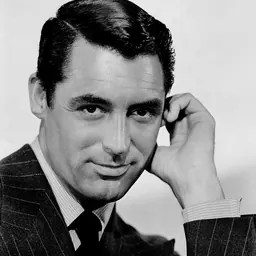

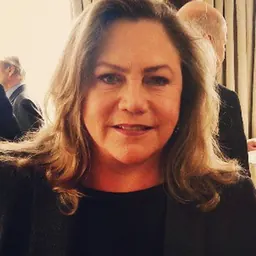


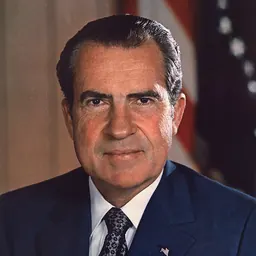
Related people
Same field, nearest in time


Contemporaries
People whose lives overlapped Rosalind Russell's



Frequently asked questions
Who was Rosalind Russell?
American actress (1907–1976)
When was Rosalind Russell born?
Rosalind Russell was born on 4 June 1907 in Waterbury.
When did Rosalind Russell die?
Rosalind Russell died on 28 November 1976 in Beverly Hills.
What was Rosalind Russell's occupation?
Rosalind Russell was an actor, film actor, singer, character actor, model and television actor.
What nationality was Rosalind Russell?
Rosalind Russell was American.
Sources & further reading
Cite this page
APA: Biography.guide. (2026). Rosalind Russell. https://biography.guide/rosalind-russell/
MLA: "Rosalind Russell." Biography.guide, https://biography.guide/rosalind-russell/.
Chicago: "Rosalind Russell." Biography.guide. https://biography.guide/rosalind-russell/.
Data last updated: 2026-09-20 · Spot an error? Report a correction.
Page generated 2026-09-27 05:25 UTC