
About Robert C. Richardson Jr.
Lived 1882 – 1954 (aged 71). Robert C. Richardson Jr. was an American military personnel.
Robert Charlwood Richardson Jr. (27 October 1882 – 2 March 1954) was a decorated United States Army general whose career spanned the first half of the 20th century, including service in the Philippine insurrection, World War I, and World War II. During World War II, he was commanding general of U.S. Army Forces in the Pacific Ocean Areas and military governor of the Territory of Hawaii.
Commissioned from the United States Military Academy in 1904, Richardson also attended the University of Grenoble, France, as well as the United States Army War College. During World War I he was a liaison officer in the American Expeditionary Force. Afterward he was a military attaché with the U.S. Embassy in Rome. He was the author of "West Point-An Intimate Picture of the National Military Academy".
Prior to World War II, Richardson commanded the 1st Cavalry Division from 1940 to 1941. He then directed the War Department Bureau of Public Relations before becoming commanding general of the VII Corps in Alabama, moving it to set up the defense of California immediately following the Japanese attack on Pearl Harbor. In 1943 he was made Commanding General of the Hawaiian Department, Military Governor of Hawaii, and all Army personnel in the Pacific Ocean and Mid-Pacific Areas. As Commander of all Pacific Army personnel, he had administrative or what is called UCMJ authority of all Army units, while tactical or what is called today operational Joint control fell to Fleet Admiral Chester W. Nimitz. He was responsible for all Army disciplinary, training, and tactical unit preparations. He was the first senior Army general officer to ever serve as Joint forces subordinate commander under a non-Army flag officer, Fleet Admiral Nimitz.
Early career Upon graduation from the United States Military Academy at West Point and commission into the U.S. Cavalry as a second lieutenant, Richardson was ordered to the Philippine Islands to join the 14th Cavalry. He served in the field against the hostile Moro tribesmen at Jolo during the Philippine War guerrilla insurrection. He was wounded in action at Cotta Usap on 7 January 1905, and was awarded the Purple Heart for wounds and the Silver Star award for gallantry in action. He subsequently participated in various other engagements against the insurgents until he left his regiment on 21 October 1905. Returning to the United States, he was with the 14th Cavalry at the Presidio of San Francisco, California when the 1906 earthquake struck; he led his cavalry troop from the Presidio as part of the Government’s response to the earthquake and subsequent firestorm.
On 25 October 1906, he returned to West Point as an Assistant Instructor of Modern Languages until 13 August 1911. First Lieutenant Richardson returned to San Francisco until 4 October, when he sailed for a second tour in the Philippines with the 14th Cavalry at Camp Stotsenburg. On 4 March 1912, he returned to the United States to join the 23rd Infantry at Texas City and Fort Clark, Texas. In August 1914, he started a second tour at West Point as Assistant Professor of English, until June 1917.
Richardson married Lois Elbertine Farman (b. 1884) on 18 November 1916, in Wyoming, New York. The couple had one son, Robert C. Richardson III. They spent the later years of their lives in Upper Village, Bath, New Hampshire. The couple were close personal friends of Rose Standish Nichols.
World War I and post-Great War Europe In June 1917, Captain Richardson was assigned to the 2nd Cavalry Regiment at Fort Ethan Allen, Vermont and on 9 July, was appointed aide to Major General Thomas H. Barry, who commanded the Central Department with headquarters at Chicago, Illinois. Richardson helped in the rapid buildup and training of the American Expeditionary Force (AEF) that was preparing to go to France. Richardson, a temporary major, sailed with Barry to France from New York on 1 December 1917. Fluent in French, Richardson served as an aide and observer with foreign armies until 9 January 1918. On 14 June, he was assigned to the Operations Division of the General Staff, AEF, as liaison officer for G.H.Q. Allied Headquarters and with American Armies, Corps, and Divisions during the combat operations of 1918. He escorted Allied missions in St. Mihiel Offensive. By now a temporary lieutenant colonel, Richardson was liaison officer with Headquarters, First United States Army, for the opening of the Meuse-Argonne Offensive and also served as the operations officer representative at Advance G.H.Q. With the end of hostilities and now a temporary colonel, Richardson joined the Reparations Board, Peace Commission, in Paris from January 28 to February 28, 1919. As part of the Occupation of the Rhineland, Colonel Richardson served on temporary duty at Headquarters, United States Third Army in Koblenz, Germany, and was attached to Headquarters, 10th French Army, at Mainz, until June 1, 1919.
During this period another controversy arose. In June 1944, General Richardson disputed Marine Lieutenant General Holland Smith's removal of Army Major General Ralph C. Smith from command of the 27th Infantry Division during the Battle of Saipan. General Richardson, as the administrative commander of all Pacific Army personnel, questioned both whether Marine General Smith, as the operational commander, had the authority to relieve Army General Smith, and whether the relief was justified by the facts. This minor inter-service controversy was fanned by the media into controversy over the Pacific war strategy as a whole, and led to a bitter inter-service relationship in the Pacific Theater. At its core, this was a difference of opinion between the U.S. Navy and Marine Corps and the U.S. Army over command authority, pre-campaign planning, and operational tactics. Also fueling the controversy was General Holland Smith's low opinion and poor treatment of the Army personnel under his control.
In October 1944, Richardson was made a permanent major general. He stood in the front row of the senior leaders who witnessed Japan’s formal surrender on the deck of the USS Missouri on 2 September 1945. After the war, Richardson continued to command the Hawaiian Department and U.S. Army Forces in the Middle Pacific until October 1946, when he reached the mandatory retirement age of 64.
Retirement Richardson was predeceased by his wife, Lois, who died on 26 July 1951 at the age of 66 at the couple's home in Bath. During his retirement, Richardson traveled and spent time in New York during the winter months. Richardson was writing his memoirs before his passing, but the manuscript was never completed.
Dates of rank
Don’t just read it —
keep it.
Full-length biographies made to live with: read them, listen on the way to work, watch them tonight.
- E-book
- Audio
- Video
Instant download · yours to keep · every purchase keeps this site free
Important facts
People in Robert C. Richardson Jr.'s life
Named in this biography and alive at the same time



Related people
Same field, nearest in time


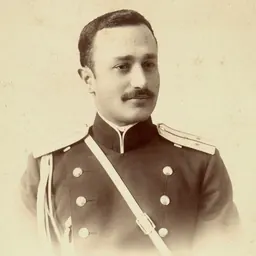



Contemporaries
People whose lives overlapped Robert C. Richardson Jr.'s

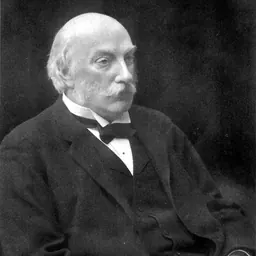

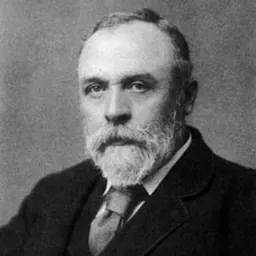


Frequently asked questions
Who was Robert C. Richardson Jr.?
United States Army general (1882–1954)
When was Robert C. Richardson Jr. born?
Robert C. Richardson Jr. was born on 27 October 1882 in Charleston.
When did Robert C. Richardson Jr. die?
Robert C. Richardson Jr. died on 2 March 1954 in Rome.
What was Robert C. Richardson Jr.'s occupation?
Robert C. Richardson Jr. was a military personnel.
What nationality was Robert C. Richardson Jr.?
Robert C. Richardson Jr. was American.
Sources & further reading
· Wikipedia: Robert C. Richardson Jr.
· DBpedia: Robert C. Richardson Jr.
Cite this page
APA: Biography.guide. (2026). Robert C. Richardson Jr.. https://biography.guide/robert-c-richardson-jr/
MLA: "Robert C. Richardson Jr.." Biography.guide, https://biography.guide/robert-c-richardson-jr/.
Chicago: "Robert C. Richardson Jr.." Biography.guide. https://biography.guide/robert-c-richardson-jr/.
Data last updated: 2026-09-20 · Spot an error? Report a correction.
Page generated 2026-09-27 05:30 UTC