
About Robert Alan Aurthur
Lived 1922 – 1978 (aged 56). Robert Alan Aurthur was an American screenwriter, film director, film producer, writer and television producer.
Robert Alan Aurthur (June 10, 1922 – November 20, 1978) was an American screenwriter, film director, and film producer. Many of his works examined race relations and featured In the Heat of the Night star Sidney Poitier.
His final work was All That Jazz (1979), directed by Bob Fosse, produced by Aurthur and written by both, released posthumously and for which he received two Academy Award nominations.
Early life Raised in Freeport, New York (on Long Island), he was a pre‐med student at the University of Pennsylvania. Once World War II broke out, he left to join the Marines during which he served as a combat correspondent.
Television
In the early years of television, he wrote for Studio One and then moved on to write episodes of Mister Peepers (1952–53). He followed with teleplays for Campbell Playhouse (1954), Justice (1954), Goodyear Television Playhouse (1953–54) and Producers' Showcase (1955). One of his four 1951–55 plays for The Philco Television Playhouse was the Emmy-nominated A Man Is Ten Feet Tall (1955), with Don Murray and Sidney Poitier, which was adapted two years later as the theatrical film, Edge of the City (1957) with Poitier and John Cassavetes.
He wrote two teleplays for Playhouse 90. One of them, A Sound of Different Drummers (October 3, 1957), borrowed so heavily from Ray Bradbury's Fahrenheit 451 that Bradbury sued.
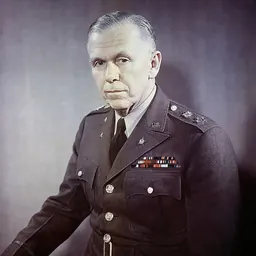
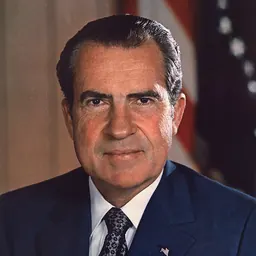
Aurthur appeared with Merle Miller in David Susskind's 2012 documentary about President Harry S. Truman titled Give 'em Hell, Harry, stating: "Going into a Howard Johnson's was bad enough, but with a President!" They discussed George Marshall, Dwight Eisenhower, and Richard Nixon, as well as their observations on Truman's respect for Marshall.
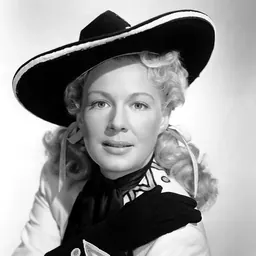
Film After 1957, Aurthur continued to write screenplays. He was one of the writers on Spring Reunion (1957), notable as Betty Hutton's final film, following with Warlock (1959), and his earlier association with Cassavetes led to script contributions on the actor's directorial debut with Shadows (1959). After an uncredited contribution to Lilith (1964), he scripted John Frankenheimer's Grand Prix (1966).
Aurthur wrote and directed The Lost Man (1969) about a black militant (Sidney Poitier). As the co-writer and producer of All That Jazz (1979), Kwamina was a collaboration with composer and lyricist Richard Adler, starring Adler's wife, Sally Ann Howes. The subject material, an interracial love affair, proved too controversial and the show closed. Carry Me Back to Morningside Heights was directed by Sidney Poitier and starred African-American stars Louis Gossett Jr. and Cicely Tyson; the plot involved a young Jewish man who insisted on becoming a slave to an African-American law student as a penance for the years of wrongs whites have done to blacks. It closed after seven performances.
Personal life Aurthur served in the United States Marine Corps during World War II. He was the first husband of actress Beatrice Arthur, who also served in the Marines; they divorced in 1950 and had no children. She used a variation of his surname as her professional name.
His second wife was Virginia Aurthur. One of their children was Jonathan Aurthur (1948–2004), who died by suicide eight years after his own son (Robert and Virginia's grandson) had committed suicide, and about which Jonathan Aurthur had written a book. At the time of his death, Robert Alan Aurthur was married to Jane Wetherell Aurthur, a former television producer; they had one daughter, Kate Aurthur, who as of 2019 is an editor-at-large at Variety.
Death Aurthur died of lung cancer in New York City in 1978, aged 56. In 2009, his former wife, Bea Arthur, died of the same disease, aged 86.
Don’t just read it —
keep it.
Full-length biographies made to live with: read them, listen on the way to work, watch them tonight.
- E-book
- Audio
- Video
Instant download · yours to keep · every purchase keeps this site free
Important facts
Family & relationships
People in Robert Alan Aurthur's life
Named in this biography and alive at the same time




Related people
Same field, nearest in time


Contemporaries
People whose lives overlapped Robert Alan Aurthur's

Frequently asked questions
Who was Robert Alan Aurthur?
American screenwriter (1922–1978)
When was Robert Alan Aurthur born?
Robert Alan Aurthur was born on 10 June 1922 in New York City.
When did Robert Alan Aurthur die?
Robert Alan Aurthur died on 20 November 1978 in New York City.
What was Robert Alan Aurthur's occupation?
Robert Alan Aurthur was a screenwriter, film director, film producer, writer and television producer.
What nationality was Robert Alan Aurthur?
Robert Alan Aurthur was American.
Sources & further reading
· Wikipedia: Robert Alan Aurthur
· DBpedia: Robert Alan Aurthur
Cite this page
APA: Biography.guide. (2026). Robert Alan Aurthur. https://biography.guide/robert-alan-aurthur/
MLA: "Robert Alan Aurthur." Biography.guide, https://biography.guide/robert-alan-aurthur/.
Chicago: "Robert Alan Aurthur." Biography.guide. https://biography.guide/robert-alan-aurthur/.
Data last updated: 2026-09-22 · Spot an error? Report a correction.
Page generated 2026-09-27 05:11 UTC