
About Robert Adams
Lived 1785 – 1837 (aged 51–52). Robert Adams was an American sailor, slave and seaman.
Robert Adams (born ) was a twenty-five-old American sailor who claimed to be enslaved in North Africa for three years, from 1810 to 1814. During this time, he claimed to have visited Timbuktu, which would have made him the first Westerner to reach the city, though his narrative is dubious. Upon his stated liberation and return to Europe, Adams' story was published in two heavily edited and divergent accounts, most notably The Narrative of Robert Adams in 1816.
Because his story was sanctioned by some of the most distinguished men in England, including members of government, who had a noted financial interest in Africa, his narrative(s) gained credibility despite "its most glaring absurdities."
Widely cited as an example of white slavery, today, both accounts are widely known to have been fabrications, lending to the dismissal of Adam's story within general history discussions and recordings.
Early life Robert Adams was an American of mixed black and white ancestry. It was written that he was "born up the river of New York, where his father lived when he quitted America;" and that his mother was a Mulatto. However, there is no record of a man under his known aliases or fitting his general description in Hudson during this period. Luckily, the Moors also had an imprisoned Frenchman who was able to communicate with Captain Horton, who also spoke French.
According to Cock's introduction to the Narrative, Adams sailed home in December 1815, omitting much of his payment, as well as his royalties from the book, but promising to return in the spring. Due to the dangerous nature of trans-Atlantic crossings in the winter, he gave Cock the "particulars of his family" to verify claims on his earnings. However, the Company of Merchants Trading to Africa's records do not show any money was ever paid to, or held for, Adams or his family. From this point, Adams vanishes from the historical record.
At the time, Timbuktu was a major center of trading, focusing on salt, books, and gold, which were all very in demand at the time. Goods coming from the Mediterranean shores and salt from Tegaza in the north were traded in Timbuktu for gold, which came from the immense gold mines of the Boure and Banbuk. The city's prosperity attracted black African and Arab scholars, merchants, and traders from North Africa. The fact that the city was a major center for trading goods for gold only increased its fame, and this very trade made the city enormously wealthy.
The following explorers attempted many failed expeditions to the remote city of Timbuktu: the American John Ledyard, the Englishman Simon Lucas, the Irishman Major Daniel Houghton, the Scotsman Mungo Park, the German Frederick Hornemann, an Englishman named Nicholls, and the Swiss explorer Johann Ludwig Burckhardt. They all failed in one way or another, primarily by disappearing in the middle of the expedition or dying before reaching the city. Most did not return home.
Robert Adams' tale of his visit to Timbuktu was highly significant for two reasons: (1) it is a tale of a Westerner finally managing to arrive at the famed city, long coveted for its supposed wealth and extensive reserves of gold, and (2) because he was said to have arrived there by accident, and not through an organized exploration.
Controversy Adams's account does not match what is now known of Timbuktu and is regarded as a probable fabrication.
Also lending doubt to Adams' story is the "artlessness," considered necessary for poor storytellers, often giving them a sense of truth. Michel de Certeau wrote of such narratives when he linked the history of writing history to the legitimization of political power, a practice found in "Western" cultures, which used the act of writing as a tool of colonialism; writing histories while minimizing or eradicating the traditions of native peoples. For example, Dick said of Adams:
Critics paint Adams as a "found narrator" who is not only unable to narrate a "continuous and straight-forward story" but who also could only answer questions put to him, first by Dupuis in 1810 in Africa, and then in 1815–16 in London, meaning the editors constructed his "story" from fragments. This, argues critics, was done to the point in which Cock brought in a group of "scientific and respectable gentlemen" to interview Adams to verify details and geographical descriptions of Africa.
Adams' story was deemed fabricated, to the point that it was denounced in the North American Review in 1817, which delivered its critique only after assessing both narratives. The critique stated:
Despite its discrepancies, it is surmised that Adams' story found an audience due to "sympathy and curiosity of Africa" at the time."
Don’t just read it —
keep it.
Full-length biographies made to live with: read them, listen on the way to work, watch them tonight.
- E-book
- Audio
- Video
Instant download · yours to keep · every purchase keeps this site free
Important facts
People in Robert Adams's life
Named in this biography and alive at the same time



Related people
Same field, nearest in time
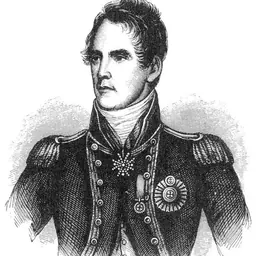


Contemporaries
People whose lives overlapped Robert Adams's
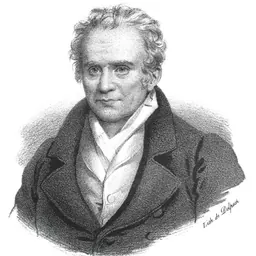


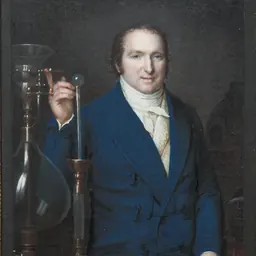
Frequently asked questions
Who was Robert Adams?
American travel writer
When was Robert Adams born?
Robert Adams was born in 1785 in Hudson.
When did Robert Adams die?
Robert Adams died in 1837 in Greenfield.
What was Robert Adams's occupation?
Robert Adams was a sailor, slave and seaman.
What nationality was Robert Adams?
Robert Adams was American.
Sources & further reading
· DBpedia: Robert Adams (sailor)
Cite this page
APA: Biography.guide. (2026). Robert Adams. https://biography.guide/robert-adams-sailor/
MLA: "Robert Adams." Biography.guide, https://biography.guide/robert-adams-sailor/.
Chicago: "Robert Adams." Biography.guide. https://biography.guide/robert-adams-sailor/.
Data last updated: 2026-09-26 · Spot an error? Report a correction.
Page generated 2026-09-27 05:15 UTC