
About Pedro Sainz de Baranda y Borreiro
Lived 1787 – 1845 (aged 58). Pedro Sainz de Baranda y Borreiro was a Mexican sailor, military personnel and politician.
Pedro Sáinz de Baranda y Borreiro (13 March 1787 – 16 December 1845) was a naval officer, industrialist, and liberal politician who founded the Mexican Navy and led the naval blockade of Veracruz, which ended with the Spanish surrendering San Juan de Ulua Fort in 1825, the last portion of Mexican territory still in Spanish hands. This event is recognized as the culmination of the Mexican War of Independence.
Born in San Francisco de Campeche to a noble Spanish family with a rich political heritage, and, afterward, was also elected to the Constituent Assembly which drafted the Mexican Constitution of 1824. A member of the Liberal Party, he served as Mayor of Valladolid, Lieutenant-Governor of Yucatán, and on two occasions as Governor of Yucatán. He also contributed to Mayan culture exploration and established the Aurora Yucateca, Mexico's first mechanized textile factory, "a bold experiment in industrial revolution."
Early years and participation in the Battle of Trafalgar Born on March 13, 1787, in San Francisco de Campeche, he was the eldest son of Pedro Sáinz de Baranda y Cano (1753–1840), a Spanish colonial administrator and hidalgo who arrived in the New World as the Minister of the Treasury (Ministro de la Real Hacienda), and María Josefa de Borreiro y de la Fuente. The Sáinz de Baranda family, belonging to the Spanish nobility, had a significant presence in liberal politics between the 18th and 20th-centuries in both Spain and Mexico.
One of his relatives, Pedro Sáinz de Baranda y Gorriti, notably served as the first democratically-elected Mayor of Madrid during the Napoleonic invasion of the Iberian Peninsula, defending the city valiantly.
At the age of 11, in 1798, Sáinz de Baranda embarked on a merchant ship bound for Spain to receive naval officer training. He officially joined the Spanish army on October 18, 1803, as a Midshipman (guardíamarina). By November 1804, he was promoted to Sub-Lieutenant (alférez de fragata) while serving aboard the San Fulgencio, a ship-of-the-line, under Domingo Pérez de Grandallana's command.
In 1796, inspired by Napoleon's military successes, especially the Rhine Campaign and the Italian Campaign, Manuel Godoy, the Spanish Prime Minister, signed the Second Treaty of San Ildefonso, establishing a Franco-Spanish alliance against Great Britain. The Treaty of Amiens (1802) provided a temporary truce, but hostilities resumed after the British attacked a Spanish squadron carrying precious metals to Cádiz two years later.
At the time, Sáinz de Baranda served on the Santa Ana battleship, part of a squadron led by Admiral Federico Gravina. The squadron encountered Admiral Horatio Nelson's British fleet off Cape Trafalgar. During the battle, the Santa Ana engaged HMS Royal Sovereign, a British ship-of-the-line commanded by Cuthbert Collingwood, 1st Baron Collingwood.
Despite British naval superiority, Santa Ana was able to engage HMS Royal Sovereign for about six hours in a fierce struggle until, due to the high number of casualties and severe injuries suffered by her crew, including Commander Alava and Sainz de Baranda himself, who sustained three dangerously severe wounds, the Spanish ship was forced to surrender. However, it was later rescued by the Spanish ships Asís, Montañes, and Rayo. After the Battle of Trafalgar, Sáinz de Baranda, a decorated hero, earned a promotion to lieutenant (teniente) at the age of eighteen. For his role in these events, Pedro Sainz de Baranda is considered the founder of the Mexican Navy.
Sáinz de Baranda held the highest operational naval position of the time as Supreme Commander of the Navy Department. However, due to his fragile health, on December 1, 1825, he wrote to the Provisional Government to request that they accept his resignation as no armed enemies remained against the Nation.
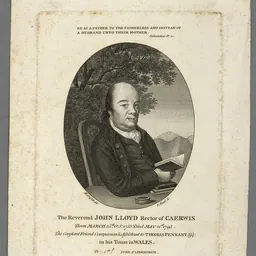
Beyond his industrial pursuits, Sáinz de Baranda's curiosity extended to the realms of culture and exploration. His collaboration with American explorer John Lloyd Stephens bore fruit in their joint research on the enigmatic Mayan civilization of the Yucatán peninsula. This collaboration played a pivotal role in enhancing our understanding of Mayan culture. Their combined efforts were instrumental in the creation of a work that remains celebrated to this day: Incidents of Travel in Yucatán co-authored by Stephens and artist Frederick Catherwood.
The remarkable progress achieved by Aurora de Yucatán encountered a formidable challenge during the Caste War of Yucatán. This conflict disrupted the thriving textile industry and forced the factory to cease operations. The widespread destruction that characterized this period unfortunately enveloped Aurora de Yucatán, leading to its closure. This chapter of unrest marked a significant setback for both the industrial sector and the region as a whole. It wasn't until 1854 that Gregorio Zambrano founded another mechanized textile factory in Monterrey.
Sáinz de Baranda died in Mérida on 16 December 1845 at the age of 58. His remains were deposited in Campeche Cathedral. In March 1987, President Miguel de la Madrid instructed that his remains should be transferred, with the corresponding military honors, to the Rotunda of the Illustrious Persons in Mexico City.
Family José María Pino Suárez, the Vicepresident of Mexico (1911 - 13), was his great-grandson. He married María Joaquina Quijano y Cosgaya, a member of the Quijano family, a lineage deeply entrenched in Yucatán's power structure, with family members strategically positioned in key roles within the local government, business, the ecclesiastical hierarchy, and military leadership.
The couple had four children: Pedro, Perfecta, María Josefa and Joaquín.
Additionally, Sáinz de Baranda was the stepfather of General Francisco Cantón, a conservative politician and military figure who served as the governor of Yucatán from 1898 to 1902, modernizing the region's infrastructure and encouraging economic growth. He had fought in the Castes War and supported Emperor Maximilian's rule during the Second French Intervention. He later supported Porfirio Díaz's Plan of Tuxtepec in 1876.
Pedro Sáinz de Baranda's legacy continued through his descendants, who left their mark on Mexico's political and social landscape. During the 19th century, the Baranda family became part of "the highest echelons of southeastern political royalty in Mexico, where they became "a Campeche-based family long active in civil and military affairs."
One of his sons, Joaquín, attained prominence as chief justice of the Supreme Court, a governor of Campeche, and a cabinet minister. His role in establishing institutions like the Public Prosecutor's Office and the Normal School underscored his commitment to advancing Mexican society. Like his father before him, he is buried in the Rotunda of the Illustrious Persons.
Another of Sáinz de Baranda's sons, General Pedro Baranda, etched his name in history as a military officer during the Reform War and the French invasion of Mexico. His leadership in battles aligned with the liberal cause and his instrumental role in founding the federal states of Campeche and Morelos exemplified his dedication to the Nation. He also contributed to the drafting of the 1857 Federal Constitution.
The family's influence extended even further, as Sáinz de Baranda's great-grandson, José María Pino Suárez, emerged as a prominent figure during the Mexican Revolution. As vice-president of Mexico, Pino Suárez played a pivotal role in this transformative period until his tragic assassination in 1913. He too is buried in the Rotunda of the Illustrious Persons.
Don’t just read it —
keep it.
Full-length biographies made to live with: read them, listen on the way to work, watch them tonight.
- E-book
- Audio
- Video
Instant download · yours to keep · every purchase keeps this site free
Important facts
Family & relationships
People in Pedro Sainz de Baranda y Borreiro's life
Named in this biography and alive at the same time



Related people
Same field, nearest in time

Contemporaries
People whose lives overlapped Pedro Sainz de Baranda y Borreiro's




Frequently asked questions
Who was Pedro Sainz de Baranda y Borreiro?
Mexican sailor
When was Pedro Sainz de Baranda y Borreiro born?
Pedro Sainz de Baranda y Borreiro was born on 13 March 1787 in San Francisco de Campeche.
When did Pedro Sainz de Baranda y Borreiro die?
Pedro Sainz de Baranda y Borreiro died on 16 December 1845 in Mérida.
What was Pedro Sainz de Baranda y Borreiro's occupation?
Pedro Sainz de Baranda y Borreiro was a sailor, military personnel and politician.
What nationality was Pedro Sainz de Baranda y Borreiro?
Pedro Sainz de Baranda y Borreiro was Mexican.
Sources & further reading
· Wikipedia: Pedro Sainz de Baranda y Borreiro
· DBpedia: Pedro Sáinz de Baranda y Borreiro
Cite this page
APA: Biography.guide. (2026). Pedro Sainz de Baranda y Borreiro. https://biography.guide/pedro-sainz-de-baranda-y-borreiro/
MLA: "Pedro Sainz de Baranda y Borreiro." Biography.guide, https://biography.guide/pedro-sainz-de-baranda-y-borreiro/.
Chicago: "Pedro Sainz de Baranda y Borreiro." Biography.guide. https://biography.guide/pedro-sainz-de-baranda-y-borreiro/.
Data last updated: 2026-09-26 · Spot an error? Report a correction.
Page generated 2026-09-27 05:16 UTC