
About Cuthbert Collingwood
Lived 1826 – 1908 (aged 81). Cuthbert Collingwood was a British surgeon, zoologist and naturalist.
Cuthbert Collingwood (25 December 1826 – 20 October 1908) was an English naturalist, physician, and theologian. He lectured in botany and medicine in Liverpool, served as surgeon‑naturalist on voyages in the China Seas, and published widely on marine zoology. A critic of Charles Darwin’s theory of natural selection, he corresponded with Darwin and Henry Walter Bates and remained aligned with Louis Agassiz’s views. Collingwood was also active in the New Jerusalem Church and wrote theological works seeking to reconcile science and religion. He died in Paris in 1908 and was buried in Nunhead Cemetery, London.
Life Cuthbert Collingwood was born at Greenwich on 25 December 1826, the fifth of six sons of Samuel Collingwood (1786–1852), an architect and contractor, and his wife Frances Collingwood. His parents were first cousins, Frances was the daughter of Samuel Collingwood (1762–1841), printer to the Oxford Clarendon Press, whilst Samuel was the printers nephew.
He was educated at King's College School and matriculated at Christ Church, Oxford, on 8 April 1845, graduating B.A. in 1849, M.A. in 1852 and M.B. in 1854. He subsequently studied medicine at Edinburgh University and Guy’s Hospital, and also attended courses in Paris and Vienna, where he worked under Professor Ernst Brücke in histology. At Oxford he attended lectures by William Buckland, and in Edinburgh he studied botany under John Hutton Balfour, winning a student prize and joining field excursions across Scotland, which he later recalled as among the happiest times of his life.
Theological and philosophical writings Collingwood was a prominent member of the New Jerusalem Church. He published several expositions of his religious beliefs: A Vision of Creation: A Poem with a Geological Introduction (1872) – an attempt to reconcile geological science with biblical creation. New Studies in Christian Theology (1883, published anonymously) – reflections on theology in light of modern science. Christ as Found in the Evangelists Compared with Present-Day Teaching (1883) – a comparative theological study. The Bible and the Age: Principles of Consistent Interpretation (1886) – a work on biblical hermeneutics and consistency of interpretation.
Debates with Darwin Collingwood was present at the meeting of the Linnean Society on 1 July 1858 when the joint papers by Charles Darwin and Alfred Russel Wallace on natural selection were first read. Following Louis Agassiz’s critical review of Darwin’s On the Origin of Species in 1860, Collingwood aligned himself with Agassiz’s views and published two papers that year: On Homomorphism: or organic representative form and On recurrent animal form and its significance in systematic zoology.
Darwin later mentioned Collingwood’s assertions in correspondence with Henry Walter Bates, particularly regarding mimicry. Bates’s 1861 paper on mimetic butterflies provided evidence for natural selection and was regarded as a decisive rebuttal of Collingwood’s analogy-based explanation.
Legacy Collingwood’s contributions to Victorian science and theology left a mixed but notable legacy. As a naturalist he was part of the Liverpool circle of marine biologists, encouraging specimen collection for the city’s museum and promoting dredging surveys of the Mersey estuary. His fieldwork in the China Seas produced valuable observations of tropical marine life, later cited by other zoologists.
Although his opposition to Darwin’s theory of natural selection placed him on the losing side of the evolutionary debates, his writings illustrate the range of responses to Darwinism in the mid‑nineteenth century and his correspondence with Darwin and Henry Walter Bates forms part of the historical record of those discussions.
Two species have been named in his honour: Goniobranchus collingwoodi, a colourful sea slug (nudibranch). Siler collingwoodi, a species of jumping spider.
Collingwood’s theological works, written as a member of the New Jerusalem Church, reflect the continuing effort among some Victorian intellectuals to reconcile scientific discovery with religious belief. His dual career as physician, naturalist, and theologian makes him a representative figure of the period’s interplay between science, faith, and civic culture.
Don’t just read it —
keep it.
Full-length biographies made to live with: read them, listen on the way to work, watch them tonight.
- E-book
- Audio
- Video
Instant download · yours to keep · every purchase keeps this site free
Important facts
People in Cuthbert Collingwood's life
Named in this biography and alive at the same time






Related people
Same field, nearest in time
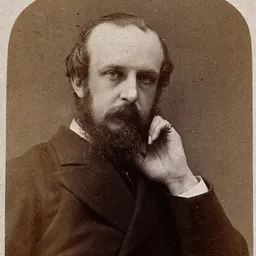

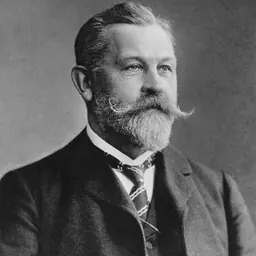
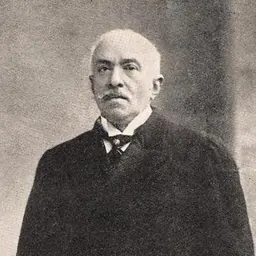
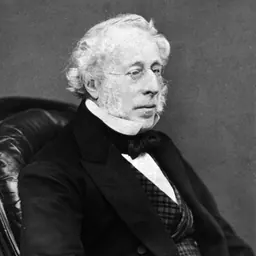
Contemporaries
People whose lives overlapped Cuthbert Collingwood's




Frequently asked questions
Who was Cuthbert Collingwood?
English surgeon and zoologist (1826–1908)
When was Cuthbert Collingwood born?
Cuthbert Collingwood was born on 25 December 1826 in Greenwich.
When did Cuthbert Collingwood die?
Cuthbert Collingwood died on 20 October 1908 in Paris.
What was Cuthbert Collingwood's occupation?
Cuthbert Collingwood was a surgeon, zoologist and naturalist.
What nationality was Cuthbert Collingwood?
Cuthbert Collingwood was British.
Sources & further reading
· Wikipedia: Cuthbert Collingwood
· DBpedia: Cuthbert Collingwood (naturalist)
Cite this page
APA: Biography.guide. (2026). Cuthbert Collingwood. https://biography.guide/cuthbert-collingwood-surgeon/
MLA: "Cuthbert Collingwood." Biography.guide, https://biography.guide/cuthbert-collingwood-surgeon/.
Chicago: "Cuthbert Collingwood." Biography.guide. https://biography.guide/cuthbert-collingwood-surgeon/.
Data last updated: 2026-09-20 · Spot an error? Report a correction.
Page generated 2026-09-27 05:23 UTC