
About Arthur Wakefield
Lived 1799 – 1843 (aged 43). Arthur Wakefield was a British sailor, new Zealand Company and royal Navy, known for Nelson, New Zealand.
Arthur Wakefield (19 November 1799 – 17 June 1843) was an English Navy officer who served with the Royal Navy before joining his brother, Edward Gibbon Wakefield, in founding the New Zealand Company settlement of Nelson in New Zealand.
Early life Arthur Wakefield was born in Essex, England, a son of Edward Wakefield (1774–1854), a distinguished surveyor and land agent, and Susanna Crash (1767–1816). His grandmother, Priscilla Wakefield (1751–1832), was a popular author for the young, and one of the introducers of savings banks. He was the brother of Catherine Gurney Wakefield (1793–1873), Edward Gibbon Wakefield (1796–1862), Daniel Bell Wakefield (1798–1858), William Hayward Wakefield (1801–1848), John Howard Wakefield (1803–1862), Felix Wakefield (1807–1875), Priscilla Susannah Wakefield (1809–1887), Percy Wakefield (1810–1832), and an unnamed child born in 1813.
Royal Navy Wakefield joined the Royal Navy at age eleven. He saw action in the Dutch East Indies, and was part of the force that captured and burnt Washington, D.C. during the War of 1812. He took part in the bombardment of Algiers in 1816. In the post-Napoleonic period he was stationed off South America, involved in diplomatic duties during the various wars of independence. He then spent several years off the coast of West Africa as part of the flotilla engaged in the suppression of the slave trade. He also saw duty in the North Atlantic, the West Indies and the Mediterranean Sea. He was eventually given command of his own ship, HM steam frigate . However, in 1837 he was passed over for promotion, so, recognising that his career was going nowhere, he resigned from the Navy in 1841.
New Zealand Company Immediately after Arthur Wakefield left the Navy in 1841, his brother, Edward Gibbon Wakefield recruited him to join the New Zealand Company, tasking him to select settlers for a new settlement to be named Nelson, escort the party to New Zealand, and supervise the growth of the new town. Arthur Wakefield sailed, in company with Captain Francis Liardet, RN, on the Whitby from London in April 1841, arriving at Wellington on 18 September 1841. The first immigrant ships arrived in Nelson in February 1842.
View of Nelson Haven, 1841. Artist: Thomas Allom after Charles Heaphy The settlement of Nelson got off to a good start. In the first two years, 18 ships transported more than 3,000 colonists. Wakefield actively worked to promote the orderly development of the colony.
However, the new colony encountered serious difficulties in subsequent months. The biggest problem was the lack of arable land. The New Zealand Company, and particularly Wakefield's brother, had made extravagant promises to the settlers about the availability of land. Each settler family had been offered 1 acre (4,000 m2) of urban land, 50 acres (200,000 m2) of suburban land, and 150 acres (600,000 m2) of rural land. However, the company had nothing like that amount of land available and the existing owners—the native Māori—proved very reluctant to sell their land and not inclined to trust the New Zealand Company's promises.
Furthermore, the newly established colonial government, under Governor William Hobson in Auckland, was not at all sympathetic to their problems. One of the basic tenets of the Treaty of Waitangi (1840), between the British Crown and various Māori chiefs, was the understanding that the Crown would protect Māori from attempts to defraud them of their land.
On the other hand, some members of the New Zealand Company and many of the settlers saw Māori as ignorant savages who had no right to stand in the way of honest British colonists. This was a period when the growing British Empire was very aware of what it saw as its manifest destiny, to rule the native peoples of the world. The British colonists believed they were owed the land, and resented the fact that their survival was dependent on the goodwill of Māori, who held all the power.
In summary, Arthur Wakefield found he had far more settlers than he had land for and they were not happy. For once, Edward Gibbon Wakefield urged caution, but he was in London and his brother Arthur was the man on the spot.
Death
The Chief Magistrate in Nelson, Henry Thompson, was a very hot-tempered, arrogant man who was not prepared to accept that the Nelson settlement did not own and control the Wairau Plains. Te Rauparaha and Te Rangihaeata visited Nelson and made it very clear that they would not allow the settlers to occupy the Wairau Plain. Despite that, Wakefield and Thompson sent out surveyors. The Māori very firmly, but without violence, escorted them off their land and burnt down their hut.
Nelson is now a thriving city. The community of Wakefield south of Nelson is not believed to be named after him, but it was renamed shortly before his death. The Wairau Affray is believed to have assisted in the new name becoming established.
The Arthur Range in what is now Kahurangi National Park was explored by Arthur Dudley Dobson, and the range and Mount Arthur were named by Dobson after Arthur Wakefield.
References with notes
Arthur
Don’t just read it —
keep it.
Full-length biographies made to live with: read them, listen on the way to work, watch them tonight.
- E-book
- Audio
- Video
Instant download · yours to keep · every purchase keeps this site free
Important facts
People in Arthur Wakefield's life
Named in this biography and alive at the same time
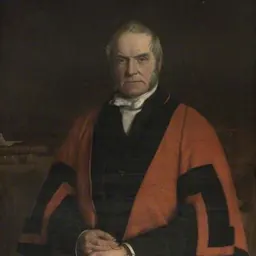



Related people
Same field, nearest in time
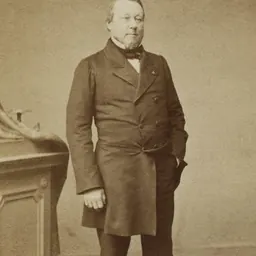
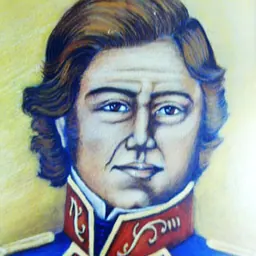
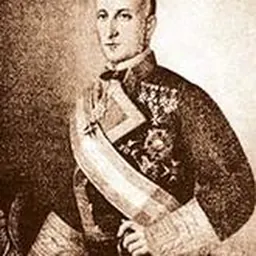

Contemporaries
People whose lives overlapped Arthur Wakefield's






Frequently asked questions
Who was Arthur Wakefield?
New Zealand coloniser (1799–1843)
When was Arthur Wakefield born?
Arthur Wakefield was born on 19 November 1799 in Essex.
When did Arthur Wakefield die?
Arthur Wakefield died on 17 June 1843 in Tuamarina.
What was Arthur Wakefield's occupation?
Arthur Wakefield was a sailor, new Zealand Company and royal Navy.
What was Arthur Wakefield known for?
Arthur Wakefield was known for Nelson, New Zealand.
What nationality was Arthur Wakefield?
Arthur Wakefield was British.
Sources & further reading
Cite this page
APA: Biography.guide. (2026). Arthur Wakefield. https://biography.guide/arthur-wakefield/
MLA: "Arthur Wakefield." Biography.guide, https://biography.guide/arthur-wakefield/.
Chicago: "Arthur Wakefield." Biography.guide. https://biography.guide/arthur-wakefield/.
Data last updated: 2026-09-24 · Spot an error? Report a correction.
Page generated 2026-09-27 05:04 UTC