
About Richard K. Sutherland
Lived 1893 – 1966 (aged 72). Richard K. Sutherland was an American military personnel.
Lieutenant General Richard Kerens Sutherland (27 November 1893 – 25 June 1966) was a United States Army officer during World War II. He served as General of the Army Douglas MacArthur's Chief of Staff in the South West Pacific Area during the war.
Early life and education Sutherland was born in Hancock, Maryland, on 27 November 1893, the only son among the six children of Howard Sutherland, who later became a US Senator from West Virginia, and Effie Harris Sutherland. Sutherland was raised and spent his adolescence and early adulthood in Elkins, West Virginia.
Sutherland was educated at Davis and Elkins College, Phillips Academy, from which he graduated in 1911, and Yale University, graduating with a Bachelor of Arts in 1916.
While at Yale, Sutherland joined ROTC. In July 1916, he enlisted as a private in the Connecticut National Guard.
Between the wars Ceremony at Camp Murphy, Rizal, 15 August 1941, marking the induction of the Philippine Army Air Corps. Lieutenant Colonel Richard K. Sutherland is on the left, behind Lieutenant General Douglas MacArthur Returning to the United States, Sutherland married Josephine Whiteside in 1920. They had one child, a daughter named Natalie.
In 1937, Sutherland went to Tientsin, China, in command of a battalion of the 15th Infantry; however, he was not promoted to major until March 1938, when he was assigned to the Office of the Military Advisor to the Commonwealth Government (Philippines), Manila, under General Douglas MacArthur with the "local rank" of lieutenant colonel. Sutherland was promoted to the rank in July of that year. Sutherland soon eased his superior, Lieutenant Colonel Dwight D. Eisenhower out of his position and became MacArthur's chief of staff.
Sutherland attracted antagonism from subordinate American and Australian officers because of perceptions that he was high-handed and overprotective of MacArthur. Sutherland was often given the role of "hatchet man". Bad news invariably came through Sutherland rather than from MacArthur himself.
According to some sources he contributed to a rift between MacArthur and the first SWPA air forces commander, Lieutenant General George Brett. Major General George Kenney, Brett's successor, became so frustrated with Sutherland in one meeting, that Kenney drew a dot on a plain page of paper and said: "the dot represents what you know about air operations, the entire rest of the paper what I know."
Sutherland had been taught to fly in 1940 by US Army Air Corps instructors at the Philippine Army Training Center and had been awarded a civil pilot's license by the Civil Aeronautics Association. Flying then became one of his favourite recreational activities. Throughout the war, he flew often as a co-pilot with General MacArthur's personal pilot, Weldon "Dusty" Rhoades. In March 1943 he asked to be formally recognised as a "service pilot", a form of pilot restricted to non-combat duties. His request was turned down by the Commanding General of the U.S. Army Air Forces, General Henry H. Arnold on the grounds that he was over the age limit and not performing flying duties. However, Sutherland secured an official pilot's rating under Philippine Army regulations in 1945.
In 1943 Sutherland and Kenney took part in an effort to promote General MacArthur's candidacy for the Presidency, working with Senator Arthur H. Vandenberg of Michigan to get the War Department to rescind the order that prevented MacArthur from seeking or accepting political office.
Japan, 30 August 1945 Among those present are: Major General Joseph M. Swing, Commanding General, 11th Airborne Division, (left); Lieutenant General Richard K. Sutherland (3rd from right); Douglas MacArthur (2nd From right); General Robert L. Eichelberger (right). Aircraft in the background is a Douglas C-54. It was Sutherland who represented MacArthur before the Joint Chiefs of Staff on this and other occasions. Sutherland opened, read, and frequently answered all communications with MacArthur, including those addressed to him personally or "eyes only". Some decisions often attributed to MacArthur were actually taken by Sutherland. For example, the decision to bypass Mindanao and move on directly to Leyte was taken by Sutherland on MacArthur's behalf, while MacArthur was traveling under radio silence.
Sutherland's conduct in Washington enraged Army Chief of Staff General Marshall. He prepared a letter that he never sent to MacArthur saying Sutherland was "totally lacking in the facility of dealing with others.... He antagonized almost every official in the War Department with whom he came in contact and made our dealings with the Navy exceptionally difficult. Unfortunately he appears utterly unaware of the effects of his methods, but to put it bluntly, his attitude in almost every case seems to have been that he knew it all and nobody else knew much of anything."
When MacArthur discovered that Eisenhower had promoted his chief of staff, Walter Bedell Smith, to the rank of lieutenant general in January 1944, he immediately arranged for Sutherland to be promoted to the same rank.
Affair with Elaine Clark During the time while MacArthur's GHQ SWPA was located in Melbourne, Sutherland met Elaine Bessemer Clark, the socialite daughter of Norman Brookes. Her husband, a British Army officer, was serving overseas. When GHQ moved to Brisbane in July 1942, Clark moved with it, as did two other civilian women, Beryl Stevenson and Louise Mowat, who worked as secretaries for Generals Kenney and Richard Marshall respectively. Sutherland installed Clark as the receptionist at the AMP Building, where MacArthur had his headquarters.
When GHQ began planning to move forward to New Guinea, Sutherland requested personnel from the Women's Army Corps to replace civilian employees of GHQ who, by agreement between MacArthur and the Prime Minister of Australia, John Curtin, could not be sent outside Australia. Sutherland further asked for direct commissions for Clark, Mowat and Stevenson. This exploited a loophole whereby enlistments in the Women's Army Corps were restricted to American citizens, but officer commissions were not. Major General Miller G. White, the U. S. Army Deputy Chief of Staff for Personnel, and Colonel Oveta Culp Hobby, the commanding officer of the Women's Army Corps, were strongly opposed; but they were overruled by Deputy Chief of Staff Joseph T. McNarney, on his being informed that the commissions were personally desired by MacArthur as essential to the operation of his headquarters and the prosecution of the war. Clark was commissioned as a captain, while the other two women, as well as General Eisenhower's driver, Kay Summersby, were commissioned as first lieutenants.
Although her rank was more a reflection of Sutherland's status rather than her own, Clark became an assistant to the headquarters commandant, with duties commensurate with her rank, and moved with Advance GHQ to Hollandia. However, her presence there, in contravention of MacArthur's agreement with Curtin, brought down the displeasure of MacArthur, who ordered her to be returned to Australia, first from Hollandia, and later from the Philippines. That Sutherland defied MacArthur on this matter caused a rift between the two.
Later life and death Sutherland retired from the U.S. Army on 30 November 1946.
Returning home, he confessed his affair to Josephine and was ultimately reconciled with her. Letters from Clark were intercepted and destroyed by Natalie.
Decorations and medals
Distinguished Service Cross with oak leaf clusterArmy Distinguished Service Medal with oak leaf clusterSilver Star with oak leaf clusterMexican Border Service MedalWorld War I Victory Medal with two campaign claspsAmerican Defense Service Medal with "Foreign Service" claspAsiatic-Pacific Campaign Medal with four campaign starsWorld War II Victory MedalArmy of Occupation Medal with "Japan" claspCompanion of the Order of the Bath (United Kingdom)Distinguished Service Star (Philippines)Philippine Defense Medal with starPhilippine Liberation Medal with two starsPhilippine Independence MedalArmy General Staff Identification Badge
Dates of rank
Don’t just read it —
keep it.
Full-length biographies made to live with: read them, listen on the way to work, watch them tonight.
- E-book
- Audio
- Video
Instant download · yours to keep · every purchase keeps this site free
Important facts
People in Richard K. Sutherland's life
Named in this biography and alive at the same time

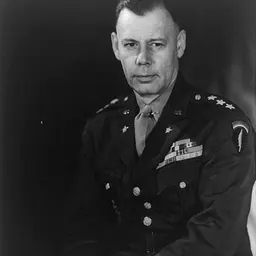



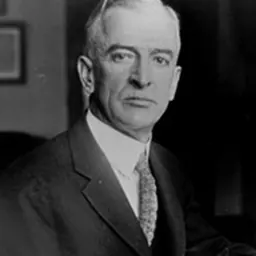

Related people
Same field, nearest in time

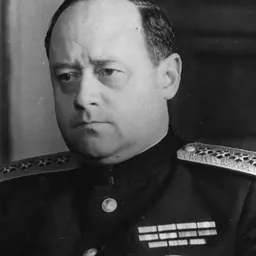


Contemporaries
People whose lives overlapped Richard K. Sutherland's
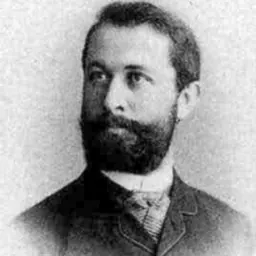

Frequently asked questions
Who was Richard K. Sutherland?
United States Army general (1893–1966)
When was Richard K. Sutherland born?
Richard K. Sutherland was born on 27 November 1893 in Hancock.
When did Richard K. Sutherland die?
Richard K. Sutherland died on 25 June 1966 in Washington, D.C..
What was Richard K. Sutherland's occupation?
Richard K. Sutherland was a military personnel.
What nationality was Richard K. Sutherland?
Richard K. Sutherland was American.
Sources & further reading
· Wikipedia: Richard K. Sutherland
· DBpedia: Richard K. Sutherland
Cite this page
APA: Biography.guide. (2026). Richard K. Sutherland. https://biography.guide/richard-k-sutherland/
MLA: "Richard K. Sutherland." Biography.guide, https://biography.guide/richard-k-sutherland/.
Chicago: "Richard K. Sutherland." Biography.guide. https://biography.guide/richard-k-sutherland/.
Data last updated: 2026-09-20 · Spot an error? Report a correction.
Page generated 2026-09-27 05:23 UTC