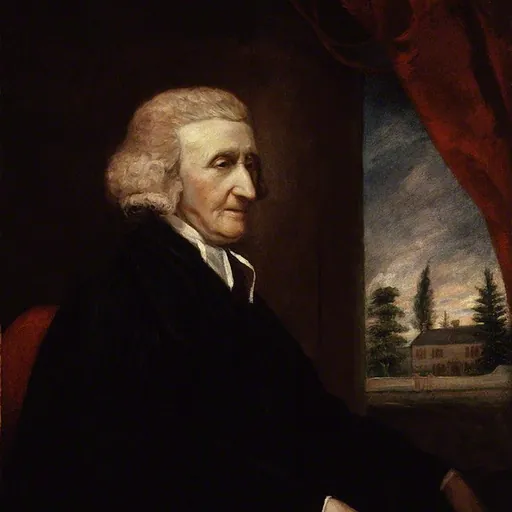
About Richard Graves
Lived 1715 – 1804 (aged 89). Richard Graves was a British writer, christian minister, poet, novelist and translator.
Richard Graves (4 May 1715 – 23 November 1804) was an English cleric, poet, and novelist. He is remembered especially for his picaresque novel The Spiritual Quixote.
Early life Graves was born at Mickleton Manor, Mickleton, Gloucestershire, to Richard Graves (1677–1729), an antiquary, and his Welsh wife Elizabeth, née Morgan. Morgan Graves (died 1770) of the Inner Temple, and the cleric Charles Caspar Graves, were his brothers.
Graves was educated first at a school run by William Smith, Curate at Mickleton from 1729, and then at John Roysse's Free School in Abingdon (now Abingdon School). Smith's well-read daughter Utrecia later formed part of his life, a relationship he broke off before her death in 1743.
Oxford don Graves gained a scholarship at Pembroke College, Oxford, matriculating on 7 November 1732. George Whitefield was a servitor of Pembroke College, and they took their BA degree on the same day in July 1736. In the same year he was elected to a fellowship at All Souls College. Close for a time to Holy Club members, he retreated from the nascent Methodism of the group. He went to London to study medicine, attended the lectures of Dr Frank Nicholls on anatomy, but fell ill. His brother Charles Caspar Graves, on the other hand, was for a time close to the Wesleys.
Returning to Oxford, Graves took his master's degree in 1740, and was ordained. He was appointed to the curacy of Tissington in Derbyshire by William FitzHerbert of Tissington Hall, a colleague at the Inner Temple of his elder brother Morgan Graves. For three years Graves was the family chaplain at the Hall, where he rambled through the district later described in his major novel. After resigning this charge, he made a tour in the north, and at Scarborough met a distant relative, Samuel Knight, Archdeacon of Berkshire. Knight obtained for him the curacy of Aldworth, near Reading, Berkshire, where he was in residence in 1744. The parsonage was out of repair, so that he lived in the house of a gentleman farmer, Mr Bartholomew of Dunworth, whose daughter he married.
Later life For a period, Graves was short of money. Through the interest of Sir Edward Harvey of Langley, near Uxbridge, he was presented in 1748 by William Skrine as rector of Claverton, near Bath, Somerset. He was inducted in July 1749, came into residence in 1750, and until his death never left the living for long.
The book's full title was The Spiritual Quixote, or the Summer's Ramble of Mr. Geoffry Wildgoose, a Comic Romance (anon.), 1773, 1774 (two editions), 1783, and 1792. It was in Anna Barbauld's collection British Novelists, and in Walker's British Classics. It ridiculed the intrusion of the laity into spiritual functions and the enthusiasm of the Methodists.
The couple had four sons, including Richard, Morgan and Danvers, and a daughter. Their grandson Richard Charles Head Graves was vicar of Great Malvern.
Don’t just read it —
keep it.
Full-length biographies made to live with: read them, listen on the way to work, watch them tonight.
- E-book
- Audio
- Video
Instant download · yours to keep · every purchase keeps this site free
Important facts
People in Richard Graves's life
Named in this biography and alive at the same time


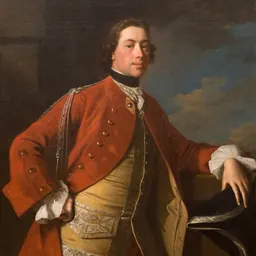
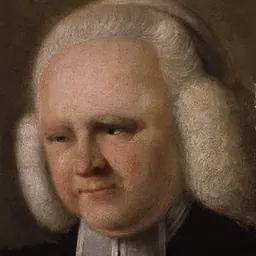

Related people
Same field, nearest in time

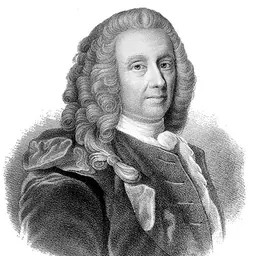
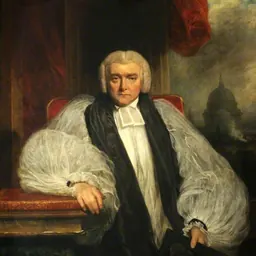


Contemporaries
People whose lives overlapped Richard Graves's

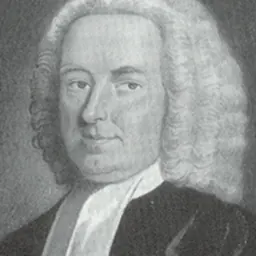


Frequently asked questions
Who was Richard Graves?
English minister, poet and novelist (1715–1804)
When was Richard Graves born?
Richard Graves was born on 4 May 1715 in Mickleton.
When did Richard Graves die?
Richard Graves died on 23 November 1804 in Claverton, Somerset.
What was Richard Graves's occupation?
Richard Graves was a writer, christian minister, poet, novelist and translator.
What nationality was Richard Graves?
Richard Graves was British.
Sources & further reading
Cite this page
APA: Biography.guide. (2026). Richard Graves. https://biography.guide/richard-graves/
MLA: "Richard Graves." Biography.guide, https://biography.guide/richard-graves/.
Chicago: "Richard Graves." Biography.guide. https://biography.guide/richard-graves/.
Data last updated: 2026-09-21 · Spot an error? Report a correction.
Portrait: Wikimedia Commons · author & licence
Page generated 2026-09-27 04:59 UTC