
About Richard Brown
Lived 1753 – 1833 (aged 79–80). Richard Brown was a British writer.
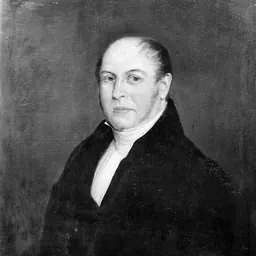
Richard Brown (1753 – 1833) or Ritchie Broun in Scots was born in Irvine. He was a sea captain and a one time friend of Robert Burns who is credited by Burns as the being the person who "encouraged me to endeavour at the character of a Poet." Gilbert Burns says of Robert's days in Irvine that he here "contracted some acquaintances of a freer manner of thinking and living than he had been used to, whose society prepared him for overleaping the bounds of rigid virtue, which had hitherto restrained him". Robert himself stated that Brown's views on illicit love "did me a mischief".
Richard Brown married Helen or Eleanora Blair, daughter of David Blair (b.1736) and Ann Muir of Girtridge Mill in Dundonald Parish, on 30 May 1785,
In later life, Richard Brown became very respectable, and, although he is said by some to have quarrelled violently with Burns, the reason remains unknown as the poet's allegations that he had taught Burns the art of seduction were not published until four years after his death. When living at Port Glasgow he was noted to be interested in education and religion, with a hospitable, kind and generous nature. He was also keen on shooting.
Association with Robert Burns
Robert Burns lived in Irvine during the years 1781–1782, at the age of 23, (1759–1796) for a period of around 9 months, whilst learning the craft of flax-dressing from his mother's half-brother, Alexander Peacock, working at the heckling shop in the Glasgow Vennel. During this time he made a number of acquaintances, befriended several locals and in particular struck up a lasting friendship with Richard Brown, with whom he took regular walks into the Eglinton Woods via the old Irvine-to-Kilwinning toll road and the Drukken or Drucken (Drunken) Steps over the Red Burn and back via the site of Saint Brides or Bryde's Well at Stanecastle. The cairn commemorating the association of Richard Brown and Robert Burns in Irvine. In his Autobiographical Letter to Dr Hunter, Burns says of this intimate friendship: "I formed a bosom friendship with a young fellow, the first created being I had ever seen, but a hapless son of misfortune." "I loved him, I admired him to a degree of enthusiasm; and I strove to imitate him. In some measure I succeeded: I had the pride before, but he taught it to flow in proper channels. His knowledge of the world was vastly superiour to mine, and I was all attention to learn. He was the only man I ever saw who was a greater fool than myself when WOMAN was the presiding star; but he spoke of a certain fashionable failing with levity, which hitherto I had regarded with horror. Here his friendship did me a mischief, and the consequence was, that soon after I resumed the plough." The now married Brown, settled with children and respectable members of society in Port Glasgow, took Burns's comments regarding womanising very badly and this resulted in an enmity that lasted until Burns's death.
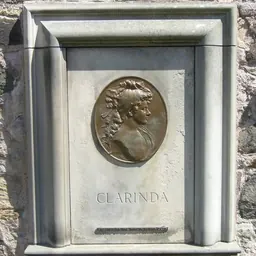
On 30 December 1787, Burns wrote to Brown saying: "Do you recollect a Sunday we spent in Eglinton woods? You told me, on my repeating some verses to you, that you wondered I could resist the temptation of sending verses of such merit to a magazine: 'twas actually this that gave me an idea of my own pieces which encouraged me to endeavour at the character of a Poet." Adding that : "Almighty Love still "reigns and revels" in my bosom; and I am at this moment ready to hang myself for a young Edinr. Widow." The widow, as he puts it, was Clarinda.
Richard Brown received from Burns one of the few signed presentation copies of the Kilmarnock Edition, the other two being given to Peggy Thompson, and James Burnes, a cousin. It was not destroyed by the family, being found hidden in a sideboard from Richard Brown's household after the captain's death.
The route of the old Toll Road The old Toll Road used by Richard Brown and Robert Burns in their walk through the Eglinton Woods was later diverted by the Earl of Eglinton, however it remained as a route within the earl's "Pleasure Grounds".
Other letters between Brown and Burns
On 15 February 1788 Burns wrote to Richard, saying I shall arrive at Glasgow on Monday evening, and beg if possible, you will meet me on Tuesday: I shall wait you Tuesday all day − I shall be found at Durie's Black Bull Inn − I am hurried as if hunted by fifty devils, else I would come to Greenock: but if you cannot possibly come, write me, if possible, to Glasgow
On 24 February Burns writes from Mossgiel that I arrived here, at my brother's, only yesterday; after fighting my way thro' Paisley and Kilmarnock against those old powerful foes of mine, the Devil, the World, and the Flesh; so terrible in the fields of Dissipation − I have met with few incidents in my life which give me so much pleasure as meeting you in Glasgow. --- There is time of life beyond which, we cannot form a tie the worth of friendship.
On 4 November 1789, in a two-page letter Burns acknowledges and welcomes Brown's news. Then he explains his new job with the Excise and goes on to reflect on their long friendship and invites Brown and his wife to visit him at Ellisland. Burns goes on to explain that he cannot travel to meet Brown anywhere on account of his Excise duties and encourages Brown to come and visit him. Reflecting on their earlier association and now being the "earliest friend" apart from family "I now have on earth". He suggests when they meet they drink a toast and hopes "may the Companions of our Youth be the Friends of our Old Age".
Micro-history
In 2013 the Irvine Burns Club and partners established an 'Irvine Harbour Heritage Trail' honouring twelve significant individuals closely associated with the harbour and Richard Brown was honoured with a plaque.
On 18 February 1788 Burns wrote to Agnes Maclehose having just met with his brother William Burns and Richard Brown, saying "I have just met with my old friend, the ship captain; guess my pleasure; to meet you could alone have given me more. --- My brother William too, the young Saddler, has come to Glasgow to meet me, and here we three spending the evening. --" The name 'Keelivine' means 'Lead pencil' in Lallans, an appropriate sobriquet for a lawyer's clerk.
Thomas Crawford of Cartsburn was a Greenock-based friend of Richard Brown and Robert Burns.
Richard Brown was a member of the Masonic Lodge Irvine Saint Andrew Number 149. John Mackenzie was also a member.
Richard was one of the members of the Greenock Burns Club as far back as 1801.
Don’t just read it —
keep it.
Full-length biographies made to live with: read them, listen on the way to work, watch them tonight.
- E-book
- Audio
- Video
Instant download · yours to keep · every purchase keeps this site free
Important facts
People in Richard Brown's life
Named in this biography and alive at the same time





Related people
Same field, nearest in time


Contemporaries
People whose lives overlapped Richard Brown's




Frequently asked questions
Who was Richard Brown?
Friend of Robert Burns
When was Richard Brown born?
Richard Brown was born on 2 June 1753 in Irvine.
When did Richard Brown die?
Richard Brown died in 1833 in Port Glasgow.
What was Richard Brown's occupation?
Richard Brown was a writer.
What nationality was Richard Brown?
Richard Brown was British.
Sources & further reading
· DBpedia: Richard Brown (captain)
Cite this page
APA: Biography.guide. (2026). Richard Brown. https://biography.guide/richard-brown-writer/
MLA: "Richard Brown." Biography.guide, https://biography.guide/richard-brown-writer/.
Chicago: "Richard Brown." Biography.guide. https://biography.guide/richard-brown-writer/.
Data last updated: 2026-09-25 · Spot an error? Report a correction.
Page generated 2026-09-27 05:11 UTC