
Raymond M. Lemaire
Belgian university professor, architect and urban planner
About Raymond M. Lemaire
Lived 1921 – 1997 (aged 76). Raymond M. Lemaire was a Belgian university teacher, architect, urban planner and art historian.
Raymond Martin Marie Ghislain, Baron Lemaire (Uccle, 28 May 1921 - Woluwe-Saint-Lambert, 13 August 1997) was an art historian and an architectural historian, a leading expert in conservation and professor at the Catholic University of Leuven and later at the KU Leuven and the Université catholique de Louvain in Louvain-la-Neuve.
Family Lemaire was a son of Herman Lemaire (1883-1947), architect in chief of the Belgian Ministry of Public Works, and of Marie-Henriette Winderyckx (*1892). In 1947, he married Christiane Vergaert (1924-2007) and they had four children. He was a nephew of the distinguished art historian, canon and professor Raymond Lemaire (1878–1954), from whom he was distinguished by his middle initial.
On 25 July 1990, he was elevated into the Belgian hereditary nobility, with the personal title of baron. He took as his heraldic device: Virtus scientiam major.
Studies and first activities After his secondary studies at the Collège Saint-Pierre in Uccle, he studied at the Catholic University of Louvain, from 1938 till 1942. He graduated in law, history and art history. In 1948, he obtained a doctoral degree in Art History and Archaeology with a dissertation on the origins of Brabantine Gothic, L'Origine du style gothique en Brabant. He worked with the professors Stan Leurs and Anoni (Milan).
Monuments Man Volunteer after Belgium was liberated, he became captain in the First Armoured Car-regiment (Brigade Piron). From 1946 until 1949, with the title of plenipotentiary minister, he was a member of the Commission searching for stolen works of art. He was a liaison officer between the Belgian government and the allied services, the so-called Monuments Men.
He coordinated the return to Belgium of thousands of looted works of art, books, archives and other items belonging to Belgium or Belgian citizens.
Activities in Belgium Lemaire became assistant (1947), lecturer (1949) and professor (1953) at the Catholic University of Louvain. He lectured art history, history of architecture, both in Dutch and in French, and continued to do so after the university had been split in two, along language lines. He retired in 1986.
His main activities were devoted towards architecture, restoration and urban planning.
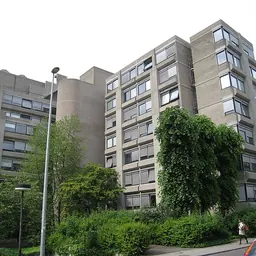
He became renowned for the restoration of the Grand Béguinage in Leuven, where he put into practice the Venice Charter, of which he was the main editor. He was also one of the main designers of the new town Louvain-la-Neuve. The concept was based on the structure of a historic traditional town.
These were not his only realizations. With regard to restorations, have to be mentioned: some thirty churches and chapels, a number of houses and country houses.
From 1972 until 1977, he was counsel to the town of Bruges, more specifically for the historic town. Thanks to him, Bruges became one of the Belgian pilot-projects for the European Year of the architectural heritage (1975).
He took also part in other urban projects: Rue des Brasseurs in Namur, Quartier des Arts in Brussels, projects in Courtrai, Mouscron, Villeneuve d'Ascq and Bergen-op-Zoom.
He took also part in projects for new buildings, as designer or counsel, often in collaboration with the architects Robert Vandendael, Daniël Depoorter, Simon Brigode, Marc Dessauvage, Auditorium prof. Peeters at the University of Leuven in Heverlee, the church of Herne, the metro station in Kraainem, the church of Brasschaat, his own house in Loonbeek.
He was also the initiator of the extensive series of books with the inventory of the Belgian architectural inheritance, along a methodology which he developed. In 1997, the order of engineers and architects of Beirut edited the book entitled: ENVIRONNEMENT ET PATRIMOINE. patrimoine et lendemain.
International activities Lemaire was one of the main authors of the Venice Charter (1964). He was advisor to the European Union, the Council of Europe, and UNESCO.
With Piero Gazzola he founded in 1965 ICOMOS, the International Council for Monuments and Sites, an NGO linked with UNESCO. Lemaire was secretary-general (1965-1975) and president (1975-1981) of the organization. He founded the ICOMOS-periodical under the name Monumentum.
He attained international recognition thanks to his activities as an expert and counsellor for important restorations and numerous renovations. This was the case for his activities regarding: the temples of Borobodur (Indonesia), the Acropolis in Athens, the Pisa tower, churches in Romania, historic town on Malta, the sites of Jerash and Petra in Jordan, the Kasbah of Algiers.
He was also the special envoy of the director general of UNESCO (1971-1997) regarding the extremely difficult question of the historic Jerusalem.
In 1976, he founded within the College of Europe in Bruges a postgraduate center for the conservation of monuments and sites. After five years, as a consequence of financial problems, the center moved to Leuven. Once he had died the Center was named after him.
Honours 1977: Raymond Lemaire was named honorary doctor at the Faculté polytechnique de Mons, 1978: the Award Sir Abercrombie (Union Internationale des Architectes), 1970: the Gold Medal of the Académie d'Architecture de France, 1983: the Gold medal for the Conservation and restoration of monuments (Hamburg).
Don’t just read it —
keep it.
Full-length biographies made to live with: read them, listen on the way to work, watch them tonight.
- E-book
- Audio
- Video
Instant download · yours to keep · every purchase keeps this site free
Important facts
People in Raymond M. Lemaire's life
Named in this biography and alive at the same time

Related people
Same field, nearest in time



Contemporaries
People whose lives overlapped Raymond M. Lemaire's


Frequently asked questions
Who was Raymond M. Lemaire?
Belgian university professor, architect and urban planner (1921-1997)
When was Raymond M. Lemaire born?
Raymond M. Lemaire was born on 28 May 1921 in Uccle.
When did Raymond M. Lemaire die?
Raymond M. Lemaire died on 13 August 1997 in Woluwe-Saint-Lambert.
What was Raymond M. Lemaire's occupation?
Raymond M. Lemaire was a university teacher, architect, urban planner and art historian.
What nationality was Raymond M. Lemaire?
Raymond M. Lemaire was Belgian.
Sources & further reading
· Wikipedia: Raymond M. Lemaire
Cite this page
APA: Biography.guide. (2026). Raymond M. Lemaire. https://biography.guide/raymond-m-lemaire/
MLA: "Raymond M. Lemaire." Biography.guide, https://biography.guide/raymond-m-lemaire/.
Chicago: "Raymond M. Lemaire." Biography.guide. https://biography.guide/raymond-m-lemaire/.
Data last updated: 2026-09-20 · Spot an error? Report a correction.
Page generated 2026-09-27 05:15 UTC