
About Ray Keating
Lived 1893 – 1963 (aged 70). Ray Keating was an American baseball player.
Raymond Herbert Keating (July 21, 1893 – December 28, 1963) was an American professional baseball pitcher. He played in Major League Baseball for the New York Highlanders / Yankees of the American League from 1912 to 1916 and in 1918 and for the Boston Braves of the National League in 1919. In 1914, Keating was caught throwing an emery ball, and the pitch was declared to be illegal.
Career Early life and career Raymond Herbert Keating was born on July 21, 1893, in Bridgeport, Connecticut. He played semi-professional baseball in Bridgeport in 1908 and 1909. He tried out with the Bridgeport Orators of the Connecticut State League in 1910,
In 1911, Keating signed a professional contract with the Lawrence Barristers of the New England League. The Barristers assigned him to the Hamilton Kolts of the Canadian League where he made his professional baseball debut. Hamilton's manager, a former spitball pitcher, taught Keating how to throw the spitball. and he won 25 of the 35 games he pitched.
Major leagues The New York Highlanders of the American League purchased Keating's contract from Lawrence for $5,000 ($ in current dollar terms) during the season. After the New England League's season finished in early September, Keating reported to the Highlanders. Keating appeared in six games for the Highlanders in 1912; he had an 0–3 win–loss record, three complete games, and a 5.80 earned run average (ERA) in 1912. The next year, he had a 6–12 win–loss record and a 3.21 ERA in 28 games, with nine complete games. Frank Chance, the Highlanders' manager, reported that Keating was almost exclusively a spitball pitcher.
In 1914, catcher Ed Sweeney taught Keating how to throw the emery ball; Sweeney had learned about it from Russ Ford, who jumped to the outlaw Federal League before the 1914 season. Keating was caught using the emery ball when Eddie Collins became suspicious after striking out against Keating in a game on September 12, 1914, and had the home plate umpire, Tom Connolly, check the ball, finding it to be scuffed. Connolly also took Keating's baseball glove, and found the emery paper hid inside. Ban Johnson, the president of the American League, outlawed the pitch, and said that anyone caught throwing it would be fined $100 ($ in current dollar terms) and suspended for 30 days. Keating had an 8–11 win–loss record, a 2.96 ERA, and 14 complete games in 34 games pitched in the 1914 season, and a 3–6 win–loss record, a 3.63 ERA, and eight complete games in 11 games pitched in 1915.
Keating pitched to a 5–6 win–loss record, a 3.07 ERA, and six complete games in 14 games pitched in the 1916 season. The Yankees sold Keating and Sweeney to the Toledo Iron Men of the American Association after the 1916 season. The Yankees reacquired Keating from Toledo in July 1918. He had a 2–2 win–loss record, a 3.91 ERA, and one complete game in 15 games pitched.
The Yankees sold Keating to the Boston Braves of the National League before the 1919 season. He had a 7–11 win–loss record and a 2.98 ERA with Boston in 1919, throwing nine complete games in 22 games pitched.
Later career The Braves sold Keating to the Los Angeles Angels of the Pacific Coast League (PCL) before the 1920 season. After spending one season with Los Angeles, Keating jumped to the outlaw San Joaquin Valley League, an independent baseball league, in 1921. In 1921, Keating was the player-manager for the team representing Madera, California. In 1922 and 1923, he played for the team representing Dinuba, California.
In 1924, Keating applied for reinstatement to organized baseball. Commissioner Kenesaw Mountain Landis told him that he could be reinstated after the season if he paid a $200 fine ($ in current dollar terms). He spent the 1924 season with the Racine, Wisconsin, team in the independent Midwest League. The team became defunct in September, and Keating returned to Bridgeport.
Keating was reinstated, and Los Angeles sold his contractual rights to Sacramento Senators of the PCL for $3,000 ($ in current dollar terms) before the 1925 season. He was suspended in September 1926 for doctoring baseballs. In 1928, Keating won 27 games for Sacramento. He continued to pitch for Sacramento into the 1930 season. In July 1930, Sacramento traded Keating to the Portland Beavers for Mack Hillis and Roy Chesterfield. He began the 1931 season with the Beavers, but was released in June. He signed with the Seattle Indians of the PCL later that week, and they released him after the season. He returned to the PCL to pitch for Seattle in July 1934.
Personal life Keating and his wife, Elizabeth, married in Bridgeport in November 1915. They separated in March 1933 and she sued for divorce, custody of their daughter, and alimony. The divorce was granted that May.
Keating resided in Sacramento, California, after his playing career, and operated a tavern there. He died on December 28, 1963, in a Sacramento hospital.
Don’t just read it —
keep it.
Full-length biographies made to live with: read them, listen on the way to work, watch them tonight.
- E-book
- Audio
- Video
Instant download · yours to keep · every purchase keeps this site free
Important facts
People in Ray Keating's life
Named in this biography and alive at the same time
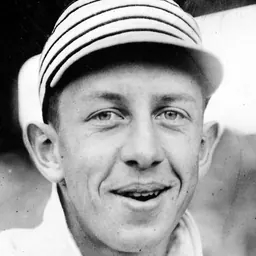
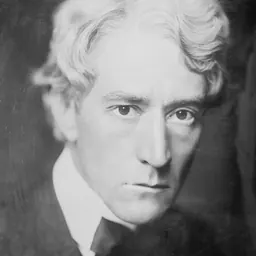

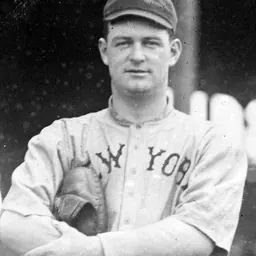




Related people
Same field, nearest in time
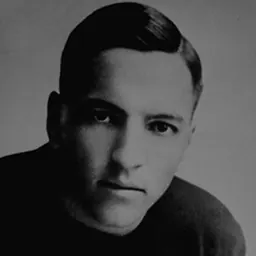
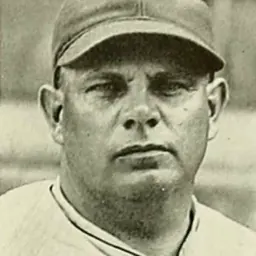

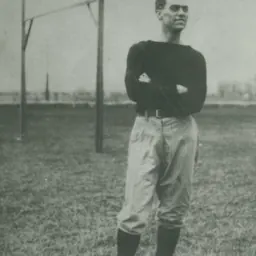
Contemporaries
People whose lives overlapped Ray Keating's
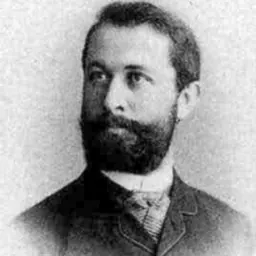

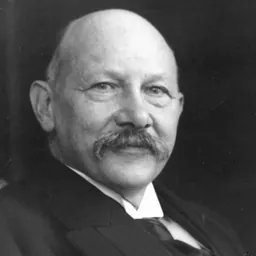

Frequently asked questions
Who was Ray Keating?
American baseball player (1893-1963)
When was Ray Keating born?
Ray Keating was born on 21 July 1893 in Bridgeport.
When did Ray Keating die?
Ray Keating died on 28 December 1963 in Sacramento.
What was Ray Keating's occupation?
Ray Keating was a baseball player.
What nationality was Ray Keating?
Ray Keating was American.
Sources & further reading
Cite this page
APA: Biography.guide. (2026). Ray Keating. https://biography.guide/ray-keating/
MLA: "Ray Keating." Biography.guide, https://biography.guide/ray-keating/.
Chicago: "Ray Keating." Biography.guide. https://biography.guide/ray-keating/.
Data last updated: 2026-09-20 · Spot an error? Report a correction.
Page generated 2026-09-27 05:18 UTC