
About Ray Brassier
Born 1965. Ray Brassier is a British philosopher, university teacher and translator.
Raymond Brassier (; born 1965) is a British philosopher. He is a member of the philosophy faculty at the American University of Beirut, Lebanon, known for his work in philosophical realism. He was formerly Research Fellow at the Centre for Research in Modern European Philosophy at Middlesex University, London, England.
Brassier is the author of Nihil Unbound: Enlightenment and Extinction and the translator of Alain Badiou's Saint Paul: The Foundation of Universalism and Theoretical Writings and Quentin Meillassoux's After Finitude: An Essay on the Necessity of Contingency. He first attained prominence as a leading authority on the works of François Laruelle.
More recently Brassier has engaged with Marxism and the work of the German-American political theorist Paul Mattick. In August 2024, it was announced that Brassier would be joining Kyung Hee University as a visiting professor in the Department of British & American Language and Culture, and in 2025 teach a masters course on Marxism and literature with the British theorist and filmmaker Jason Barker.
Education He received a Bachelor of Arts degree from the University of North London in 1995 and Master of Arts and Doctor of Philosophy degrees from the University of Warwick in 1997 and 2001 respectively.
Philosophical work Along with Quentin Meillassoux, Graham Harman, and Iain Hamilton Grant, Brassier is one of the foremost philosophers of contemporary speculative realism interested in providing a robust defence of philosophical realism in the wake of the challenges posed to it by post-Kantian idealism, phenomenology, postmodernism, deconstruction, or, more broadly speaking, what they refer to as "correlationism". Brassier is generally credited with coining the term speculative realism, though Meillassoux had earlier used the phrase speculative materialism to refer to his own position.
Brassier himself, however, does not identify with the speculative realist movement, and, further, disputes that there even is such a movement, stating:
Brassier is strongly critical of much of contemporary philosophy for what he regards as its attempt "to stave off the 'threat' of nihilism by safeguarding the experience of meaning – characterized as the defining feature of human existence – from the Enlightenment logic of disenchantment". According to Brassier, this tendency is exemplified above all by philosophers strongly influenced by Heidegger and Wittgenstein. Unlike philosophers such as John McDowell, who would press philosophy into service in an attempt to bring about a "re-enchantment of the world", Brassier's work aims to "push nihilism to its ultimate conclusion".
According to Brassier, "the disenchantment of the world understood as a consequence of the process whereby the Enlightenment shattered the 'great chain of being' and defaced the 'book of the world' is a necessary consequence of the coruscating potency of reason, and hence an invigorating vector of intellectual discovery, rather than a calamitous diminishment". "Philosophy", exhorts Brassier, "would do well to desist from issuing any further injunctions about the need to re-establish the meaningfulness of existence, the purposefulness of life, or mend the shattered concord between man and nature. It should strive to be more than a sop to the pathetic twinge of human self-esteem. Nihilism is not an existential quandary but a speculative opportunity."
Don’t just read it —
keep it.
Full-length biographies made to live with: read them, listen on the way to work, watch them tonight.
- E-book
- Audio
- Video
Instant download · yours to keep · every purchase keeps this site free
Important facts
People in Ray Brassier's life
Named in this biography and alive at the same time
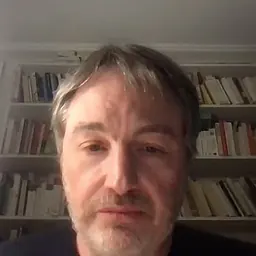

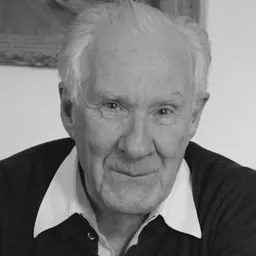




Related people
Same field, nearest in time
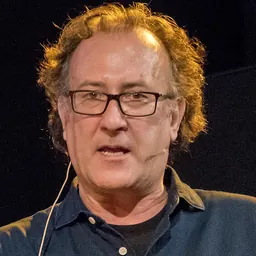

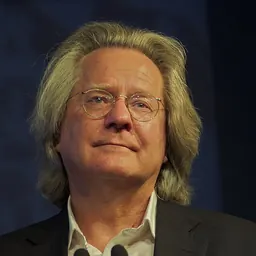

Contemporaries
People whose lives overlapped Ray Brassier's



Frequently asked questions
Who is Ray Brassier?
British philosopher
When was Ray Brassier born?
Ray Brassier was born in 1965 in London.
What is Ray Brassier's occupation?
Ray Brassier is a philosopher, university teacher and translator.
What nationality is Ray Brassier?
Ray Brassier is British.
Sources & further reading
Cite this page
APA: Biography.guide. (2026). Ray Brassier. https://biography.guide/ray-brassier/
MLA: "Ray Brassier." Biography.guide, https://biography.guide/ray-brassier/.
Chicago: "Ray Brassier." Biography.guide. https://biography.guide/ray-brassier/.
Data last updated: 2026-09-26 · Spot an error? Report a correction.
Page generated 2026-09-27 05:14 UTC