
About Emiliano Aguirre
Lived 1925 – 2021 (aged 96). Emiliano Aguirre was a Spanish paleoanthropologist, paleontologist and geologist, known for Archaeological Site of Atapuerca.
Emiliano Aguirre Enríquez (5 October 1925 – 11 October 2021) was a Spanish paleontologist, known for his works at archaeological site of Atapuerca, whose excavations he directed from 1978 until his retirement in 1990. He received the Prince of Asturias Award in 1997.
Biography Aguirre was born in Ferrol, Galicia, on 5 October 1925. He studied humanities and philosophy at the Facultad Eclesiástica de Alcalá, natural sciences at the University of Madrid in 1955, and theology at the University of Granada. He was a former Jesuit with a PhD in biological sciences with a thesis on extinct elephants, supervised by Miquel Crusafont i Pairó.
Between 1955 and 1956, Aguirre was a prospector of dinosaur sites in the , where he helped excavating the remains of Abditosaurus, and a prospector and discoverer of thirty new marine and continental Cenozoic sites in Granada between 1956 and 1961. In 1963, he designed the Arbona Museum, the first museum with in situ exhibition of fossil remains in Europe. In 1963, he was part of the Spanish Mission of Archaeological Salvage in Nubia, in which he studied the human remains at the necropolis of Argin (Sudan). In 1968, thanks to a postdoctoral fellowship from the Wenner-Gren Foundation, he traveled to South Africa to study early hominid fossils and to Kenya to excavate in the Tugen Hills with the archaeologist Louis Leakey. He supervised 26 doctoral theses.
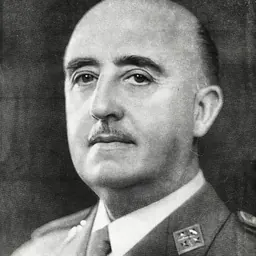
Dissemination of evolutionary theory in Franco's Spain In the early years of his professional career in the 1950s, Aguirre promoted conferences, meetings, and scientific publications at a time when the national Catholicism of Francisco Franco's regime hindered the dissemination of Charles Darwin's theory. in which he stated his defense of the modern synthetic theory of evolution, as opposed to the theistic dirigiste approaches commonly adopted at the time.
In 1966, the book La Evolución was published by Editorial Católica, in its collection Biblioteca de Autores Cristianos ("B. A. C."), which was a real milestone for the social diffusion of evolutionary ideas in Spain. The work was co-directed by the paleontologists Miguel Crusafont, , and Aguirre, and included articles that covered biological evolution from very different approaches, including Crusafont's orthogenetic dirigiste ideas, but above all, it exposed the synthetic theory, assumed by most of the authors, among whom, besides Aguirre, were Ramón Margalef, Antonio Prevosti, Salustio and Rafael Alvarado, Francisco Bernis or José Antonio Valverde. According to the paleontologist , referring in 2006 to this work: "It took Spanish evolutionary paleontology a little longer than the rest of the evolutionary disciplines to enter modernity. It finally did, thanks to Emiliano Aguirre". At that time, science was not much promoted, so he was in charge of training all those who studied Atapuerca.
Personal life and death Aguirre married Carmen Bule in 1975.
Honors and awards Aguirre leaving his footprint in the "Bulevar del Calzado" in Arnedo, in 2008.
Prince of Asturias Award (1997) Medal of Honor for the Invention of the García-Cabrerizo Foundation (1997) Medal of Merit in Labour (1999) Four volumes of festschrift edited by Regional Archaeological Museum of the Community of Madrid (2004) His footprint and shoe print at Bulevar del Calzado of Arnedo (2008) "Arquero de Oro" of the (2009) "Premio Evolución" of the Atapuerca Foundation (2011) "Emiliano Aguirre street" by Burgos' city council (2011)
Taxa named after him Hipparion concudense aguirrei (1961). Cricetodon (Hispanomys) aguirrei (1977). Pseudodryomys aguirrei (1978). Paracamelus aguirrei (1984).
Honoris causa Honoris causa for the University of A Coruña (2000) Honoris causa for the University of Burgos (2007)
Selected works Meléndez, B. y Aguirre, E. (1958): «Hallazgo de Elephas en la terraza media del río Manzanares (Villaverde, Madrid)». Las Ciencias, 23(4): 597-605 Howell, FC; Butzer, KW y Aguirre, E. (1961): «Noticia preliminar sobre el emplazamiento acheulense de Torralba (Soria)». Excavaciones arqueológicas en España, 10: 3-38 Aguirre, E. (1968): «Une interprétation biomécanique de l’evolution de la région glabellaire dans l’anthropogenèse». En: Guinzberg, V.V. (Ed.) Seventh International Congress of Anthropological and Ethnological Sciences. Nauka. Moscú Aguirre, E. (1969): «Evolutionary History of the Elephant». Science, 164(3886): 1366-1376 Aguirre, E. y Fuentes, C. (1969): «Los vertebrados fósiles de Torralba y Ambrona». En: Études sur le Quaternaire dans le monde. VIII Congrés INQUA: 433-437 Aguirre, E. y Leakey, P. (1974): «Nakali: nueva fauna de Hipparion del Rift Valley de Kenya». Estudios Geológicos, 30: 219–227 Aguirre, E. y Soto, E. (1974): «Nuevo fósil de Cercopitécido en el Pleistoceno inferior de La Puebla de Valverde (Teruel)». Estudios Geológicos, 30: 213-217 Aguirre, E.; Basabe, J.M. y Torres, T. de (1976): «Los fósiles humanos de Atapuerca (Burgos): nota preliminar». Zephyrus, 26-27: 489-511 Aguirre, E. y Lumley, M.A. de (1977): «Fossil men from Atapuerca, Spain: their bearing on human evolution in the Middle Pleistocene». Journal of Human Evolution, 6: 681 Aguirre, E. (1979): «Situación estratigráfica y geocronológica de los primitivos Homínidos fósiles de Africa». Boletín de la Real Sociedad Española de Historia Natural. (Sección Geológica), 77: 17-22 Aguirre, E.; Alberdi, M.T.; Jiménez, E.; Martín, C.; Morales, J.; Sesé, C. y Soria, D. (1982): «Torrijos: nueva fauna con Hispanotherium de la cuenca media del Tajo». Acta Geológica Hispanica, 17(1–2): 39-61 Aguirre, E. (1988): «Crónica y desarrollo de la Paleontología Humana». En: VV.AA. Historia de la Paleontología. Madrid: Real Academia de Ciencias Exactas, Físicas y Naturales. Historia de la Ciencia: 89-119 Rosas, A., Aguirre, E. y Bermúdez de Castro, J.M. (1991): «Mandibules et dents d'Ibeas (Espagne) dans le contexte de l'évolution humaine en Europe». L’Anthropologie, 95: 89–102 Rosas, A. y Aguirre, E. (1999): «Restos humanos neandertales de la cueva del Sidrón, Piloña, Asturias. Nota preliminar». Estudios Geológicos, 55(3–4): 181-190 Aguirre, E. y Carbonell, E. (2001): «Early human expansions into Eurasia: The Atapuerca evidence». Quaternary International, 75: 11-18
Don’t just read it —
keep it.
Full-length biographies made to live with: read them, listen on the way to work, watch them tonight.
- E-book
- Audio
- Video
Instant download · yours to keep · every purchase keeps this site free
Important facts
People in Emiliano Aguirre's life
Named in this biography and alive at the same time




Related people
Same field, nearest in time



Contemporaries
People whose lives overlapped Emiliano Aguirre's




Frequently asked questions
Who was Emiliano Aguirre?
Spanish paleontologist
When was Emiliano Aguirre born?
Emiliano Aguirre was born on 5 October 1925 in Ferrol.
When did Emiliano Aguirre die?
Emiliano Aguirre died on 11 October 2021 in Burgos.
What was Emiliano Aguirre's occupation?
Emiliano Aguirre was a paleoanthropologist, paleontologist and geologist.
What was Emiliano Aguirre known for?
Emiliano Aguirre was known for Archaeological Site of Atapuerca.
What nationality was Emiliano Aguirre?
Emiliano Aguirre was Spanish.
Sources & further reading
Cite this page
APA: Biography.guide. (2026). Emiliano Aguirre. https://biography.guide/emiliano-aguirre/
MLA: "Emiliano Aguirre." Biography.guide, https://biography.guide/emiliano-aguirre/.
Chicago: "Emiliano Aguirre." Biography.guide. https://biography.guide/emiliano-aguirre/.
Data last updated: 2026-09-20 · Spot an error? Report a correction.
Page generated 2026-09-27 05:30 UTC