
About Barbara Herman
Born 1945. Barbara Herman is an American philosopher, ethicist and university teacher, known for History of ethics, Kantian ethics and Moral Philosophy.
Barbara Herman (born May 9, 1945) is the Griffin Professor of Philosophy and Professor of Law at the University of California, Los Angeles Department of Philosophy. A well-known interpreter of Kant's ethics, Herman works on moral philosophy, the history of ethics, and social and political philosophy. Among her many honors and awards include a Guggenheim Fellowship (1985-1986) and election to the American Academy of Arts & Sciences.
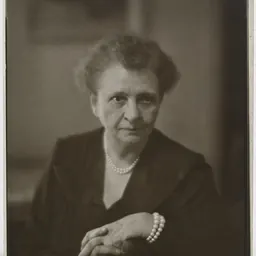
Biography Barbara Herman as an undergraduate at Cornell (second row, fourth from the left) sits with fellow Telluride House members including faculty residents Frances Perkins (second row, first from the left) and Paul Grice (second row, first from the right).
Herman was born in New York City to Ruth and Robert Herman. Her mother was a secretary and her father a union organizer and professional fund-raiser. Her brother is physicist Jay Herman. Herman attended Flushing High School in Queens and Cornell University, where she majored in history. While a senior at Cornell, Herman was "the first woman to live at Telluride House under the new arrangements" after "Convention for the first time was able to grant full residential preferment to an undergraduate woman." There she lived alongside Gayatri Chakravorty Spivak, Clare Selgin Wolfowitz, and Paul Wolfowitz, as well as in-house faculty members including Frances Perkins and Paul Grice. She has since taught Telluride Association Summer Program (TASP) seminars at Deep Springs College and the Cornell branch.
Shortly after graduating from Cornell with a B.A. in 1966, Herman began doctoral studies in history at Harvard University. She soon discovered an affinity for philosophy and transferred to the philosophy department, but not before earning an M.A. in modern European history.
Of Herman's time at Harvard, Martha Nussbaum said during her introduction to the Dewey Lecture at the University of Chicago Law School:
On a personal note, I remember feeling the power of that captivating presence on the memorable occasion when I first heard Barbara Herman speak. She probably doesn't remember this at all, but she was an older graduate student at Harvard and she was famous among us younger graduate students as one of the best, but I had never really met her or heard her even talk. And on this occasion she was addressing the whole faculty of the Harvard philosophy department about why the graduate students wanted to form a union. And I remember—and this is a pretty daunting occasion, with Van Quine, Nelson Goodman, and all these people sitting there who were actually not very friendly to the idea of a graduate student union—but I remember the confidence, incisiveness, and great humor with which she faced down that group, and I remember thinking, "this is a truly wise person as well as one who is a lot of fun."
From 1973 to 1980 Herman was assistant professor at the Massachusetts Institute of Technology. She then joined the faculty at the University of Southern California, first as a visiting assistant professor and then as an assistant professor, associate professor, and finally professor of philosophy and law in 1992. In 1994 Herman was appointed Griffin Professor of Philosophy at UCLA and in 2006 she was jointly appointed to the law school.
Of Herman's essay collection Moral Literacy, philosopher Stephen Darwall writes:
Rawls pointed out that it was one of Hegel's aims to overcome the many dualisms that he thought disfigured Kant's transcendental idealism. Herman's essays, in my view, are distinctive for this same emphasis. Throughout, she stresses continuities where more orthodox Kantian thought insists on separation. And she argues that Kant's central insights are not only preserved, but improved, when one appreciates these continuities. Thus, where orthodox Kantian thought sharply distinguishes desire from reason, love from reason, particular judgment from principle, and so on, Herman argues that these pairs should all be seen as continuous and interconnected and that a Kantian take on ethics is enhanced by so viewing them. She is tough-minded and rigorous, philosophically. And she doesn't waste words. Herman has an economy of expression and a penchant for illuminating philosophical coinage.
Legal theorist Lawrence Solum wrote on his blog:
In my opinion, Herman's recent work represents the very best of contemporary moral philosophy in the tradition of Kant—only a handful of scholars combine her deep appreciation of Kant, philosophical rigor, and genuine intellectual flexibility. A superb book. What I can I add to Darwall's high praise, except to say, "Highly Recommended!"
In 2014, Herman gave the Dewey Lectureship in Jurisprudence at the University of Chicago Law School, titled "The Moral Side of Non-Negligence."
Don’t just read it —
keep it.
Full-length biographies made to live with: read them, listen on the way to work, watch them tonight.
- E-book
- Audio
- Video
Instant download · yours to keep · every purchase keeps this site free
Important facts
People in Barbara Herman's life
Named in this biography and alive at the same time






Related people
Same field, nearest in time

Contemporaries
People whose lives overlapped Barbara Herman's


Frequently asked questions
Who is Barbara Herman?
American philosopher
When was Barbara Herman born?
Barbara Herman was born on 9 May 1945 in New York City.
What is Barbara Herman's occupation?
Barbara Herman is a philosopher, ethicist and university teacher.
What is Barbara Herman known for?
Barbara Herman is known for History of ethics, Kantian ethics, Moral Philosophy, Political Philosophy and Social philosophy.
What nationality is Barbara Herman?
Barbara Herman is American.
Sources & further reading
Cite this page
APA: Biography.guide. (2026). Barbara Herman. https://biography.guide/barbara-herman/
MLA: "Barbara Herman." Biography.guide, https://biography.guide/barbara-herman/.
Chicago: "Barbara Herman." Biography.guide. https://biography.guide/barbara-herman/.
Data last updated: 2026-09-22 · Spot an error? Report a correction.
Page generated 2026-09-27 05:17 UTC